The Hospital Bill That Crosses an Ocean: How Diaspora Cash Quietly Became Kenya's Health Insurer
A first-of-its-kind national survey shows nearly a quarter of Kenyan families receiving money from abroad now spend it on medical care, filling a gap the country's health system cannot.
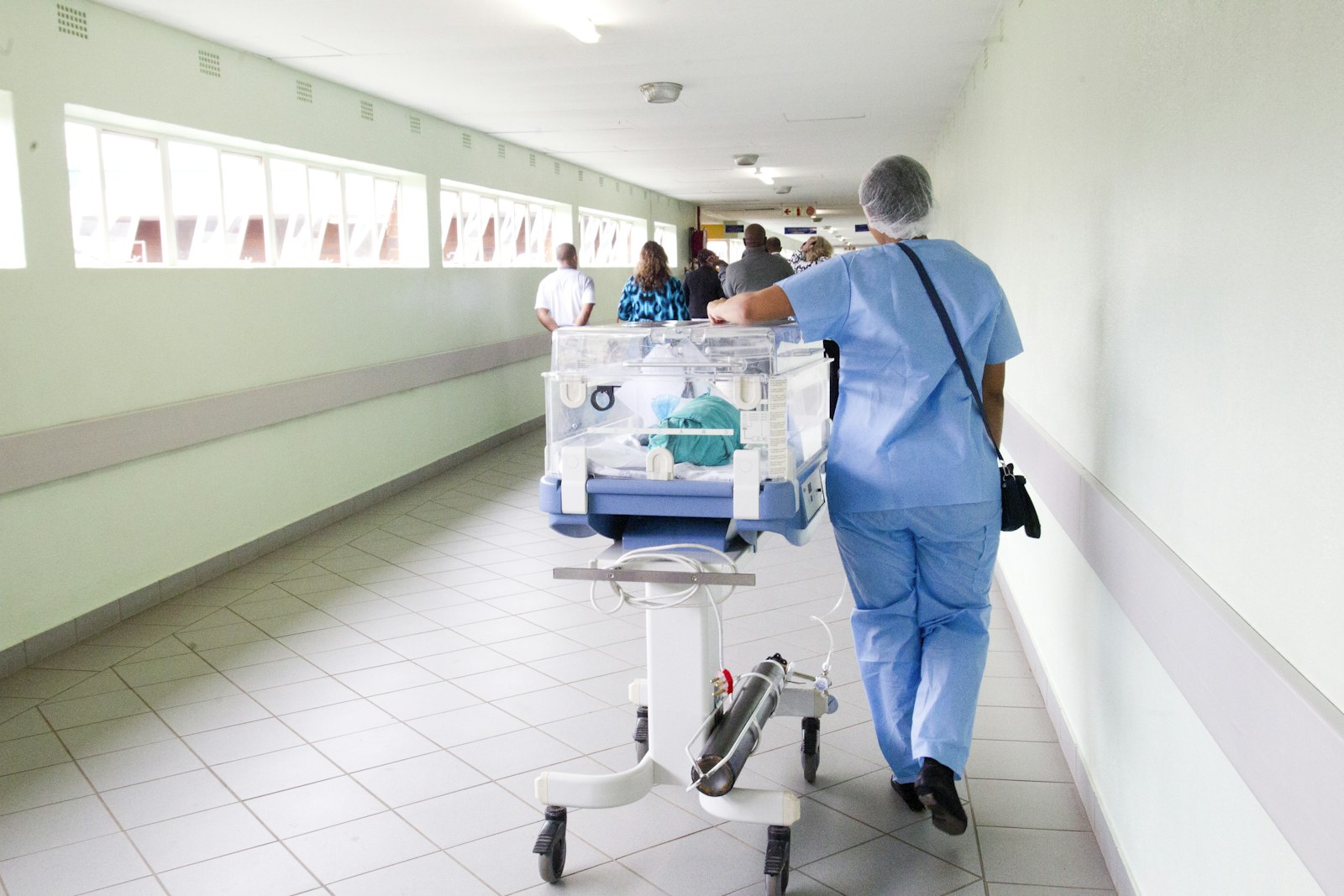
The call comes when it is already dark in Nairobi. A nurse needs a deposit before a relative can be admitted, or a pharmacy will not release the medication until someone pays. Thousands of kilometres away — in a flat in Dallas, on a night shift in Frankfurt, in a quiet suburb of Melbourne — a phone lights up, and within minutes a transfer is on its way. By the time the sun rises over the ward, money earned across an ocean has settled a bill in Kiambu or Kisumu. For a growing share of Kenyan households, this is no longer an act of crisis. It has hardened into a system, one that quietly does the work a national health insurer is meant to do.
A new government survey has, for the first time, measured the scale of that arrangement — and the numbers are striking.
A survey that names the lifeline
On Tuesday, the Kenya National Bureau of Statistics released its 2025 Remittances Household Survey, the first study of its kind to track not just how much money the diaspora sends home, but what families actually do with it once it arrives. Between June 2024 and May 2025, the bureau estimates, Kenyan households received around Ksh931.8 billion in remittances — a sum that now rivals the country's largest sources of foreign exchange.
What the survey reveals is less a story of investment than of survival. According to KNBS, 73.1 per cent of recipient households used the money to buy food and household goods, the single largest category of spending. Education came second, at 31.4 per cent. And in third place, just behind school fees, came healthcare: 23.9 per cent of households reported using money from abroad to pay medical bills.
"Food and household goods accounted for the highest proportion of expenditure among households receiving remittances," the report states — a plain sentence that captures how much of this money never reaches a savings account.
The diaspora as informal insurer
That nearly one in four recipient families is paying for treatment with remittances is not simply an act of generosity. It is a symptom of how Kenyans pay for healthcare at all.
In October 2024, the country replaced the long-running National Hospital Insurance Fund with the Social Health Insurance Fund, administered by the new Social Health Authority, as part of an ambitious push toward universal health coverage. Yet roughly two years on, only about a quarter of Kenya's 52 million people hold any form of health insurance. The transition itself has been turbulent: reporting by the Daily Nation has documented a rise in out-of-pocket costs during the shift to the new system, with the great majority of private hospitals saying patients are still paying cash at the counter.
Into that gap steps the diaspora. A son in Qatar, a daughter nursing in Britain, a cousin driving for a delivery app in Minneapolis — each becomes, in effect, an insurance policy with no premiums table and no waiting period, activated by a phone message and a mobile-money code. It is fast, personal and dependable in a way the formal system has struggled to be. It is also invisible, appearing in no actuarial model and answering to no regulator.
Money for survival, not for wealth
The survey's most sobering finding is what the money is not doing. Despite the popular image of diaspora cash building bungalows and buying plots back home, only 2.2 per cent of recipient households reported using remittances for real estate, and 2.6 per cent for construction. Formal savings and investment products barely registered at all.
"Allocation of remittances to savings, formal investments and financial instruments was limited, indicating untapped potential for leveraging remittances for wealth creation and financial deepening," KNBS concluded.
More than one in five recipient households told the bureau that remittances were their main source of livelihood — not a supplement to wages, but the floor beneath the family. When money is the difference between a meal and an empty pot, or between a hospital admission and a turned-away patient, little is left over to invest. The report describes households relying on the funds as a buffer against economic vulnerability, cushioned against shocks but rarely able to climb beyond them.
Where the money begins
The geography of this support points squarely at the diaspora the survey was built to understand. The United States alone accounted for 43.5 per cent of all remittances reaching Kenyan households, by far the largest single source, followed by Germany and Australia. The Central Bank of Kenya tracked Ksh651.2 billion flowing through formal channels such as banks and money-transfer firms, while the household survey captured a further Ksh280.6 billion arriving informally — carried in pockets, sent through friends, or handed over as goods rather than cash.
Behind each percentage point are people balancing their own rent and bills abroad against the knowledge that, back home, a medical bill could land at any hour. The same Kenyans navigating visa renewals, currency swings and the high cost of living in their host countries are quietly underwriting the healthcare of relatives they may not have seen in years. The diaspora's contribution does not stop at the airport or the wire transfer; it follows a parent into a consultation room and a child into a pharmacy queue.
The policy question Nairobi cannot ignore
For a government that increasingly courts the diaspora as an engine of foreign exchange — remittances have outperformed several traditional export earners — the survey is both reassuring and uncomfortable. The money is real, resilient and growing. But if most of it is absorbed by food, fees and medical bills, its power to build lasting wealth is limited, and the families sending it remain one emergency away from strain.
Analysts have begun asking whether financial products are designed for the reality the data describes: health-savings vehicles, diaspora-linked insurance, or simpler ways for senders abroad to pre-fund a relative's care. The Social Health Authority already allows Kenyans abroad to make voluntary contributions toward cover for their families, but uptake remains modest against the tide of direct, person-to-person transfers that families trust and understand.
For now, the arrangement holds because it has to. Somewhere tonight a phone will light up, a code will be entered, and a bill will be paid before morning. The 2025 survey has finally written that moment into a national ledger. The harder question — how long families should have to insure one another across oceans, and what it would take to build a system they could lean on instead — is one the numbers alone cannot answer.