The Fifty Beds at Nanyuki: How a US Ebola Quarantine Plan Collided With Kenya's Sense of Sovereignty
As Congo's outbreak grows into one of the worst on record, a half-built American isolation centre beneath Mount Kenya has turned a health emergency into a question of dignity the diaspora is watching.

On the cool plains beneath Mount Kenya, the garrison town of Nanyuki has spent June wrestling with a question it never expected to face. Word spread that Laikipia Air Base, the quiet airfield on the town's edge, was being prepared to host a fifty-bed isolation centre — not for Kenyans, but for American citizens who might be exposed to Ebola hundreds of kilometres away, across the border in the Democratic Republic of the Congo. For a town that has recorded no cases of the disease, the news landed less like a public-health measure than an imposition.
By early June, the unease had hardened into anger. Hundreds of demonstrators filled the streets, and on June 9 the protests turned deadly when police opened fire, with at least one person killed, according to Al Jazeera, after earlier clashes that had already cost lives. Placards demanded to know why a country with zero Ebola infections should become a holding ground for the exposed nationals of another. The crowds were modest by the standards of Nairobi's mass demonstrations, but the symbolism was outsized — and it has not faded.
A Facility No One in Nanyuki Asked For
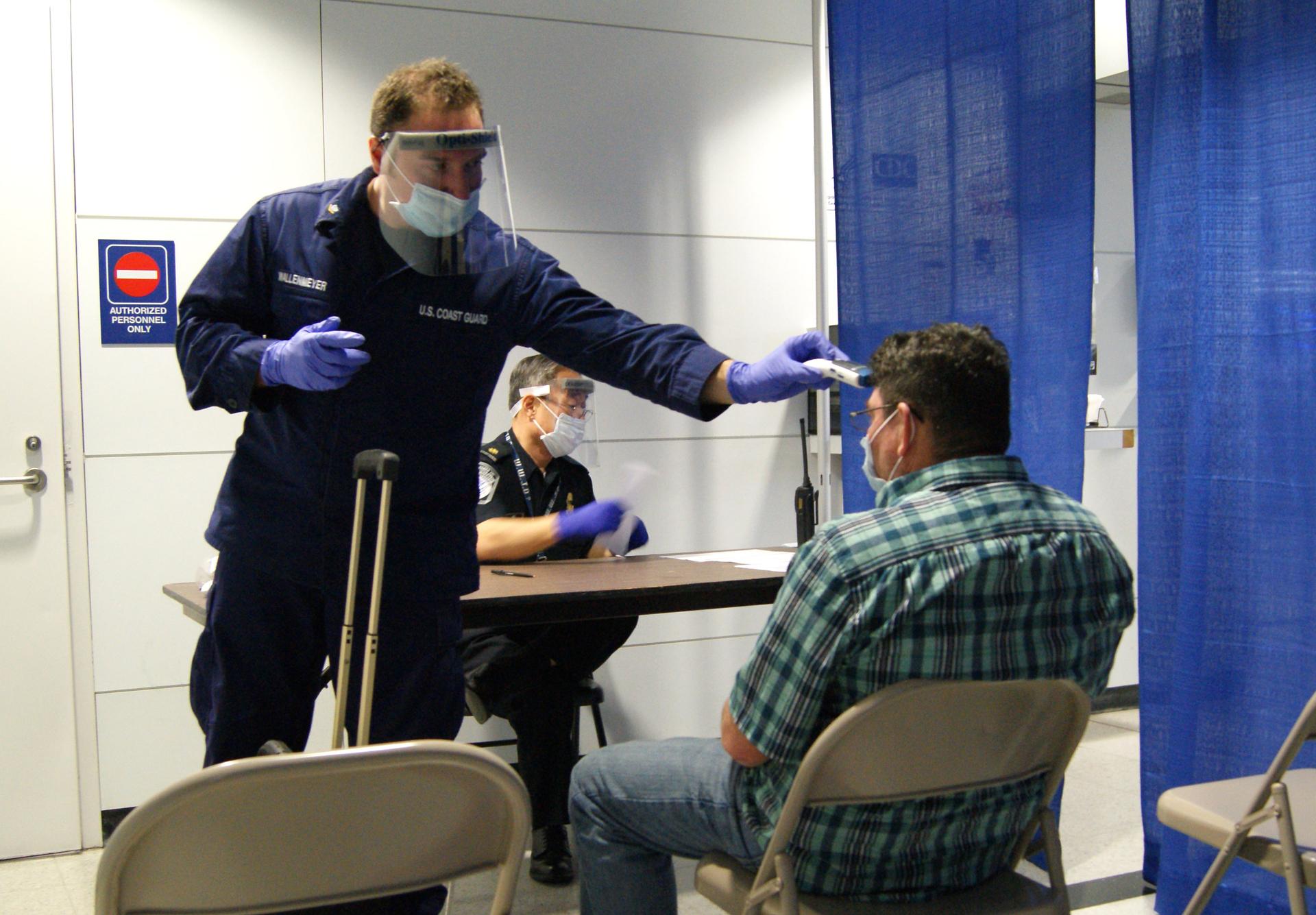
The plan, as reported, was straightforward on paper: a 50-bed unit at Laikipia Air Base where Americans who had been in contact with the virus in Congo or Uganda could be monitored while still asymptomatic, with anyone developing symptoms moved elsewhere for care. For Washington it offered a staging point close to the outbreak zone. For many Kenyans it raised a more uncomfortable question — why here, and why now.
What inflamed the dispute as much as the facility itself was the secrecy around it. Many Kenyans say they learned of the centre only when US Secretary of State Marco Rubio announced it to American citizens, rather than from their own government, and the terms of the arrangement have not been made public. Kenyan officials have said the unit would also serve Kenyans and other foreign nationals; US officials have not confirmed that. Into that information vacuum rushed rumour, and reassurance struggled to keep pace.
A Strain With No Cure
The backdrop is a genuine emergency. The World Health Organization declared an international public health emergency on May 17 after detecting the rare Bundibugyo strain of Ebola, which had been circulating undetected for weeks in eastern Congo before spilling into neighbouring Uganda. Unlike the more familiar Zaire strain, Bundibugyo has no approved vaccine and no approved treatment — a fact that makes containment, rather than cure, the only line of defence.
The numbers have climbed steadily. By June 24, Congolese health authorities had reported more than 1,100 confirmed cases and close to 300 deaths, with hundreds of patients hospitalised in isolation — figures that place this among the largest Ebola outbreaks ever recorded. The province of Ituri has borne the overwhelming share of infections, while North and South Kivu have logged smaller clusters. Health officials have warned that late detection, compounded by recent declines in Western health funding, could push the toll higher still.
When Aid Becomes a Flashpoint
It is impossible to separate the Nanyuki standoff from the politics of money. Over the past year the United States cut most of its foreign aid and effectively shut down the US Agency for International Development, hollowing out the same global health infrastructure that has historically blunted outbreaks like this one. Against that backdrop, an American request to place a quarantine centre on Kenyan soil — for the benefit of Americans — struck many as a reversal of priorities.
The Trump administration has said it "cannot and will not allow" exposed cases to enter the United States, a sharp departure from the 2014-16 West Africa outbreak, when infected American citizens were flown home for treatment. To critics in Nanyuki, that posture read plainly: the risk Washington would not accept at home was being routed to a country with no cases of its own. The World Health Organization, meanwhile, has been scaling up support to Congo and Uganda, reinforcing surveillance, contact tracing and cross-border preparedness — the unglamorous work on which the region's safety depends.
A Court Draws a Line
What might have stayed a quiet diplomatic arrangement became a constitutional one when the dispute reached Kenya's courts. A High Court judge suspended the plan, barring government agencies from "establishing, operationalising, facilitating, approving or permitting" any Ebola quarantine or treatment centre tied to a foreign-government arrangement. The order froze the project while the case is heard.
Yet the facility did not simply stop. Satellite imagery seen by Reuters showed white tents accumulating on an 11-acre plot cleared inside the airbase since late May, and US military aircraft reportedly continued ferrying in staff and equipment even after the court orders. The government moved to lower the temperature, with the health minister telling the country the American-run plans had been halted and later appearing before the court over the matter. The episode left an impression of a state caught between an ally's request and its own citizens' objections — and of a judiciary unwilling to let a question of this magnitude be settled quietly between governments.
Why the Diaspora Is Watching
For Kenyans living abroad, Nanyuki is more than a domestic news item. Many in the diaspora send money home each month and follow developments in their home counties with the attentiveness of people who still feel responsible for them. A health controversy in a town like Nanyuki travels to family WhatsApp groups in Dallas, Manchester and Doha within hours.
There is also a pointed irony that resonates in diaspora circles. Kenyans abroad spend their lives navigating the visa regimes, health screening and bureaucratic suspicion of wealthier nations. To watch a wealthier nation seek to place its own exposed citizens inside Kenya — over the objections of the people who live there — inverts a familiar dynamic. For some, the court's intervention read as a quiet assertion of dignity. For others, it raised a worry that a public-health disagreement could strain the US-Kenya relationship that underpins trade, security cooperation and, indirectly, the immigration channels their families lean on.
What Comes Next
For now, the fifty beds at Nanyuki remain a half-built encampment, the plan suspended rather than cancelled. The outbreak across the border shows little sign of slowing, and the pressure for regional staging points will not vanish with a single court order. Kenya's task is to remain a good-faith partner in a continental emergency without surrendering the say of its own communities — a balance the coming weeks of legal argument will test.
What is already clear is that a remote airfield beneath Mount Kenya has become an unlikely stage for a much larger negotiation: about who carries the burden of a health crisis, who decides, and what a sovereign nation owes both its neighbours and itself. For the families watching from Nairobi and from the diaspora abroad, the answer will matter well beyond Nanyuki.