The Gap That Became a Diagnosis: Why Kenya Keeps Cutting HIV Infections but Cannot Stop the Dying
New HIV infections in Kenya have fallen by more than half in five years. The death toll has barely moved — and a collapse in American funding now threatens even that fragile progress.
A Quiet Arithmetic in the Counties
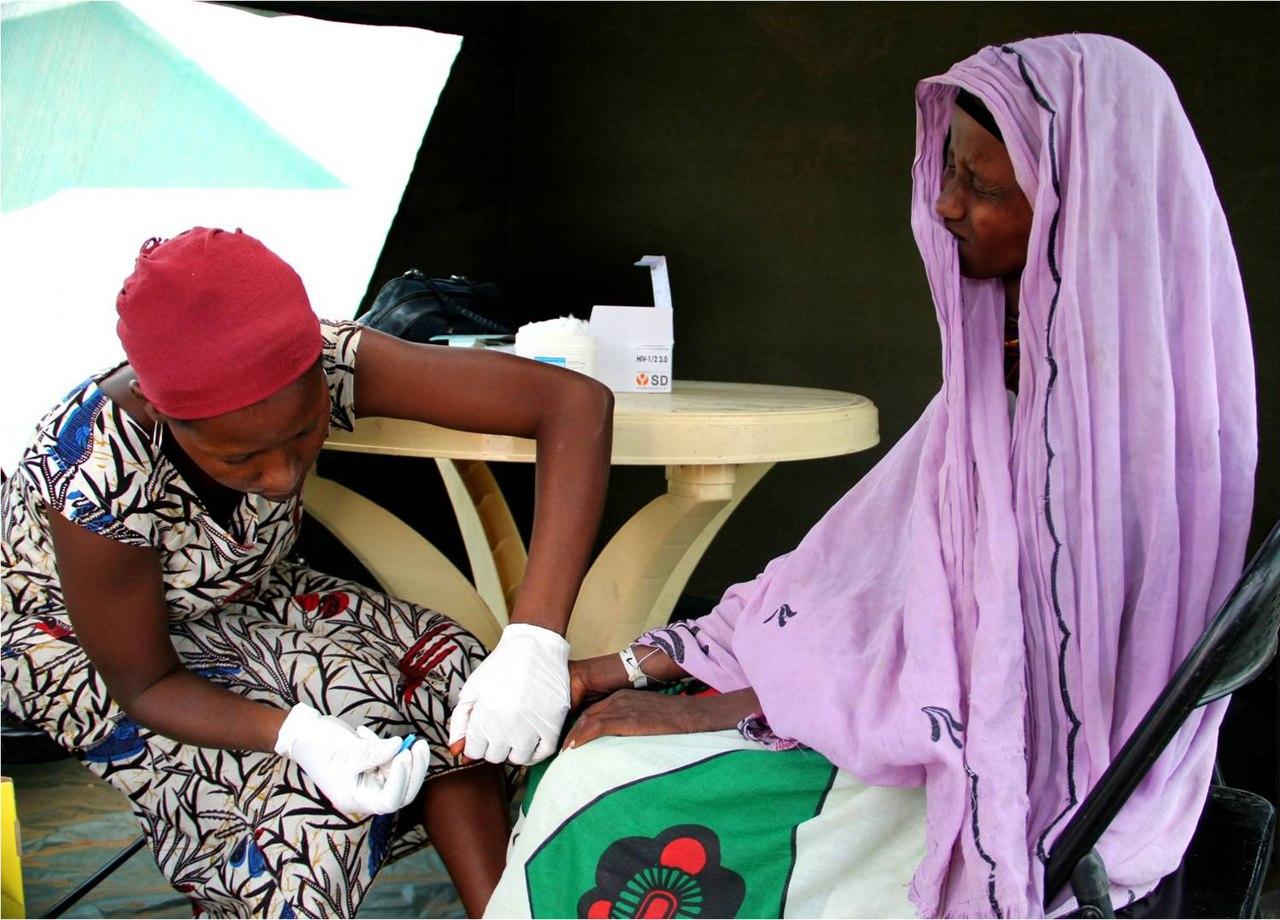
In a county hospital in Homa Bay, the hardest work is no longer finding people with HIV. It is keeping the ones already found. A patient tests positive, starts antiretroviral drugs, collects a month's supply, and then — somewhere between the bus fare, a clashing work shift, an empty pharmacy shelf, or the fear of being seen at the clinic — disappears from the register. Months later the same name returns, this time as a death.
That arithmetic now defines Kenya's epidemic. The country has become strikingly good at stopping new infections and strangely unable to stop the dying. The Kenya HIV Estimates 2026, presented this month by the National Syndemic Disease Control Council, lays the contradiction out in cold figures: new infections down by more than half in five years, deaths almost exactly where they were. For the Kenyan families watching from Houston, Birmingham or Doha, who send money home precisely so that a relative's illness never becomes a funeral, it is a number worth understanding.
A Victory Measured Only Halfway
Between 2020 and 2026, new HIV infections in Kenya fell from 32,027 to 13,936 — a 56 per cent drop. By the standards of any public-health programme, that is a remarkable achievement, even if it falls short of the 75 per cent reduction the country had targeted.
The second number undoes the celebration. Over the same five years, AIDS-related deaths fell by just 0.3 per cent, from 19,486 to 19,434, against a target of cutting them in half. Nearly 20,000 Kenyans are still dying every year from a disease that has been treatable for two decades. From 2023 onward, deaths began to overtake new infections, and the 2025 gap — roughly 19,400 deaths against fewer than 14,000 new infections — is the widest yet recorded. As the council's analysts put it, the distance between those two figures is itself a diagnosis: not of a prevention failure, but of a treatment system that keeps people alive only long enough to enrol them.
Where the Pipeline Leaks
The deaths are not random, and they are not spread evenly. Nairobi alone recorded 2,491 AIDS-related deaths, about one in eight of the national total, followed by Homa Bay with 1,693, Kisumu with 1,510, Siaya with 1,265 and Migori with 1,052. Ten counties, dominated by the capital and the Lake region, account for well over half of all deaths. These are also the counties carrying the heaviest treatment loads, where the sheer number of patients has outrun the clinics meant to hold them.
Age tells its own story. The peak death toll falls in the 45-to-49 bracket, with 2,559 deaths, and adults between 35 and 59 make up 53 per cent of all those who died. "These are not people who missed the era of antiretroviral treatment," Nelson Otwoma, who heads programmes at the National Empowerment Network of People Living with HIV and AIDS in Kenya, told the Daily Nation. They were diagnosed, most were started on drugs, "and the programme lost them along the way." He described a pipeline leaking at every joint — people not identified, the identified not linked to care, the linked not retained — undone by transport costs, drug stockouts, stigma and clinic hours that collide with the working day.
The youngest are the most exposed of all. Children aged nought to four accounted for 1,507 deaths, driven by mother-to-child transmission and the fact that only 46 per cent of children in that group are on treatment. In Kenya's arid north — Wajir, Mandera, Garissa — overall prevalence is low, but stigma is so severe that men avoid testing until they are already gravely ill, and mother-to-child transmission rates run far above the national average.
The American Money That Held It Together
Hovering over every one of those figures is a question of who pays for the drugs, the test kits and the counsellors. For two decades, much of that bill was met not by Nairobi but by Washington, through the President's Emergency Plan for AIDS Relief and the US Agency for International Development. In 2025, that flow was abruptly frozen and then sharply cut.
UNAIDS and independent aid monitors documented the immediate consequences inside Kenya: drop-in centres and key-population clinics shuttered, community-led testing and follow-up programmes halted, and looming stockouts of HIV test kits, viral-load reagents and early-infant-diagnosis supplies. Harm-reduction groups estimate Kenya would need to find roughly 66.9 billion shillings — about 518 million US dollars — to replace what the United States withdrew. Modelling studies of the funding shock across high-burden African countries projected tens of thousands of additional HIV deaths by 2030 if the gap is not filled. The plateau in Kenya's death toll predates these cuts, but the timing means the country is now being asked to fix its retention crisis at the precise moment its largest external funder has walked away.
What the Diaspora Carries Home
This is where a domestic health story becomes a diaspora one. Kenyans abroad sent home about 931.8 billion shillings between mid-2024 and mid-2025, according to the national remittances survey, money that households overwhelmingly spend on food, school fees and medical bills — increasingly including the transport fares and clinic costs that determine whether a relative stays on treatment. As public funding contracts, that private lifeline is quietly absorbing some of the slack.
The diaspora is woven into the shortfall in a second way. The nurses, clinical officers and lab technicians that Kenya trains and then exports to the United Kingdom's NHS, to American hospitals and to Gulf clinics are the same cadre a stretched HIV programme needs to chase up missing patients at home. And the politics of PEPFAR — debated and budgeted in Washington — are, for Kenyan-Americans, a question about their own relatives' medicine cabinets. A funding decision taken in a US committee room lands, months later, as an empty shelf in a Migori dispensary.
The Years Already Written
The cruelest feature of these figures is their lag. Today's deaths reflect infections and treatment interruptions from five and ten years ago; the prevention gains now being celebrated will not show up as fewer funerals for years to come. That means the next stretch of the death curve is, in a sense, already written — shaped by who stayed on treatment in 2018 and who quietly fell off.
What is not yet written is whether Kenya can plug the leaks in its treatment pipeline fast enough, and whether it can do so while replacing a vanished American subsidy. For the diaspora that funds so much of the country's healthcare from a distance, the lesson of the 2026 estimates is uncomfortably simple: the war on new infections is being won, and the war to keep the infected alive is not — and the money that decides it now runs partly through their own pockets.