Treat First, Pay Later: How Kenya's New Free Ambulance Plan Could Ease the Diaspora's Dreaded 3 a.m. Call
Ruto's promise of a national dispatch centre and 24-hour free emergency care speaks directly to Kenyans abroad who have long footed the hospital deposit from afar.
For Kenyans living abroad, few things arrive with more force than the call that comes in the small hours. A parent has collapsed. A brother has been in a matatu crash on the Nairobi–Nakuru highway. A cousin has been rushed to a county hospital that will not begin treatment until someone, somewhere, sends a deposit. The person who answers that call is often thousands of kilometres away, opening a phone in a cold flat in Manchester or a night shift in Dallas, and reaching for the only tool they have: M-Pesa.
That ritual — the frantic transfer before the IV line goes in — may be about to change. On Sunday, 21 June, President William Ruto used the 95th St. John Ambulance annual parade and inspection at State House to announce a set of reforms that, if delivered, would reorganise how Kenya answers its medical emergencies. For the diaspora, the headline is not the ceremony. It is the promise that the first hours of a crisis will no longer hinge on whether the family can find cash in time.
What Ruto Announced
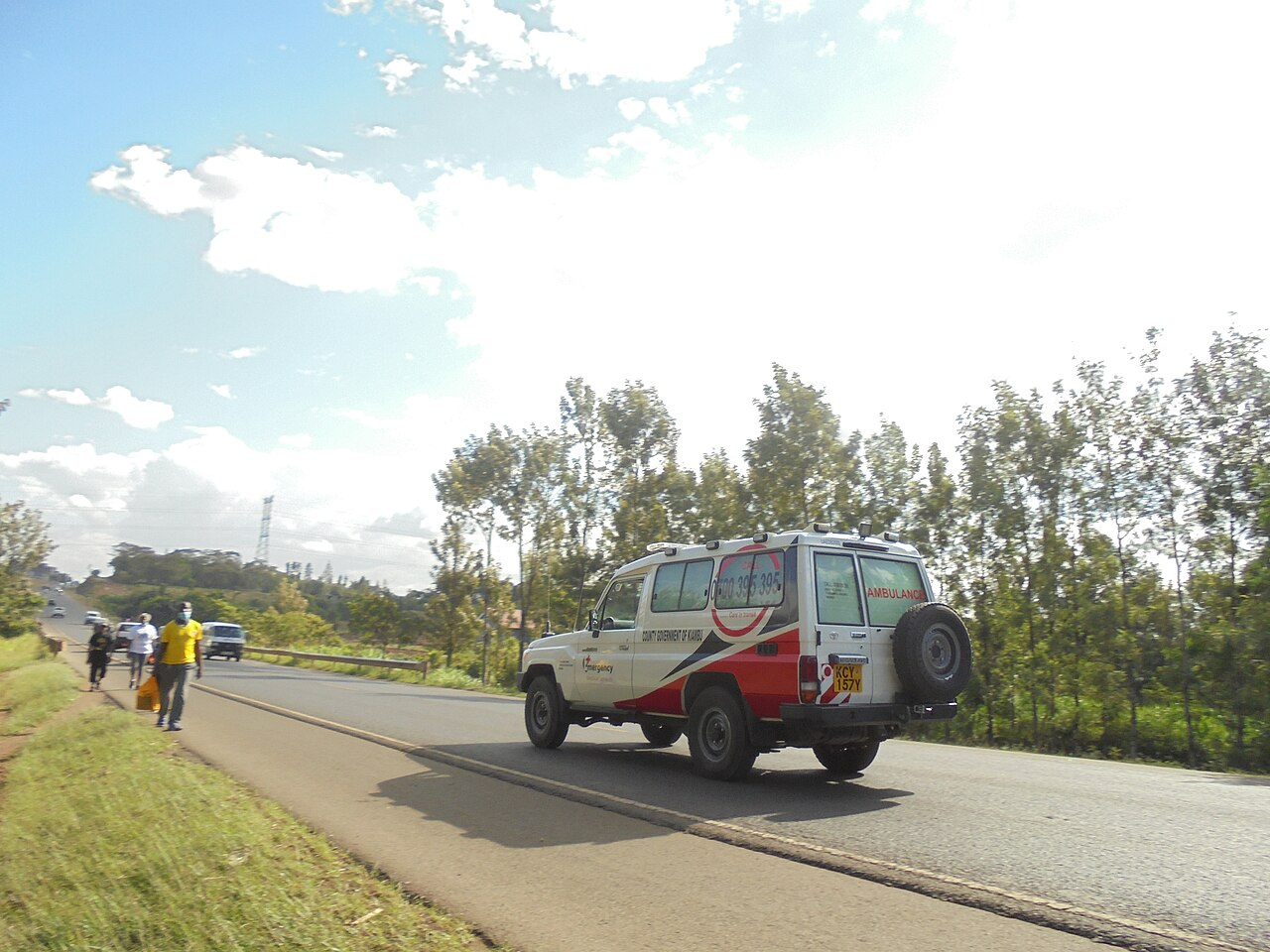
The centrepiece is a National Ambulance Dispatch Centre, which the government says will be operational by the end of July. Run through the Digital Health Agency as part of Kenya's broader digital health system, the centre is meant to coordinate ambulances in real time, link responders to hospitals, and route the nearest available vehicle to a caller who dials a single central emergency number. The President said it is designed to handle up to 100,000 emergency evacuations a year, and that once it is running, Kenya would become only the second country in Africa to operate a nationally coordinated ambulance dispatch system.
Alongside the dispatch centre, Ruto said emergency ambulance services would be provided free of charge, and that the Social Health Authority would cover the first 24 hours of emergency treatment — including admission, surgery and other critical procedures — through the SHA Emergency, Chronic and Critical Illness Fund, a mechanism previously outlined by Health Cabinet Secretary Aden Duale. He also pledged 15 new ambulances to St. John Ambulance Kenya and KSh500 million toward a new national headquarters for the organisation on a one-acre site in Upper Hill, Nairobi, with Parliament providing KSh300 million and the government KSh200 million.
The Deposit Problem the Diaspora Knows Too Well
To understand why this lands so squarely on the diaspora, you have to understand the deposit. For years, the unwritten rule at many Kenyan facilities has been simple and unforgiving: treatment follows payment. A trauma patient could arrive at a hospital gate stable and leave the waiting bay in a far worse state, not because care was unavailable but because the admission desk needed money first. Families learned to act accordingly, and in countless cases the person with the means to act fastest was the relative abroad.
Kenya's diaspora sends home well over four billion US dollars a year, and a significant share of those transfers are not for school fees or land but for exactly these moments — a deposit, a scan, a surgeon's fee demanded before the operating theatre opens. The reform Ruto described, framed by some Kenyan outlets as a "treat first, pay later" model, would shift that burden off the family at the worst possible moment. If the SHA fund truly absorbs the first 24 hours regardless of a patient's registration status, the diaspora's role would change from emergency financier of last resort to something closer to what it should be: a source of support, not a precondition for survival.
Why the First 24 Hours Matter
The decision to anchor the policy on the first day of care is not arbitrary. In trauma medicine, the early window after a serious injury is when intervention saves the most lives, and road crashes are among Kenya's leading causes of violent death. The country's highways and urban junctions produce a steady stream of casualties for whom minutes, not days, decide the outcome. A coordinated dispatch system that shortens the time between a phone call and a stretcher, paired with a guarantee that the receiving hospital will act without waiting for a transfer to clear, targets precisely the gap where Kenyan emergency care has historically failed.
For diaspora families, that window has its own cruelty. The time difference means the 3 a.m. call often reaches them when banks are closed and mobile-money limits bite, and the helplessness of watching a relative's care stall over a transaction is one of the quieter griefs of life abroad. A state guarantee for the first 24 hours speaks to that helplessness directly.
The Questions That Will Decide Whether It Works
Announcement and delivery are different things, and the diaspora has learned to read Kenyan health pledges with a careful eye. The Social Health Authority, which is meant to fund this promise, has had a turbulent launch, with providers complaining of delayed reimbursements and patients confused about coverage. A guarantee is only as good as the fund behind it, and a dispatch centre is only as useful as the ambulances, fuel, crews and hospital beds at the other end of the call. A single national number means little in a county where the nearest equipped vehicle is an hour away.
There is also the question of reach. Kenya's emergency-care deficit is sharpest in rural and underserved areas, the very places where many diaspora families' elderly parents live. Whether the new system extends there, or concentrates in Nairobi and the major towns, will determine how many of those midnight calls actually end differently. The promise to handle 100,000 evacuations a year is ambitious; the proof will be in the counties.
A Reform the Diaspora Will Watch Closely
For now, the announcement gives Kenyans abroad something they rarely get from health policy back home: a plan that addresses a burden they carry personally. The dispatch centre is due within weeks, and the SHA emergency cover is the kind of commitment that will be tested the first time a family abroad gets the call and is told, for once, that treatment has already begun.
If it holds, it will not end the 3 a.m. phone ringing. But it could change what the person on the other end has to do when they answer — and that, for a community that has long paid to keep its relatives alive from a distance, would be a reform worth more than its budget line suggests.