The Stillness in the Stands: How a US Visa Wall Kept Africa's Fans Away From Its Own World Cup
The 2026 World Cup is being played in America, but a wave of visa refusals has left African supporters — from Dakar to Kinshasa — watching their teams from an ocean away.
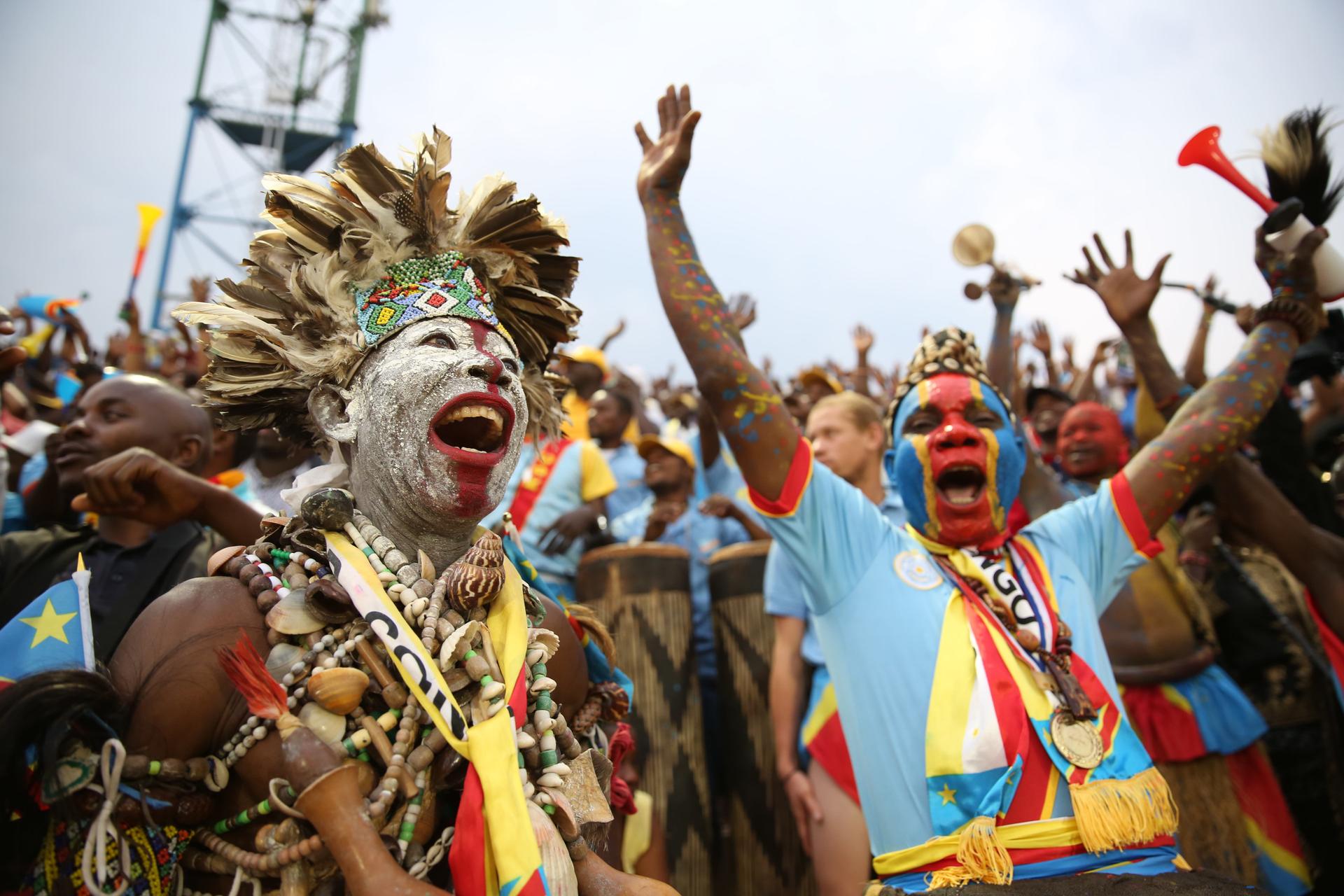
Every time the Democratic Republic of Congo played at this year's African football showpiece, one man in the crowd did not move. While thousands around him sang and jumped, Michel Kuka Mboladinga stood perfectly still, arm half-raised, dressed in his country's colours, holding a pose modelled on a statue of Patrice Lumumba, the independence leader executed in 1961. Fans nicknamed him "Lumumba Vea." His silent tribute made him famous across the continent, and the Congolese government thanked him with a four-wheel-drive.
When DR Congo reached the 2026 World Cup in the United States, Mboladinga expected to bring the same devotion to the stands. Instead, he watched his team's must-win group game against Uzbekistan in Atlanta from thousands of miles away. He had not been granted a US visa.
His absence, reported by Reuters, is one small story inside a much larger one. The first World Cup jointly hosted by the United States, Canada and Mexico was sold as football's most global edition yet — 48 teams, more nations, more fans. But for large parts of Africa, the tournament has unfolded behind a wall of visa refusals, and the people missing from the stands are telling a story that the scorelines cannot.
When the ticket was the easy part
For many African supporters, buying a match ticket and booking a flight turned out to be the simple part. The hard part was the US consulate.
Senegal, one of the continent's strongest sides, travelled to the tournament without an official supporters' delegation for the first time — its fans left to watch from home after visas were refused, according to France 24. The Associated Press reported that supporters from roughly a quarter of the qualifying nations faced travel bans, tightened entry rules or high US visa refusal rates. Iran's football authorities publicly urged FIFA to intervene over what they called "really terrible" treatment of their travelling party.
The result is visible from the broadcast gantry. AP noted that in one match Côte d'Ivoire's supporters outnumbered Ecuador's by something like 130 to one; in another, Spain's fans outnumbered Cape Verde's roughly nine to one. The disparity is not about passion. It is about which passports open the door.
A superfan grounded
Mboladinga's case captures how many gates a single African fan has to pass through. He rose to prominence at the Africa Cup of Nations in Morocco at the start of the year, his stillness a deliberate act of remembrance. He bears a striking resemblance to Lumumba, and his colourful suits and raised arm turned him into a symbol far beyond football.
Getting to America was another matter. His arrival at the World Cup was first delayed by travel restrictions imposed on people coming from DR Congo because of an Ebola outbreak — an epidemic that, by late June, government data put at more than 1,200 confirmed cases and over 300 deaths. He eventually reached the tournament in time for the group's final round, only to be absent for the decisive fixture in Atlanta.
The Congolese ambassador in Washington, Kapinga Yvette Ngandu, told Reuters she hoped he would secure a visa if the team advanced. "I hope he brings his own brand of support to the team," she said. For a supporter whose entire act is about presence — about simply being there, unmoving — the enforced distance was its own kind of statement.
The empty half of the stadium
FIFA has spent years marketing the World Cup as a celebration that belongs to everyone. Yet the images beaming out of American stadiums this summer show something more selective: full sections of European and Latin American colour, thin scatterings from Africa.
That imbalance matters beyond aesthetics. A home crowd, or the lack of one, shapes atmosphere, morale and the sense that a team is truly represented on the world stage. When a nation reaches the biggest tournament in the sport for the first time — as several African and smaller footballing countries did this year — and its people cannot follow, the milestone is hollowed out. Cape Verde, the smallest nation ever to reach the knockout rounds, made history on the pitch; many of its supporters could only celebrate it from the islands.
What the diaspora sees from the cheap seats
For the African diaspora already living in the United States, the tournament has become a mirror. In host cities from Atlanta to Seattle, Kenyan, Nigerian, Ghanaian and Congolese communities have filled bars, churches and fan zones, adopting neighbours' teams and turning living rooms into stand-ins for stadiums they helped fill the demand for.
They are also watching a policy they know intimately. The same visa regime that kept Senegalese and Congolese fans at home is the one that has reshaped their own lives this year: sharply higher refusal rates, a new $750 fee for priority US visitor-visa appointments, and a broader tightening that has pushed some long-settled Africans toward the exits. For Kenyans in America — whose community has spent recent weeks absorbing news of detentions, self-departure offers and court fights over citizenship — the sight of fellow Africans turned away from a football match lands as something familiar rather than surprising.
The World Cup, in that sense, has become an unusually public audit of who America is willing to let in. Most visa decisions happen in silence, one applicant at a time. This time the refusals have a scoreboard beside them.
The cost of a closed door
None of this changes the football. DR Congo, Senegal, Cape Verde and the rest will be judged on results, and the tournament will crown a champion regardless of who filled the seats. But a World Cup is also a claim about the world — about who is welcome to gather and cheer in one place.
For now, that claim looks narrower than the branding suggests. Michel Kuka Mboladinga's motionless pose was always meant to say something about memory and belonging. His absence from Atlanta said it more loudly than any performance in the stands could have. Somewhere between a ticket bought in hope and a visa never granted lies the real story of Africa's 2026 World Cup — a continent invited to play, and too often told to watch from home.
