From a Camp to a Stadium in Seattle: How Refugee and Diaspora Roots Are Quietly Rewriting the 2026 World Cup
A teenager born in an East African refugee camp scored for Australia this month. From Nairobi, his goal looks less like an outlier than a sign of how migration is remaking football.
The first time Nestory Irankunda touched the ball at this World Cup, he was nineteen years old and a long way from where his life began. In the twenty-seventh minute of Australia's opening match against Turkey, he steadied himself, struck, and watched the net move. The 2-0 win mattered less, in the end, than the line it wrote into the record books: the youngest Australian ever to score at football's biggest tournament. Days later, on June 19, he was back on the pitch in Seattle, this time facing the host United States, one more teenager carrying a continent's worth of detours in his boots.
What the broadcast graphics could not capture is how far that goal had already travelled before it crossed the line. Irankunda was born in 2006 in a refugee camp, to a family that had fled the long civil war in Burundi. Within months of his birth, the family was resettled in Australia, first in Perth and later in Adelaide, where a restless boy with fast feet would grow into a forward good enough to be sold to Bayern Munich. The story is, in its bones, a story about movement — about the way conflict, displacement and migration keep redrawing the map of who plays for whom.
A goal that travelled further than the ball
For East African readers, the most striking detail is where the journey started. Kenyan outlets, including the Daily Nation, have placed Irankunda's birth at Kakuma, the sprawling refugee settlement in Turkana County that has become a byword for the region's decades of displacement. Other accounts of his life describe a camp across the border in Tanzania, where many Burundians fleeing the war were sheltered in the same years. The precise dot on the map is contested; what is not in dispute is the shape of the story — a child born into statelessness who, two decades later, would wear a national jersey on the world's largest sporting stage.
That ambiguity is itself revealing. The camps of East Africa rarely keep tidy records, and the children born inside them often carry birthplaces that shift depending on who is telling the story. Irankunda's rise does not erase that uncertainty; it simply lifts one name out of it. His goal against Turkey was a personal milestone, but it was also a reminder that the region's refugee infrastructure — Kakuma, Dadaab, the transit camps of Tanzania and Uganda — has been quietly producing citizens of other countries for a generation.
The camp that keeps appearing in the story
Kakuma was never built to last. It opened in 1992 as an emergency response and has instead become one of the largest refugee settlements on earth, home to hundreds of thousands of people from across the Horn and the Great Lakes. For most of its residents, the camp is a waiting room with no clear exit. For a small number, resettlement abroad has been the door out, and the children of those families have grown up Australian, Canadian, American or British, fluent in the languages and loyalties of their new homes.
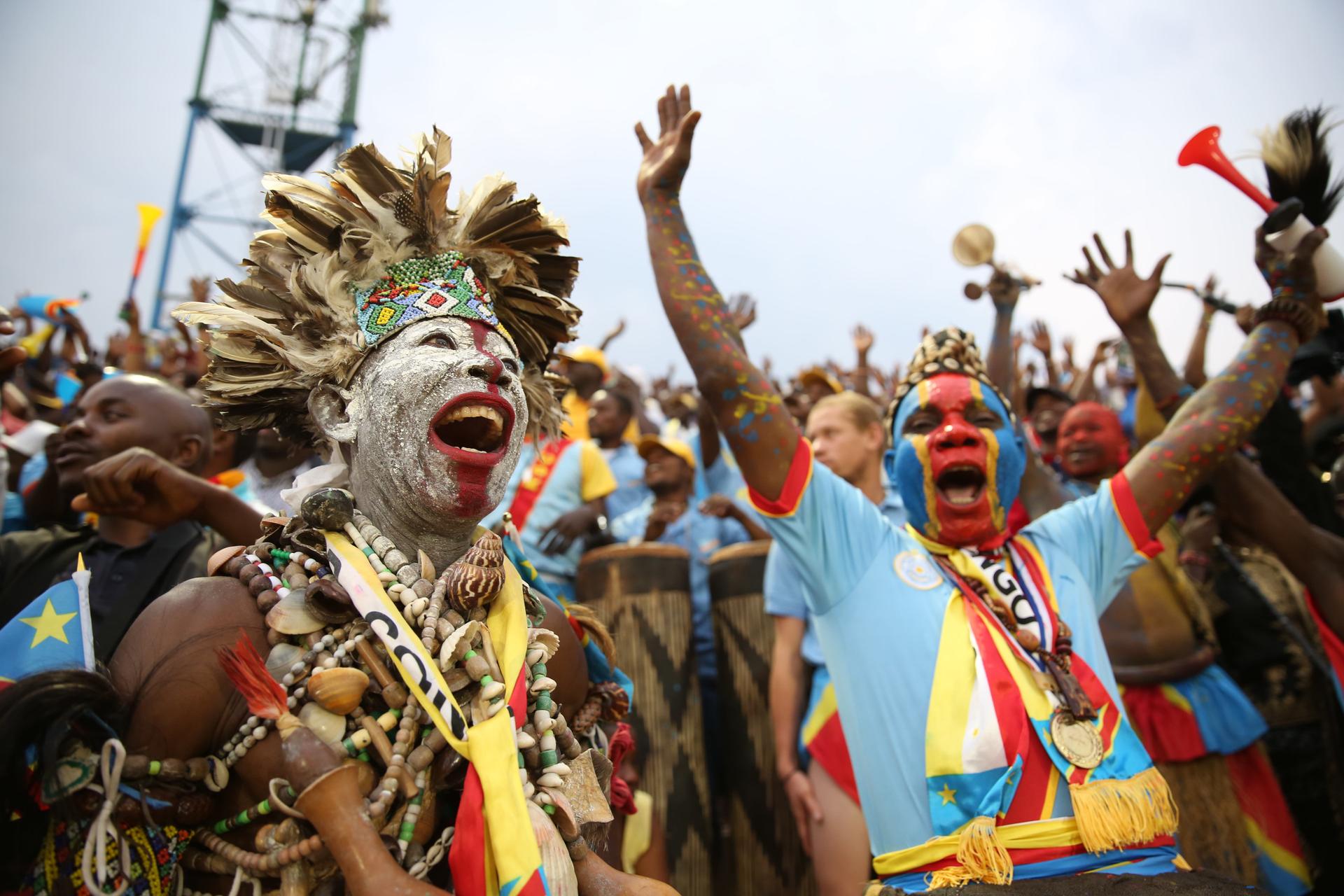
Football has a way of making those quiet migrations visible. When a player with East African roots scores for a distant flag, the region notices, and the noticing is complicated. There is pride, and there is also a familiar ache — the sense that talent born in the camps so often has to leave the continent to be seen. Irankunda is the vivid example this month, but he is not alone. Australia, like many squads in this tournament, fields several players whose families arrived as refugees, a fact its own football associations have long celebrated in their outreach to displaced communities.
A tournament remade by migration
Zoom out from any single player and the pattern becomes the story. This World Cup, the first staged across the United States, Canada and Mexico, runs from June 11 to July 19 with a record 48 teams and 104 matches. It is also, by some distance, the most diasporic edition ever played. A relaxation of FIFA's eligibility rules has allowed dozens of players to represent nations other than the one in which they were born, and squads from Africa, the Caribbean and the Gulf increasingly lean on talent raised abroad.
The examples run in every direction. Qatar's roster includes players born in Khartoum and Mogadishu, East Africans by birth who came to football through a Gulf academy system. European sides field children of African migration who chose, at the senior level, the country of their parents over the country of their passport, or the reverse. The neat idea that a national team mirrors a single nation has been quietly retired. What remains is messier and, arguably, more honest: a tournament that looks like the modern world, with all its border crossings stitched into the team sheets.
For Kenya, which has never qualified for a World Cup, this is a particular kind of bittersweet. The country watches the tournament not through its own flag but through the scattered children of its region, and through the camps inside its own borders that have, almost incidentally, helped supply other nations' dreams.
What it costs to follow the team
If the players move freely, their supporters do not. Attending this World Cup has been ruinously expensive for African fans, several times costlier than recent editions once flights, tickets and accommodation across three vast host countries are tallied. The bureaucratic hurdles have been steeper still. A visa-bond scheme that would have required fans from five African qualifying nations to lodge deposits of up to 15,000 US dollars was suspended in May 2026 for confirmed ticket holders, easing but not erasing the barrier. A separate travel measure has barred ordinary citizens of several countries from obtaining match-attendance visas altogether, with exemptions carved out for players, team staff and their immediate families.
The result is a tournament many East Africans are experiencing almost entirely from home, and at an awkward hour. Unlike the 2022 edition in Qatar, whose kickoff times aligned neatly with East African clocks, the 2026 matches force fans in Nairobi, Kampala and Dar es Salaam to choose between sleep and football, staying up deep into the night or rising before dawn to catch a continent's adopted sons in action.
Watching from Nairobi
There is something fitting in that distance. The diaspora has always experienced home at a remove — through phone calls timed to inconvenient hours, through money sent across borders, through achievements claimed proudly even when the achiever has never set foot in the country being credited. This World Cup simply turns that experience into spectacle. A goal scored in Seattle by a young man born in a camp becomes, for a few minutes, a shared East African possession, replayed on Nairobi phone screens and argued over in WhatsApp groups from Dubai to Minneapolis.
None of it changes the conditions in the camps, or shortens the queue for resettlement, or lowers the price of a plane ticket. But it does insist on a truth the region knows well and the tournament makes briefly undeniable: that the lines between here and there, home and away, ours and theirs, were always more porous than the jerseys suggest. Irankunda will play on, for Australia, with a continent half-claiming him from afar. From Nairobi, that half-claim feels less like borrowing than like recognition — of a story that started in a place no one chose, and travelled further than anyone planned.