A Father's Country, Another Country's Shirt: How Philipp Mwene Became Kenya's Third Son at a World Cup
Born in Vienna to a Kenyan father, Austria's left-back has quietly joined Divock Origi and Martin Olsson in a small, proud lineage — reopening an old question about where home really is.
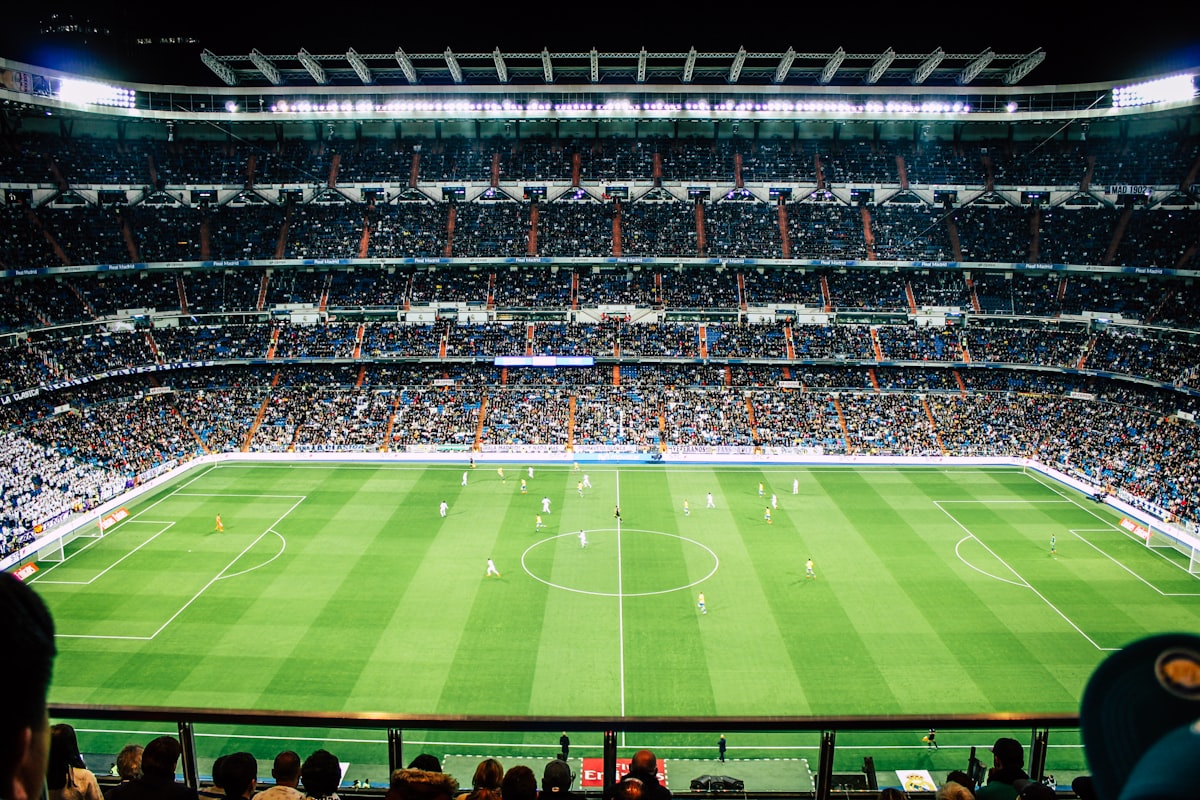
When Philipp Mwene jogged onto the turf at Levi's Stadium in Santa Clara, the name stitched across his shoulders read Austria. But in a scattering of living rooms in Nairobi and Vienna, the people watching were thinking of a different place entirely — the country his father left long before a son would carry it, quietly and almost without announcement, onto the biggest stage in world football.
Mwene, a left-back born in Vienna in January 1994 to a Kenyan father and an Austrian mother, began this World Cup as one more name on a 26-man squad sheet. By the time Austria had beaten Jordan 3-1 in their opening match, he had become something rarer. According to data compiled by Nation Sport, he is only the third footballer of Kenyan descent ever to appear at a Fifa World Cup. It is a small club. It is also a quietly emotional one, because each name in it belongs to a father who once boarded a plane out of Kenya and a son who grew up speaking another country's anthem.
A lineage measured in fathers
Before Mwene, there were two. Divock Origi, the Belgium striker who lit up the 2014 World Cup, is the son of Mike Origi, a former Harambee Stars forward who built a playing career in Europe and raised a boy who would score on the same stage his father never reached. Martin Olsson, born in Sweden in 1988 to a Kenyan father and a Swedish mother, wore the Swedish shirt at the 2018 World Cup in Russia.
Now there is a third. The thread connecting all three is not a passport but a parent. None of them learned their football in Kenya, and none of them will play for Kenya. Yet each carries a Kenyan name and a Kenyan story, and that is enough for a country starved of its own World Cup appearances to feel, for ninety minutes, that it has a stake in the tournament after all.
For Kenyan fans, this is a familiar and bittersweet arithmetic. The nation has never qualified for a World Cup. Its presence at the sport's marquee event has always been borrowed — felt through the bloodlines of players raised in Brussels, Stockholm and now Vienna.
A tournament that keeps speaking East African
Mwene is part of a much larger current running through the 2026 finals. Nation Sport counted 295 players at this year's tournament who were born outside the countries they represent — footballers shaped by migration, by changes to Fifa's rules on switching national allegiance, by colonial history and by the simple fact that families move.
Kenya itself is one of 69 countries to have produced a player for this edition, even without a team in the draw. Across the squads, East Africa keeps surfacing in unexpected places. Australia's forward Awer Mabil, who also played at the 2022 World Cup in Qatar, was born in the Kakuma refugee camp in north-western Kenya to South Sudanese parents and moved to Australia at the age of ten. His Socceroos teammate Nestory Irankunda, just 20, was born to Burundian parents in a camp in Kigoma, Tanzania, and arrived in Australia as an infant. Qatar's squad includes four players with roots in Sudan and Somalia.
These are not footnotes. They are reminders that the map of global football is drawn, increasingly, by the same forces that shape the diaspora itself: displacement, opportunity and the long reach of family ties.
The rules that redrew the pitch
How did a left-back from Vienna come to embody Kenya at a World Cup? The answer lies partly in the way the modern game has loosened its definition of belonging. Fifa's regulations on the transfer of national allegiance, combined with decades of migration and Europe's hunger for talent, have made dual heritage one of the defining features of the international game.
Some nations have leaned into it almost entirely. Debutants Curaçao arrived with a squad of 25 foreign-born players. France, and Paris in particular, has become a factory for the world: Nation Sport noted that a record number of this tournament's players were born in France or its overseas territories, scattered across nearly a dozen national teams. African squads, too, draw heavily on a European-raised diaspora, with Morocco, Algeria, Senegal and others fielding sons of emigrants.
Against that backdrop, Mwene's story is both ordinary and special — ordinary because so many players now share a similar inheritance, special because, for Kenya, the well runs so shallow that every drop counts.
What Harambee Stars sees in the mirror
There is a harder question buried in the celebration. If Kenya can produce, by descent, footballers good enough for the World Cup, why can it not produce a team good enough to reach one? The success of the diaspora's sons is a mirror held up to the country's own football administration, with its perennial struggles over funding, governance and youth development.
For now, Kenyan supporters tend to set that debate aside in the moment. When Mwene overlaps down the left for Austria, the conversation in WhatsApp groups from Kayole to Kennesaw is less about the federation's failures than about a name that sounds like home appearing on the world's biggest screen.
The diaspora in the stands
That, ultimately, is why these players matter to readers far from Nairobi. The Kenyan diaspora has spent this tournament doing what it does best — claiming its own across borders. Fans in the United States, where many of the matches are being played, have turned out to watch a left-back most of them had never heard of a month ago, simply because his father came from the same soil they did.
Mwene may not score the goal that defines this World Cup. He may not even start every match. But he has already done something that lingers: he has given a country without a team a reason to lean toward the screen, and given a diaspora one more name to fold into its long, stubborn story of belonging to two places at once.