The List Kenya Refused to Be On: How a Five-Day Ebola Travel Ban Collided With 80,000 Clean Tests
Israel barred travellers from five African nations over an Ebola outbreak centred in Congo. Kenya, with no recorded case, protested — and within days was struck from the list.
A Notice in Tel Aviv, a Jolt in Nairobi
For a Kenyan nurse in Haifa planning a July trip home to bury an uncle, the first sign of trouble was not a headline but a quiet warning from a friend who books flights for a living: check the rules before you fly, because Kenya is suddenly on a list.
The list was real. On 10 June, Israel's Population and Immigration Authority circulated a notice instructing airlines to deny boarding to foreign nationals who had passed through Kenya, Uganda, Rwanda, South Sudan or the Democratic Republic of Congo within the previous 21 days. Carriers were told to comb passengers' recent travel histories and turn away anyone who triggered the rule. Israeli citizens and permanent residents were exempt. Everyone else, including the wide community of Kenyans who shuttle between Nairobi and the Middle East for work, study and family, was not.
The measure was framed as a precaution against Ebola. For thousands of Kenyans abroad, it landed as something more personal: a foreign government had quietly decided that a passport stamped in Nairobi was now a reason to keep you off a plane.
The Outbreak That Drew the Border
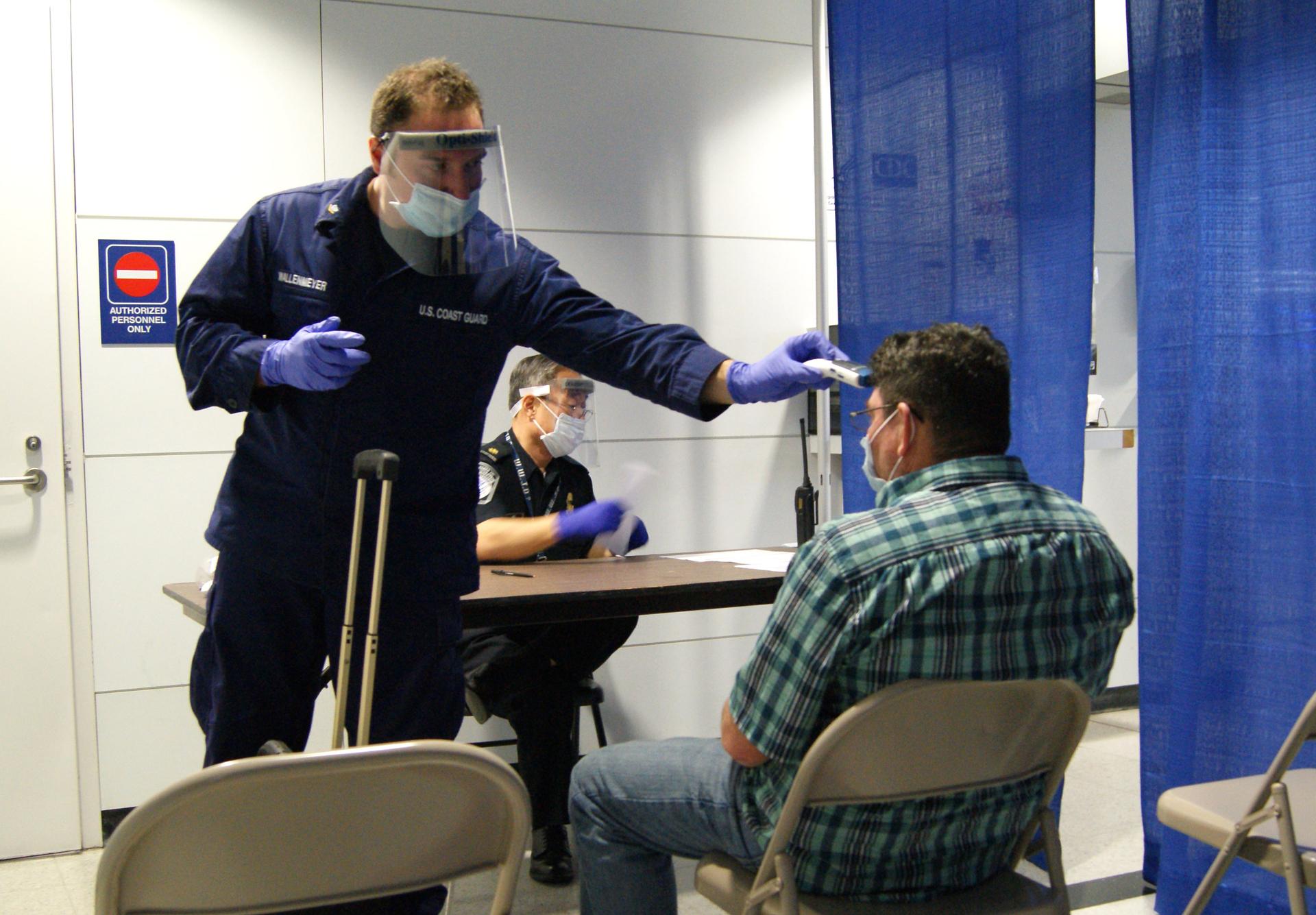
The fear behind the notice was not invented. An Ebola outbreak had taken hold in the region, with the epicentre in the Democratic Republic of Congo. By mid-June, the World Health Organization and Congolese authorities had logged 782 cases and 181 deaths in what is the country's seventeenth recorded outbreak, with the disease still confined to three eastern provinces — Ituri, North Kivu and South Kivu. Ebola is among the diseases that move governments to act first and refine later; its case-fatality rate and history of cross-border spread make health ministries nervous about waiting for certainty.
Israel's response followed a familiar template used by many countries during outbreaks: draw a geographic ring around the affected zone and restrict movement from every country inside it. The logic is blunt by design. Rather than assess each nation's individual risk, a blanket rule treats a region as a single hazard and errs toward exclusion. It is fast, it is legally simple, and it sweeps up countries on the strength of their neighbourhood rather than their numbers.
That bluntness is precisely what Kenya objected to.
Kenya's Case: 80,000 Tests, Zero Confirmations
On 15 June, Kenya's Principal Secretary for Foreign Affairs, Abraham Korir Sing'Oei, issued a formal protest. "Kenya strongly protests the decision by Israel to include the country amongst those whose travellers it will restrict," he said, arguing that the listing failed to reflect the country's public health record and its investment in disease surveillance.
His central number was hard to argue with. Kenya, he said, had conducted more than 80,000 Ebola tests without recording a single confirmed case. The country sits at a crossroads of regional travel and has long served as a monitoring and preparedness hub for East and Central Africa, working with neighbours on cross-border screening precisely so that an outbreak elsewhere does not become an outbreak everywhere. To be placed on a restriction list despite that work, Nairobi argued, was not just inaccurate; it risked broadcasting a misleading picture of a health system that had, by its own metrics, performed.
Kenyan officials also pointed to the practical fallout. A travel restriction does not only inconvenience passengers. It dents confidence in a country's airports and hospitals, complicates trade, and strains a diplomatic relationship — all on the basis of a disease the country had tested for tens of thousands of times and never found.
Why the Diaspora Watched Closely
For Kenyans living overseas, this kind of story carries a weight that goes beyond one country's entry rules. Much of the diaspora's life is built on the assumption of movement: the ability to fly home for a funeral, to return after a wedding, to keep a job in one country and a family in another. A blanket ban tied to geography rather than evidence threatens that assumption directly, and it does so without warning.
There is also the quieter sting of stigma. Diaspora communities spend years building reputations as nurses, engineers, drivers and entrepreneurs, only to watch a single official notice fold their home country into a category defined by an outbreak it does not have. The Kenyan nurse in Haifa was not in Congo. She had not been near a case. Yet for five days, the rules made no distinction between her itinerary and the epidemic's epicentre.
That is why the protest from Nairobi mattered to people far from it. It was, in effect, the state arguing on behalf of every citizen whose travel plans had just been thrown into doubt by a line on a list.
A Reversal in Five Days
The pushback worked, and quickly. On 15 June — the same day Sing'Oei's statement landed — Israel's Ministry of Health removed Kenya and Rwanda from the roster of countries facing the temporary Ebola-related restrictions. The Israeli Embassy in Nairobi announced the reversal, easing curbs that had clouded relations between the two governments almost as soon as they appeared.
The speed of the climbdown is its own data point. It suggests the original listing was a precautionary reflex rather than a considered judgment about Kenya's specific risk, and that once Nairobi presented its surveillance record, the case for keeping Kenya on the list collapsed. Restrictions on the other named countries, closer to or inside the outbreak zone, were not described in the same terms.
For travellers, the practical effect was immediate relief: a Nairobi stamp was no longer a barrier to boarding a flight to Israel. For the diplomats, it was a small, swift win — the kind that rarely makes a lasting headline but quietly protects thousands of journeys.
What the Episode Leaves Behind
The five-day ban is over, but the questions it raised are not. Outbreaks will keep prompting governments to reach for blunt geographic tools, and countries with clean records will keep finding themselves swept into restrictions written for their neighbours. Kenya's experience shows both the cost of that approach and the value of a state that can answer it with numbers.
It also offers the diaspora a lesson worth keeping. Movement that feels permanent can be suspended overnight by a notice in another capital, and the best defence is often an evidence trail — tests run, cases tracked, systems documented — that a government can put on the table when a border suddenly closes. Kenya had that trail this week, and it was enough to get off the list. The Ebola outbreak that triggered the alarm, still burning in the region, remains the more serious and unfinished story.
Ebola and outbreak response are sensitive public-health topics; readers seeking guidance on travel or testing should rely on official health authorities and their own governments' current advisories.