The Lab Result From Kagaari North: How Embu's First Mpox Case Lands on Every Diaspora Visit Home This June
A 29-year-old woman in Runyenjes returned a positive sample on May 30. By Monday, Embu had become the 39th Kenyan county on a list that quietly decides who flies in, who flies out, and who pays for the swab.
The first thing Jamal Runyenje had to do on Monday morning was read a one-page lab report a second time. The Embu County executive committee member for health had been waiting on the result since the weekend, when a nurse in Runyenjes Sub-County packaged a swab from a 29-year-old woman in Kagaari North Ward and sent it off for testing. By dawn on May 30, the laboratory had its answer, and by the time Embu's Tuesday newspapers landed in Nairobi and London and Lowell, Massachusetts, the county had its 39th uninvited guest: confirmed Mpox.
Runyenje's statement, released through Governor Cecily Mbarire's administration, asked residents to "remain calm but vigilant." That is the careful language of a public-health official who knows two things at once: that a single case in a Mt Kenya county is not a crisis, and that for tens of thousands of Embu, Kirinyaga and Meru families with sons and daughters abroad, it is still enough to redraw the map of a June visit.
What the May 30 sample said and what came next
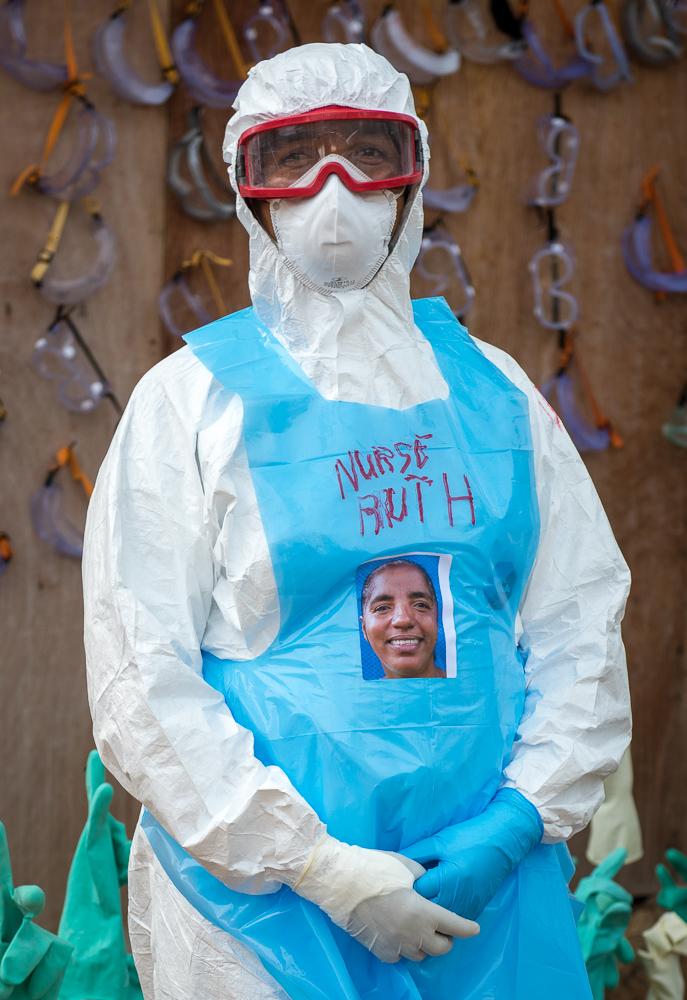
The woman at the center of the announcement lives in Kagaari North Ward, inside Runyenjes Sub-County, a coffee belt that climbs up the eastern flank of Mt Kenya. According to Embu's health department, samples were drawn after she presented with symptoms consistent with Mpox, and laboratory results received on May 30 confirmed the infection. By the time the county made the announcement public, contact tracing was already underway.
The response menu, as Runyenje described it, is the standard outbreak playbook: case investigation, active case search in the patient's immediate community, enhanced surveillance at health facilities across the county, infection-prevention measures inside clinics, and a public-information push that asks anyone with fever, swollen lymph nodes, body aches or unusual skin lesions to come in immediately. Every health facility in Embu, the statement noted, has been placed on heightened alert.
None of this is unusual. It is, in fact, exactly what Kenya's surveillance system was designed to do. What is unusual is the route the story takes from the Runyenjes clinic to a WhatsApp group in Atlanta within the same news cycle.
A virus that has already crossed thirty-eight county lines
Mpox is not new to Kenya. By the most recent national tally, the country had recorded more than a thousand cases spread across 38 counties since the outbreak that began in mid-2024, with a reported case fatality rate of roughly 1.7 per cent. Mombasa, sitting on the highway and rail spine that links Nairobi to the port, has carried the largest county-level burden. The transmission map has tracked the country's transport corridors with depressing precision: long-haul drivers, traders crossing borders, market towns where buses idle for hours.
The Ministry of Health says it has screened more than 8.8 million travellers at points of entry since the outbreak began, and last year designated Terminal 1A, Gate 16 at Jomo Kenyatta International Airport as the dedicated arrivals lane for passengers from Uganda and Tanzania, where Mpox, Marburg and Ebola have all flared at different points. Vaccination campaigns through late 2025 prioritised truck drivers and sex workers along the transport routes the virus seemed to be using as a ladder.
Against that backdrop, Embu joining the list is less of a surprise than a tick on a timeline. The point of the surveillance was always to detect the 39th county the day it became the 39th, not the week or month after. That part of the system, on this evidence, worked.
The CDC notice that was always going to land somewhere
What makes a Mt Kenya county case different from a port-town case is who is reading it. Last year, the United States Centers for Disease Control added Kenya to its Mpox Level 2 Travel Health Notice, the middle tier of its colour-coded warning system. Level 2 does not stop anyone boarding a plane to Nairobi. What it does is land in inboxes. Travel-medicine clinics in Boston, Minneapolis, Dallas, Manchester and Toronto print it. Group leaders organising mission trips read it. Panel physicians conducting US immigration medical exams ask the questions it prompts. Insurance adjusters scanning whether a claim is covered look at it.
The Australian government's Smartraveller advisory, the UK Foreign Office briefing and the Canadian Public Health Agency all carry their own variants of the same notice. None of them is meant to discourage travel to Kenya outright. All of them are meant to remind a returning passport-holder that public-health officials at the other end will ask about symptoms. A new county appearing on the Kenyan outbreak map, especially one in the densely-travelled Mt Kenya corridor, is the kind of update those advisories revise upward, not downward.
Why Embu changes the calculus for the Mt Kenya diaspora
The map of the Kenyan diaspora is not evenly drawn over the country. Mt Kenya — the region that takes in Embu, Kirinyaga, Meru, Tharaka-Nithi, Nyeri and Murang'a — is one of its densest source basins. Kenyan associations in the US Midwest and the UK's North-West are filled with surnames that trace back to villages a short matatu ride from Runyenjes. June and July are peak return-home months: a school break in the diaspora calendar, a long stretch of dry weather in the Mt Kenya foothills, a season of weddings and funerals that anchor families across two continents.
Those visits do not change because one case has been confirmed. They become more administered. A child travelling from Boston now has a heavier conversation with the family doctor before the flight. A nurse coming home from Manchester reads the CDC notice with different eyes. A returning Embu daughter planning a fortnight at her grandmother's coffee farm in Kagaari now thinks about whether her mpox vaccine is current, whether her travel insurance covers an antiviral course, whether she can produce a vaccination card if asked at JKIA on the way back. None of that is panic. All of it is friction.
The Ebola shadow at the same time
The Embu announcement also lands inside a wider regional health story. The Health Cabinet Secretary, Aden Duale, has been reassuring Kenyans for weeks that Kenya remains free of confirmed Ebola cases, even as a cluster in the Democratic Republic of Congo and the United States's controversial plan for a quarantine field hospital at Laikipia Air Base have dominated front pages. A Kenyan court has temporarily suspended the Laikipia facility pending consultation with affected counties. Three suspected Ebola cases involving travellers from the DRC have all tested negative.
The Embu case has nothing to do with Ebola. They are different viruses, different transmission patterns, different vaccines. But for a diaspora reader scrolling through the morning's Kenyan headlines from a kitchen in Texas, the two stories arrive in the same swipe, and the cumulative effect is a country that suddenly looks busier on the public-health map than it did at Easter.
What diaspora families should actually do this week
Public-health doctors who work with returning Kenyan travellers offer a short, unglamorous list. Check whether your mpox vaccination is current. If you are visiting a household with infants, immunocompromised relatives or pregnant women, raise it with their clinician before you arrive. Know which county hospital handles isolated suspected cases in the area you are visiting, and keep the Ministry of Health's hotline saved on your phone.
Above all, watch how the next two weeks unfold in Embu. The county's surveillance has just had its proof-of-concept moment. If the contact-tracing teams in Runyenjes can ring-fence the spread before it leaves Kagaari North Ward, Embu's first case will read, in retrospect, as a system working as designed. If not, this week's quiet announcement from a Mt Kenya governor's office will be the line every later story dates itself from.