The Base At Laikipia: How an American Ebola Plan and a Nairobi Court Order Put Kenya Between Washington and Its Own Doctors
A 50-bed quarantine unit for Americans, an interim court injunction, and a June 2 hearing have made a US-Kenya health pact the most contested diaspora story of the week.
On Saturday afternoon, a small group of American officials in plain clothes stepped off a charter aircraft at Laikipia Air Base, a Kenya Defence Forces installation about 125 miles north of Nairobi. They carried medical kits, briefing folders, and the quiet authority of a federal agency that has just begun a deployment. Within hours, Kenya's Ministry of Health confirmed what diaspora WhatsApp groups had been buzzing about since the week before: a 50-bed isolation and treatment facility for Americans potentially exposed to Ebola, paid for and partly staffed by the United States, was being stood up on Kenyan soil while the case challenging its legality was still pending in a Nairobi courtroom.
For Kenyans abroad, the optics are extraordinary. A country that has recorded no Ebola cases is now hosting a containment unit for citizens of another country, built to absorb the medical risk of an outbreak more than 1,500 miles away in the Democratic Republic of Congo. On Monday, June 2, High Court Judge Patricia Nyaundi will hear the next stage of the legal challenge that briefly paused the project last week. Until she rules, the facility's status is a question, but its political weight is already heavy on both sides of the Atlantic.
A 50-Bed Unit, Then a Court Order
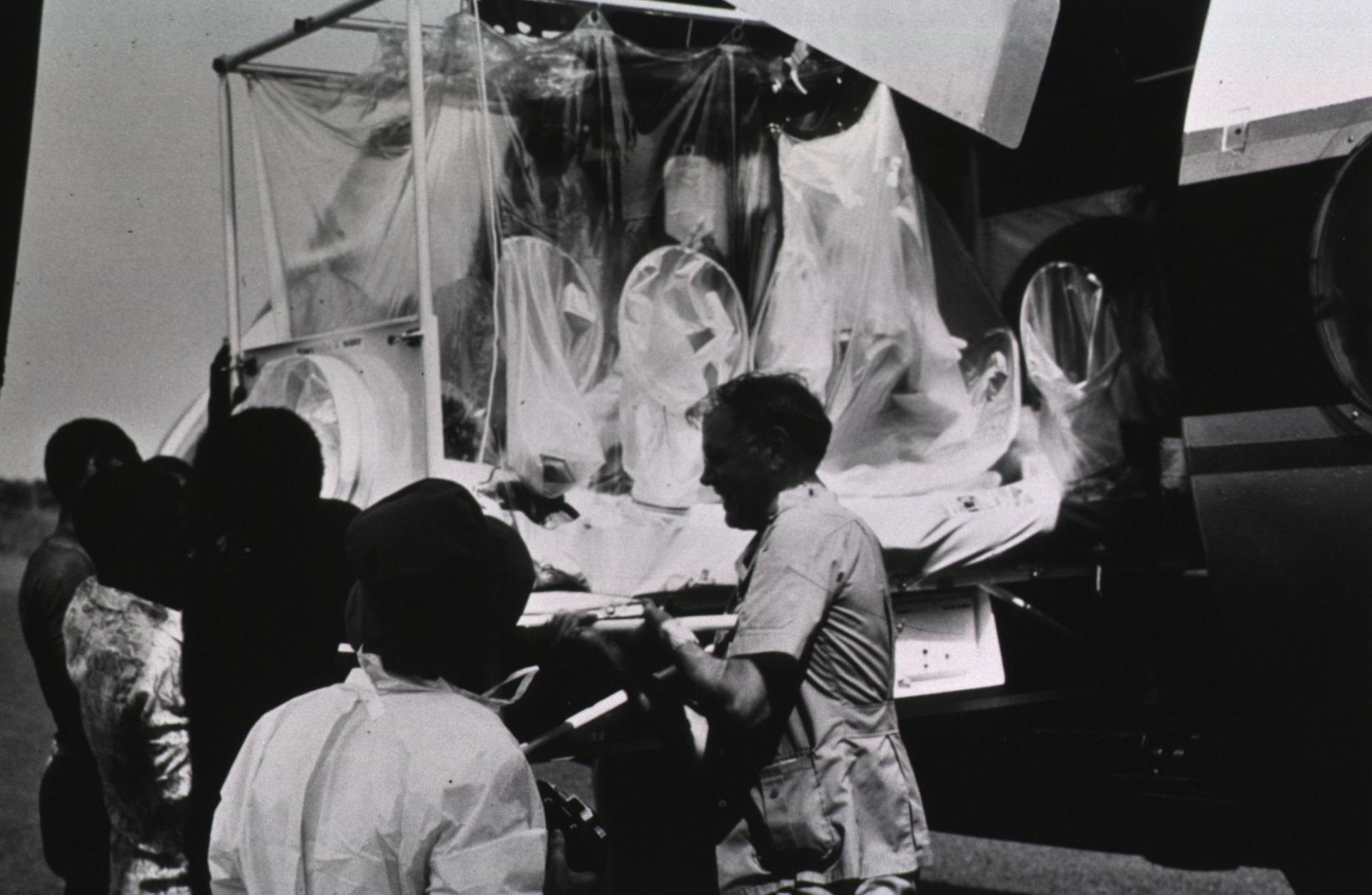
The arrangement was announced from Washington on Wednesday, May 27. A senior Trump administration official told reporters that the State Department, the Department of Health and Human Services, and the Department of War had agreed with Nairobi on a "state-of-the-art" 50-bed quarantine unit at Laikipia, designed to receive Americans evacuated from the DRC before any symptoms emerged. The US Public Health Service Commissioned Corps would supply physicians, nurses, laboratory technologists and engineers, including officers who worked the 2014-2015 West Africa response.
Secretary of State Marco Rubio framed the plan in stark terms during a White House cabinet meeting. "We cannot and will not allow any cases of Ebola to enter the United States," he said. The administration's preference, officials explained, was speed: an Atlantic medevac flight from Kinshasa can take twelve hours or more, and the Bundibugyo strain driving the outbreak has no approved vaccine or treatment. Cutting transit time, the argument went, would save American lives.
Within forty-eight hours, the plan was in court. The Katiba Institute, a civil society group focused on constitutional issues, filed a challenge. On Thursday night, Judge Nyaundi issued an interim order barring Kenya from "establishing or operating any Ebola-related facility" under foreign agreements, or admitting anyone exposed to or infected with the virus into the country, until the petition is decided. The case is scheduled for June 2.
Why Kenya, and Why Now
The siting decision has been the hardest part of the announcement to explain. Laikipia is closer than Frankfurt and far closer than New York to the DRC, but it is also a politically charged location. Kenya hosts a substantial American military and humanitarian presence, and the country's foreign policy has tilted toward Washington since the renegotiation of bilateral aid and the relaunch of the wider US global health strategy this year. Sources familiar with the talks say the Kenyan government accepted the facility partly in exchange for continued health funding that had been at risk in the broader USAID drawdown.
Inside the cabinet, the choice has been defended as humanitarian and operational. Outside, it has been read as something else. Dr. Davji Bhimji Atellah, secretary-general of the Kenya Medical Practitioners, Pharmacists and Dentists Union, did not mince words. "What makes the US choose Kenya when the epicenter of the outbreak is in Congo?" he asked. "We will not sit back and watch Kenya be treated as a containment colony for a lethal pathogen that we did not generate. If it is too dangerous for America, it is too dangerous for Kenya."
The Outbreak Across the Border
The medical context is unsparing. The current DRC outbreak, officially declared on May 15, has produced more than 1,000 suspected cases and at least 238 suspected deaths. The World Health Organization has classified it a public health emergency of international concern, and the Red Cross has named ten African countries it considers at elevated risk, with Kenya, Uganda and Rwanda among them. Uganda has already confirmed seven cases and one death. One Brazilian patient in Sao Paulo is being tested after returning from the DRC. Two suspected cases in India and two in Italy were both ruled negative.
For Kenya's health system, the numbers are not abstract. The country has spent the past three years rebuilding cholera response capacity after the 2024 outbreak that touched Nairobi, Kisumu, Migori and Kwale. Public hospitals are still understaffed, and infection-control supplies are not evenly distributed. The Ministry of Health says additional isolation centers will be set up at Kenyatta National Hospital and the Kenya National Police Hospital, but the unions argue those announcements were drafted after the political agreement, not before.
What the Diaspora Is Asking
For Kenyans in the United States, the questions are domestic and immigration-shaped. The State Department's worldwide travel notice issued on May 28 redirects US-bound passengers from the DRC, Uganda and South Sudan through four designated airports, Washington-Dulles, Atlanta, Houston and JFK, and bars lawful permanent residents who have spent time in those three countries in the previous twenty-one days from entering the United States. The Kenyan passport is not on that list, but several Kenyan green card holders who travel through Entebbe or Bujumbura on family business have begun calling immigration lawyers in Houston and Atlanta to ask whether their next return will trigger enhanced screening.
For Kenyans in Nairobi with relatives in the diaspora, the worry is the reverse. A facility at Laikipia is, in practice, a runway into the country for foreign nationals who may be incubating a virus that has no approved treatment. Several US-based Kenyan physicians have signed a letter asking the Ministry of Health to publish the bilateral agreement, the staffing roster and the biosafety protocol before any patient is admitted.
The June 2 Hearing and the Days After
Judge Nyaundi's courtroom on Monday will not, by itself, settle the broader argument. A constitutional petition of this scale tends to move in stages, and the government has signalled that even if the interim order is extended, the logistical setup at Laikipia will continue under the heading of "preparedness." A US Health and Human Services spokesperson confirmed last week that the deployed team had been ordered to support care, monitoring and quarantine of American citizens departing the DRC "as part of a coordinated interagency effort."
If the court allows the facility to operate, it will become the most visible American medical footprint in Kenya since the height of the PEPFAR years. If it does not, the United States will need to find a different host on the East African coast, or accept the medevac time it tried to avoid. Either way, the diaspora is paying close attention. The story sits exactly where the most consequential ones in this community always sit, at the intersection of immigration, health and a foreign-policy decision made over their heads.