The Fifty Beds at Laikipia: How a Kenyan Court's Ebola Order Pulled the Diaspora Into a US Health Partnership Reckoning
A High Court suspension of a US-funded quarantine field hospital has reopened a $1.6 billion partnership and put Kenyan health workers abroad in an awkward middle.

On Saturday, a small group of Americans in dark windbreakers stepped off a transport plane at Laikipia Air Base, about 200 kilometres north of Nairobi. By Monday morning, their job description was the subject of a court order in Milimani, a political fight in Mt Kenya, and a knot of group chats stretching from Atlanta to Manchester. The Americans had come to set up a 50-bed field hospital. The question Kenyans at home and abroad were now asking was whether the hospital should be allowed to open at all.
The orders came from High Court Judge Patricia Nyaundi late Thursday night, after the Katiba Institute, a Nairobi-based constitutional rights organisation, filed an urgent application arguing that the planned US-staffed Ebola quarantine facility had been agreed to without public participation or parliamentary oversight. The judge barred the Kenyan government from establishing or operating any Ebola-related facility under agreements with foreign governments, and from admitting anyone exposed to or infected with the virus, until the case is heard. By Saturday, reports out of Nairobi suggested the project was moving ahead at Laikipia regardless, which has only sharpened the standoff.
For most diaspora Kenyans the headlines arrived through a familiar channel: a WhatsApp screenshot of a Daily Nation alert, forwarded with three question marks. The deeper question is not whether Kenya can host an American field hospital. It is what the December 2025 US-Kenya health partnership has quietly become, and who decided what gets attached to it.
A Quiet Saturday Landing in Laikipia
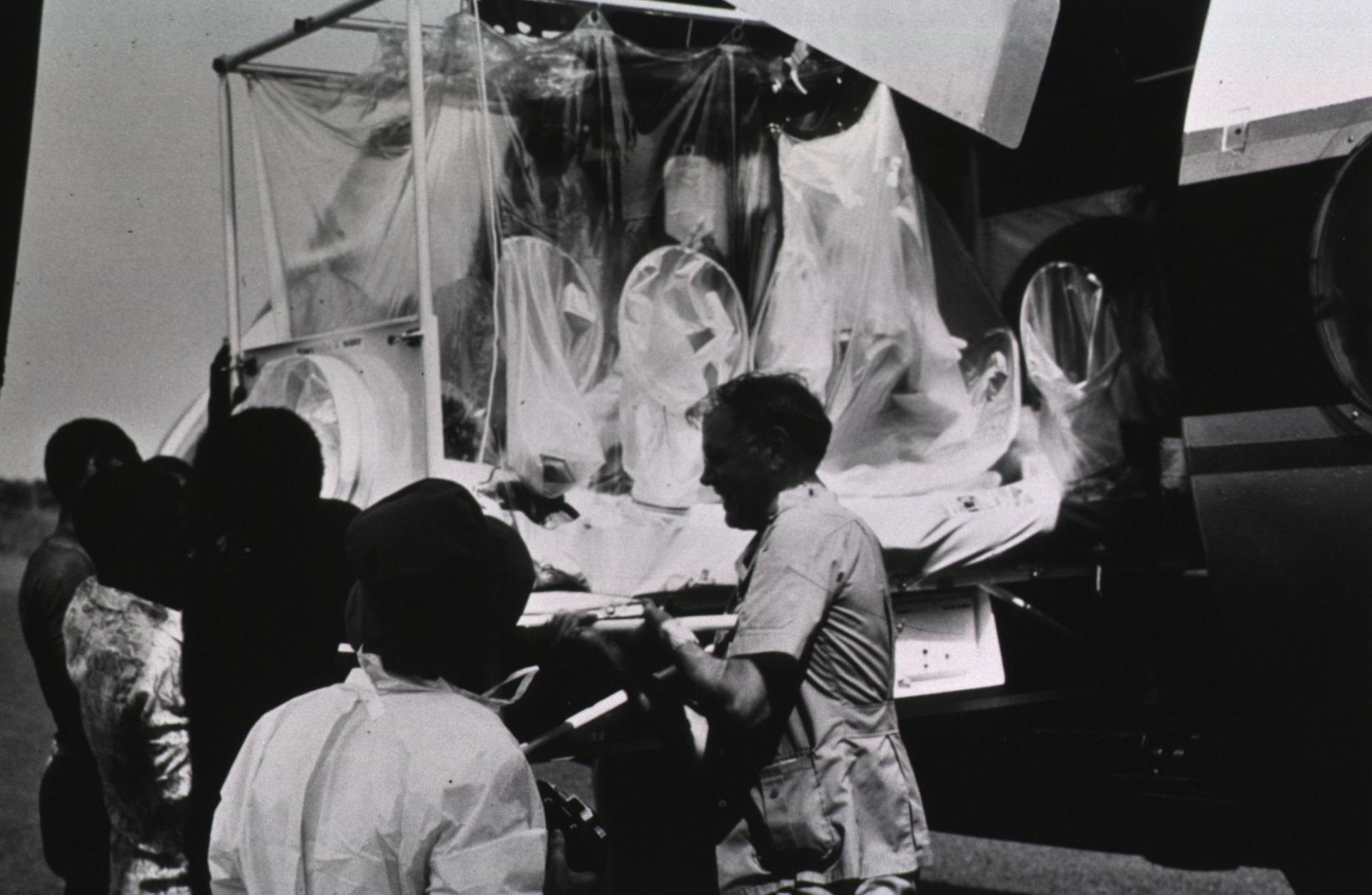
The base sits in dry plains country roughly 1,500 miles from the Ebola epicentre in the Democratic Republic of the Congo. According to multiple international reports, the facility is being designed initially as a 50-bed field hospital, expandable to 250 beds if the outbreak worsens. The intended patients are US citizens — aid workers, missionaries and contractors — who may be exposed to the virus while operating across the region and would be moved to Laikipia instead of being flown back to American hospitals.
Personnel from the US Public Health Service have, by Kenyan and US press accounts, been training for the deployment at Joint Base Andrews in Maryland for weeks. Their landing at Laikipia was meant to be routine. Instead, it coincided with a court order that, on its face, makes their work illegal until further notice. The Kenyan government has been given 48 hours to formally respond.
What the December Deal Actually Promised
The Ebola facility is one clause inside a much larger agreement. In December 2025, President William Ruto, Prime Cabinet Secretary Musalia Mudavadi and US Secretary of State Marco Rubio signed a five-year health partnership in Washington valued at roughly Sh323 billion, or up to $1.6 billion in US funding. The public framing focused on HIV, tuberculosis, malaria, maternal health and disease surveillance — areas where US support has been familiar for two decades through programmes like PEPFAR.
Where the deal departs from previous arrangements is in its outbreak-response language. Tucked into the framework were provisions covering infectious disease preparedness, including the option to stand up US-operated quarantine infrastructure on Kenyan soil. Health Cabinet Secretary Aden Duale has defended the package, telling reporters it protects Kenya's interests while keeping essential services running. Critics counter that the small print on outbreak response was never debated and was not what Kenyans believed they were getting.
Why the Katiba Institute Pulled the Court Order
The Katiba Institute's executive director, Nora Mbagathi, has framed the case in constitutional terms rather than xenophobic ones. Writing on social media platform X after Thursday's filing, she argued that a public health decision of this scale required transparency, public participation, and parliamentary engagement, none of which she said had occurred. The institute also pointed to the right to life and to fair administrative action, suggesting that ferrying Ebola-exposed patients into a country with no confirmed cases is precisely the kind of decision Kenyans should be allowed to weigh before it is made.
The political resonance is wider than the courtroom. Mt Kenya MPs publicly pressured the government over the Laikipia site earlier in the week. Civil society groups and a number of Kenyan doctors have asked, bluntly, why the country should host a quarantine centre for a disease whose current outbreak is more than 2,400 kilometres away.
Voices From the Diaspora's Health Workforce
The story lands differently in the diaspora, where tens of thousands of Kenyans work as nurses, respiratory therapists, doctors, lab technicians and care assistants across the United States, the United Kingdom and the Gulf. For many of them, the US-Kenya health deal is more than a policy headline. It feeds the pipelines that hired their classmates and that may eventually fund training for relatives back home.
A Kenyan-American registered nurse in Maryland, who asked not to be named because she works adjacent to federal public health programmes, captured the bind in a phone interview echoed in diaspora forums: she supports investment in Kenya's hospitals but worries about the optics of a US-only field hospital on Kenyan land. The diaspora, she said, ends up arguing both sides of the kitchen table — defending the partnership when relatives back home call it imperial, and defending Kenya's right to public participation when American colleagues call the court order obstructionist.
The diaspora has financial and family interests in the deal succeeding. It also has a long memory of decisions taken about Kenyans without Kenyans. The Laikipia row sits exactly in that gap.
The Outbreak That Started It — and Why Kenya Was Chosen
The reason there is a 50-bed plan at all is the Ebola outbreak unfolding in the Democratic Republic of the Congo, with smaller fears that it could leap into Uganda. The World Health Organization elevated its risk assessment to "very high" in DR Congo earlier this month, with regional case counts and deaths still climbing through May. Kenya, with Nairobi as a major aviation hub for humanitarian and military traffic, is the obvious staging country for any American operation in the region.
Kenya's own preparedness work has accelerated quietly in parallel. Public Health Principal Secretary Mary Muthoni told reporters earlier this month that Gate 16 at Jomo Kenyatta International Airport has been designated for arrivals from high-risk countries, with isolation facilities airside. Travellers are being asked to submit online health declarations, and authorities are using genomic sequencing and aircraft waste sampling to look for early warning signals. As of this weekend, no Ebola cases have been recorded inside Kenya.
What Happens Next — at the Court and at the Airports
Judge Nyaundi's order is interim, not final. The case is expected back in court next week, when the Katiba Institute will press its constitutional arguments and the state will be invited to detail what the deal actually contains. For the Laikipia team, the practical question is whether the field hospital remains in standby or is quietly stood up regardless of the ruling.
For the diaspora, the next week will likely sharpen rather than settle the argument. Already, Kenyan community Sunday services in Lowell, Minneapolis and Slough have heard pastors urge patience and prayer. Already, immigration lawyers in New York are fielding calls from clients who want to know whether sponsoring a relative through health-sector pipelines might get caught up in fallout from the partnership.
But it is the story State House has. The Laikipia field hospital was always going to be more than a logistics decision. Once the planes landed and the lawyers filed, it became a test of how the US-Kenya health partnership is going to be governed for the next five years, and of how the Kenyan diaspora, fluent in both languages, fits into the answer.