The Cargo That Landed at Laikipia: How a US Ebola Field Hospital Made a Kenyan Courtroom the Diaspora's Next Battleground
An American 50-bed quarantine for Ebola-exposed citizens sits frozen at a Kenyan air base. On June 2, a High Court hearing will decide whether it ever opens.

The first Americans arrived on Saturday. Their plane came down at the U.S. Laikipia Air Base, about 125 miles north of Nairobi, with crates of pop-up isolation tents, a 50-bed manifest, and a list of names. Some of them, according to a U.S. official quoted by CNN, were members of the Public Health Service team trained at Joint Base Andrews in Maryland; others were technicians who had been studying biocontainment protocols all spring. By the time the last container was unloaded, Kenyan lawyers were already inside a Nairobi courthouse asking a judge to make the entire operation stop.
That judge, Patricia Nyaundi of the High Court, did. By Friday she had ordered the Kenyan government to refrain from establishing or operating any Ebola-related facility on Kenyan soil under any agreement with the United States, and from admitting any person exposed to or infected with the virus into the country, until a full hearing on the merits of the case. She set that hearing for June 2 — Tuesday morning, less than 36 hours from now.
For the hundreds of thousands of Kenyans watching from Nairobi, Atlanta, Boston, London and Dubai, this is not just another constitutional skirmish. It is the moment when the country's deepening health partnership with the United States, signed with great fanfare in Washington six months ago, ran into the limits of what Kenyans are willing to allow on their own ground — and into the harder question of who, exactly, that ground is supposed to protect.
A $1.6 Billion Deal, and a 50-Bed Field Hospital
The agreement that produced the Laikipia facility was signed in Washington in December 2025 by President William Ruto, Prime Cabinet Secretary Musalia Mudavadi, and U.S. Secretary of State Marco Rubio. Valued at roughly KSh323 billion, it commits up to $1.6 billion in U.S. funding over five years for Kenya's health system, with chunks earmarked for HIV/AIDS, tuberculosis, malaria, maternal health, and disease surveillance. Health Cabinet Secretary Aden Duale has defended the deal repeatedly, calling it a backbone for the Social Health Authority and for Kenya's path toward universal health coverage.
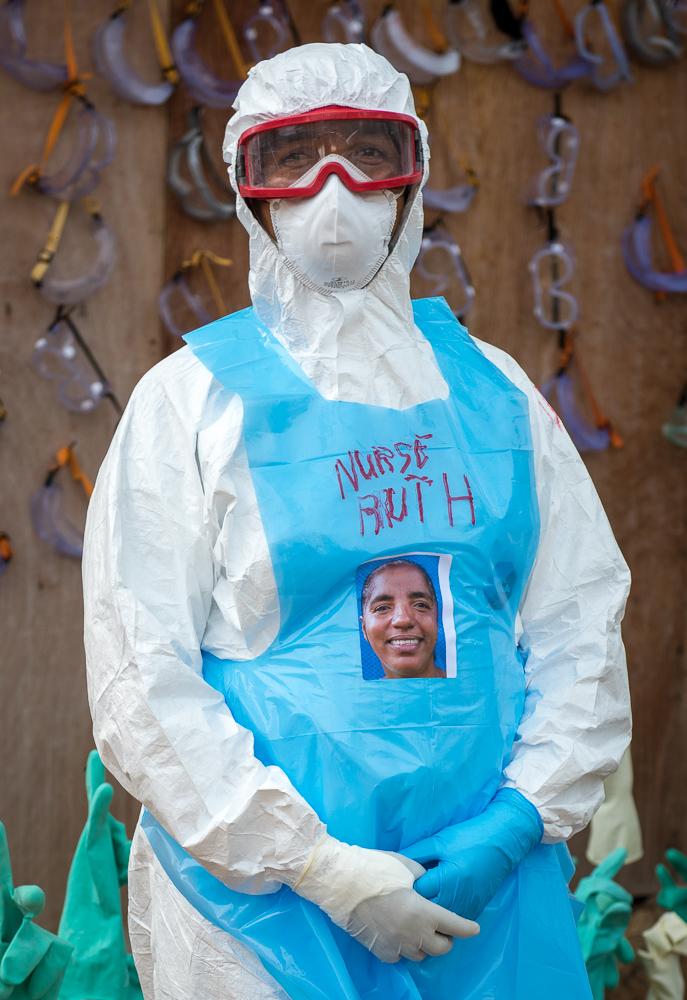
The 50-bed field hospital at Laikipia is the part of that backbone that almost nobody noticed when the press conferences ended. According to documents disclosed in the petition, the unit was always meant to be expandable — to 250 beds if necessary — and was designed specifically to receive U.S. citizens evacuated from outbreak zones in the Democratic Republic of the Congo and Uganda rather than fly them home for treatment. The U.S. Public Health Service personnel who would staff it were already training at Joint Base Andrews in late spring.
Then, in the last week of May, when news that the facility was nearing operational status leaked into Kenyan papers, the politics caught fire.
The Petition That Stopped the Trucks
The case was brought by the Katiba Institute, a constitutional-law non-profit that has spent the last decade dragging Kenyan governments through the courts on procurement, public participation, and the bill of rights. Its executive director, Nora Mbagathi, framed the petition not as anti-American but as anti-shortcut. There had been, the institute argued, no parliamentary oversight, no public participation, and no published environmental or health-impact assessment for a facility designed to hold a Class 4 pathogen on Kenyan soil. Rights to life, to health, to a clean environment, to fair administrative action — Mbagathi listed them on the social platform X — were all in play.
Judge Nyaundi agreed the case raised serious constitutional questions. Her temporary order gave the government 48 hours to file a formal response and set the substantive hearing for June 2. CNN reported on Friday that, even with the order in place, a U.S. team was already on the ground at Laikipia; the Kenyan government has not publicly confirmed whether construction or staging has continued.
What the Diaspora Is Watching
For Kenyans abroad, the Laikipia story sits awkwardly across two loyalties at once. American hospitals, public-health agencies, and humanitarian organisations are some of the largest employers of Kenyan-trained nurses, doctors, and lab technicians in the diaspora. The $1.6 billion deal funds the very systems many of them remit money home to support. Several Kenyan-American nurses on community forums this weekend said they understood, at a clinical level, why the United States might want a forward isolation unit on the African continent rather than fly Ebola-exposed personnel through eight-hour transit corridors back to Atlanta or Bethesda.
But many of those same people are also citizens of a country whose constitution was redrawn in 2010 around the principle that no agreement with a foreign power should bind Kenyans without public consent. The Katiba Institute's argument is the one that resonates most loudly in WhatsApp groups in Maryland, Massachusetts, and the United Kingdom: if a 50-bed quarantine for foreign nationals can be built quietly inside a defence cooperation envelope, what else can?
That tension — between gratitude for the partnership and unease at its terms — is the diaspora's real subject this week.
An Outbreak Without Borders
The reason the Laikipia facility exists at all is not in dispute. On May 16, the World Health Organization declared the Bundibugyo-strain epidemic in eastern Democratic Republic of the Congo a Public Health Emergency of International Concern. By May 29, country authorities and the WHO had logged 1,262 suspected and confirmed cases and at least 241 deaths, with imported cases in Uganda's North Kivu border province and as far as the capital, Kampala. Existing Ebola vaccines and monoclonal antibodies, calibrated to the Zaire strain, may be only partly effective against Bundibugyo, which is one reason the response has felt so much more fragile than the 2018 to 2020 effort.
Kenya itself has reported no Ebola cases. The Ministry of Health has tightened screening at Jomo Kenyatta International Airport, designating Gate 16 for arrivals from high-risk regions and adding online health declarations, isolation rooms, and aircraft-waste genomic sequencing. Public Health Principal Secretary Mary Muthoni has urged the public to trust ministry communications rather than viral WhatsApp claims. But the diaspora's question is older than this outbreak: in a region where airports, military bases, and diplomatic agreements increasingly braid together, where exactly does Kenyan sovereignty begin?
The Hearing on June 2
What will happen on Tuesday morning is technically narrow. Judge Nyaundi will hear arguments on whether to extend, modify, or vacate her temporary order, and whether to consolidate the petition for a full constitutional hearing. The U.S. embassy in Nairobi has so far declined to comment on internal Kenyan litigation. The Kenyan government's brief, due within hours, is expected to argue that the deal falls inside existing defence and health cooperation frameworks that already enjoyed parliamentary blessing in December.
For the diaspora, the bar is both lower and higher. Lower because the immediate question is just whether construction at Laikipia can continue this week. Higher because, regardless of how Judge Nyaundi rules, the case has already pushed into public view a clause that most Kenyans abroad had no idea their government had signed — and a precedent that will outlast whichever side wins. The Bundibugyo strain may come and go in eastern Congo. The doctrine of where Americans can be quarantined, on whose terms, and with what consent from the host country's citizens, will not.