The Journey Continues, Fam: Joe Mudukiza's Long Fight With Sickle Cell, and the Belgian Door He Chose Not to Walk Through
He once asked doctors in Belgium to end his life. Then Kenya asked him to stay. At 30, the sickle cell advocate who chose to keep fighting has died.
Two days before his family logged into his Facebook account to tell the world he was gone, Joe Mudukiza wrote a message that read like the opening line of a comeback.
"I'm back again finally, from the darkest journey of my life," he posted. "The battle was real, but so is God's faithfulness. No crisis can keep down someone built by God's glory, sustained by His grace, and covered by His favour. The journey continues, fam." He signed off the way he always did, asking his followers to drop a comment or an emoji to keep him company. "See you around guys, much love my peeps."
On July 2, that same page carried a different kind of message. "Friends and family of Joe, it is with deep sorrow that we announce the death of our brother," his sister wrote, according to Tuko.co.ke, which first reported the news. "Let us use this page to remember him and pray for the family during this difficult time." Mudukiza was 30. The illness he had fought and photographed and narrated in public for years, sickle cell anaemia, had finally taken him.
The post that read like a promise
For the strangers who had followed his story, the timing was cruel. Many had read the hopeful post and assumed the worst was behind him. "Si juzi amekua online akisema tumupe ka emoji," one commenter, Judith Okido, wrote — only the other day he was online asking us for an emoji. Another, Mwanaisha Nafullah, refused to accept it at first: "No, no, no. Account hacked, Joe is a fighter. He told us he was well juzi." The disbelief was its own kind of tribute. Mudukiza had spent years teaching people to see him as more than a diagnosis, and in the hours after his death that lesson held: they mourned a fighter, not a patient.
A diagnosis he carried since his teens
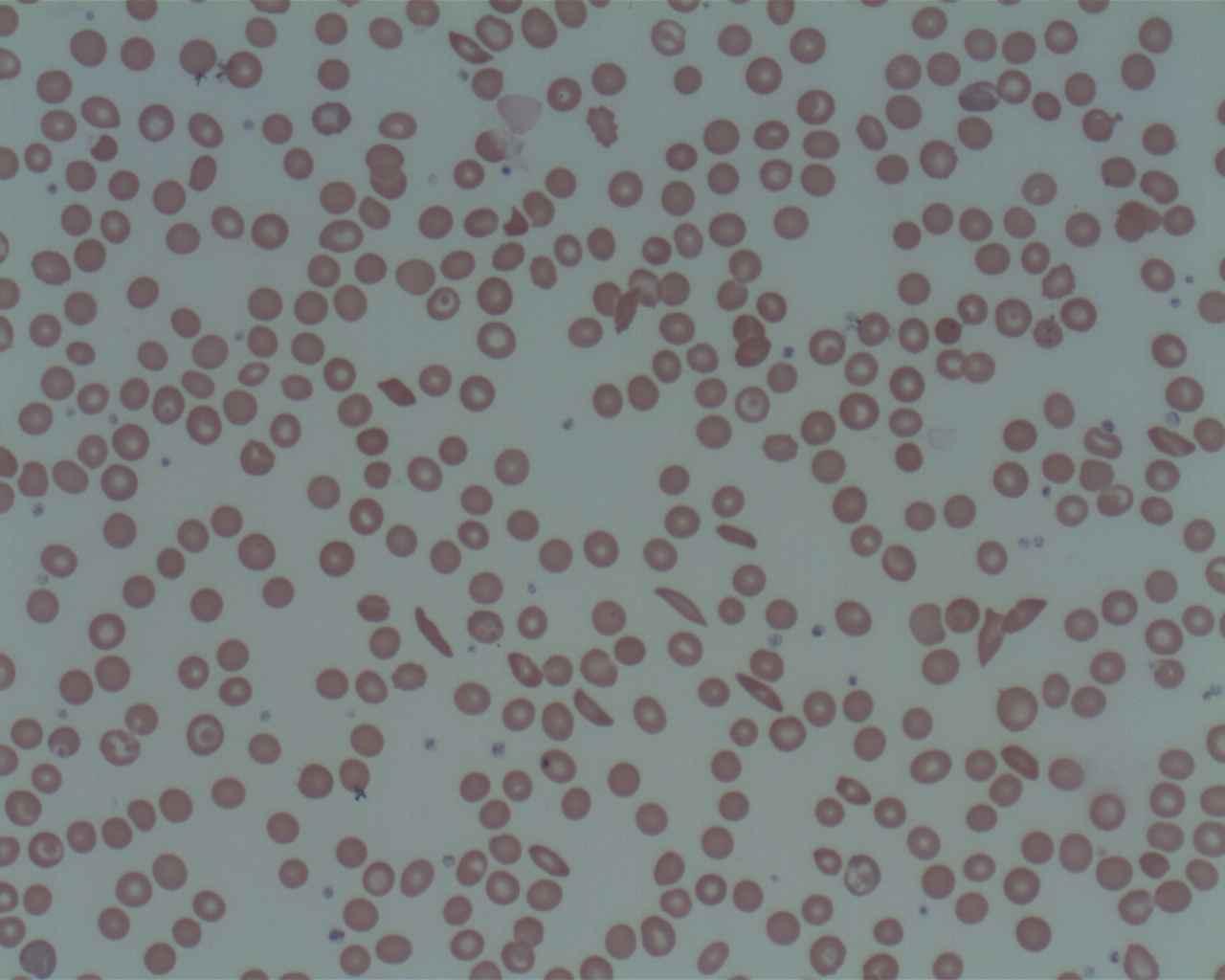
Mudukiza discovered he had sickle cell anaemia in 2009, when he was 13, according to Tuko.co.ke. It is a genetic blood disorder in which a mutation reshapes red blood cells from soft discs into rigid crescents that snag in small blood vessels, starving tissue of oxygen and triggering waves of pain that patients call crises. There is no simple cure, and for most Kenyans there is no cheap management either. Mudukiza lived inside that reality for the better part of two decades, in and out of the darkness he described in his final post, learning to speak about a condition that many families still treat as a private shame.
Over time he made a decision that not everyone in his position makes: he went public. He shared the crises and the hospital stays, and in doing so became a familiar voice for others living with the disease, an advocate who turned his own pain into something other people could hold onto.
The Belgian door
In 2024, that pain reached a point Mudukiza could no longer carry quietly. Unable to raise the roughly 750,000 shillings he said he needed for treatment that would have improved his quality of life, he did something that stunned the country: he applied to the Association for the Right to Die with Dignity in Belgium, asking to be medically assisted to die. Kenya offers no legal path for that choice, so he looked abroad, to a jurisdiction where assisted dying for people in unbearable, incurable suffering is lawful. His story, first aired by Tuko.co.ke, ran under headlines that were hard to forget — a young Kenyan man asking foreign doctors to end a life his own country's health system could not adequately treat.
It was a story about sickle cell, but it was also a story about money, and about the distance between what care costs and what an ordinary patient can pay. The Belgian door existed. The door to affordable treatment at home, for him, did not.
The call that changed his mind
Then the country he had nearly given up on called back. After his story aired, Mudukiza was flooded with support from Kenyans, and, he later said, a phone call from the Ministry of Health helped change his mind about assisted death. International organisations that work with people living with sickle cell and other chronic illnesses reached out too, some offering to help arrange treatment. The man who had applied to die chose instead to keep fighting.
That decision is the reason the Belgian door became a footnote rather than a destination. Mudukiza did not travel to Europe to end his life. He came back to the work of living with a difficult illness, and to the public advocacy that gave that struggle a purpose. His final message, with its talk of returning from the darkest journey, belonged to the person that reprieve had allowed him to become.
What sickle cell costs, at home and in the diaspora
Mudukiza's story lands with particular weight for the African diaspora, because sickle cell is, in a real sense, a diaspora disease. The trait that causes it is most common in populations whose ancestors came from malaria-endemic regions of sub-Saharan Africa, which means Kenyan, Nigerian, Ghanaian and other African-descended families in the United States, the United Kingdom and across Europe carry the condition with them wherever they settle. For many of those families, Mudukiza's ordeal is not abstract. It is a cousin in Nairobi, a sibling in Birmingham, a child screened at birth in Atlanta.
His case also exposed an uncomfortable geography of care. In wealthier countries, sickle cell patients can increasingly access pain management, transfusion programmes and, for a fortunate few, gene therapies that were unthinkable a decade ago. In Kenya, the same patient may struggle to raise a five-figure shilling sum for basic treatment. That gap is why stories like Mudukiza's turn so quickly into conversations about medical migration — about who gets to fly abroad for a cure, and who is left to raise money on Facebook. It is why the Belgian option, however grim, felt to him like the only door that would open.
A community says goodbye
In the end, the emojis he always asked for came flooding back, this time as farewells. "My thoughts and prayers are with Joe's family," wrote Billy Keyombe. "Rest well, champ. You really fought," added Elizabeth Mukula. The tributes came from people who had never met him but had followed his darkest journey in real time, and who understood that his choosing to stay, after everything, had meant something.
Joe Mudukiza spent years insisting that a diagnosis was not the whole of a person. His last post promised that the journey would continue. For the community he leaves behind — in Nairobi, and in the far-flung places where the same illness travels in African blood — that promise now belongs to them.