The Mouth That Britain Forgot: How a Kenyan-Born Surgeon Became a Lifeline in the NHS Dental Crisis
As "dental deserts" spread across the UK, oral surgeon Sonam Haria — raised in Nairobi, trained at King's — embodies the diaspora talent now holding a fraying system together.
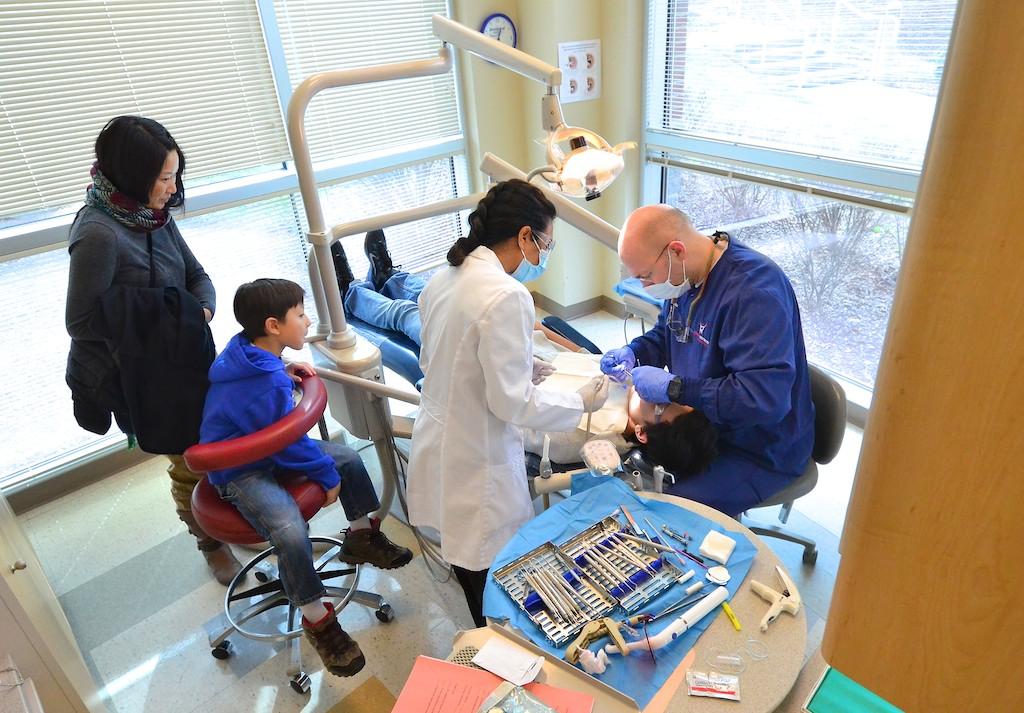
In a market town in the English Midlands, a mother works her way down a list of dental practices and hears the same sentence at every number she dials: the books are closed, no new NHS patients are being taken, try again later in the year. Her young son has been awake for two nights with a swollen jaw and a fever that paracetamol no longer touches. By the time a place is finally found, the tooth cannot be rescued with a filling. It will be removed in a hospital theatre while the child sleeps under general anaesthetic, one of tens of thousands of such procedures performed on British children every year.
That scene has become ordinary in a country that once treated universal dental care as a settled achievement. It is also the backdrop against which a Kenyan-born oral surgeon, Sonam Haria, has built a career — and against which the quiet contribution of diaspora medical professionals to Britain's health service comes into sharp focus.
A Country That Lost Its Dentists
Britain's dental system is in the middle of a slow, grinding collapse. The National Health Service was designed to guarantee access to a dentist in the same way it guarantees access to a doctor, but that promise has frayed badly. Years of flat funding and a payment contract widely criticised as outdated have pushed many dentists to scale back NHS work or abandon it altogether in favour of private practice, where the economics are kinder.
The result is a patchwork of what campaigners and journalists now call "dental deserts" — towns and rural districts where no practice is accepting new NHS patients at all. Millions of people have effectively lost routine access to check-ups. Some travel long distances for care; others wait, self-treat, or simply go without until a manageable problem becomes an emergency. The gap is not evenly spread: it falls hardest on poorer communities, where private fees are out of reach and NHS lists are longest.
When prevention disappears, the costs do not vanish. They move downstream, from the dentist's chair to the hospital ward, and from cheap interventions to expensive ones.
When Decay Becomes Surgery
Nowhere is that shift more visible than in the mouths of children. Diets heavy in sugary drinks, frequent snacking and processed food expose young teeth to repeated acid attacks that wear away enamel. Without regular preventive visits, early decay goes unspotted until it is severe.
The consequence is stark: tooth decay remains one of the most common reasons young children in England are admitted to hospital, many of them to have multiple teeth extracted under general anaesthetic. These are not exotic medical events but the predictable end point of a system that has stopped catching problems early. Each case represents a child in pain, a family disrupted, and a hospital absorbing a burden that a single timely appointment might have prevented.
It is this end of the pipeline — the complex, the surgical, the cases other clinicians refer onward — where specialist oral surgeons matter most. And it is here that practitioners trained to the highest level become indispensable.
From Nairobi's Squash Courts to a London Theatre
Sonam Haria's path to that work began far from any English dental desert. Raised in Kenya, she was an all-rounder who excelled in the classroom and on the court, representing the country in international squash before she ever picked up a dental instrument. The discipline of elite sport — the repetition, the composure under pressure — is not a bad apprenticeship for surgery.
She studied dentistry at King's College London, then spent several years in postgraduate training before earning specialist registration in oral surgery with the UK's General Dental Council, a status awarded only to those who complete advanced training and pass demanding professional examinations. She holds the MFDS and oral surgery qualifications from the Royal College of Surgeons of England and is a member of the Royal Colleges of Surgeons of both England and Edinburgh.
Her clinical work has taken her through some of Britain's most demanding institutions, including Guy's Hospital in London, where she has treated patients with complex conditions. Her expertise spans dental implant surgery and oral oncology — caring for people undergoing treatment for head and neck cancers, and helping to rebuild oral function and quality of life after gruelling treatment. It is precisely the kind of high-acuity work that a thinning NHS workforce can least afford to lose.
The Quiet Infrastructure of Diaspora Medicine
Haria is one figure, but she stands for something larger. Britain's health service has always leaned heavily on clinicians trained or born abroad, and African professionals are a significant strand of that workforce. They staff the wards, run the clinics and increasingly fill the specialist roles that keep complex care moving. When commentators discuss the "dental crisis," they rarely name the people quietly holding the line; many of them carry passports, accents and childhoods from elsewhere.
For the Kenyan diaspora, stories like Haria's complicate the usual migration narrative. The familiar headlines are about visas tightening, fees rising and families separated. Less often told is the story of skill flowing in the other direction — of Kenyans who reach the top of a profession abroad and, in doing so, become part of the essential machinery of another country's public services. That contribution is real, and it deserves to be counted alongside remittances when the value of the diaspora is tallied.
What Nairobi Stands to Gain
The relevance does not stop at Britain's shores. Kenya is expanding Universal Health Coverage at the same time as its own rates of tooth decay climb, driven by the same urban dietary shifts reshaping diets worldwide. Oral health has long been a neglected corner of the country's medical priorities, under-resourced and under-staffed relative to need.
Here, diaspora expertise can become a two-way bridge rather than a one-way drain. Through mentorship, virtual teaching and partnerships with institutions such as the University of Nairobi's dental school, specialists working abroad can help build the training pipelines, surgical capacity and oral-cancer care that Kenya will need as coverage widens. A surgeon who learned the craft in London theatres can shape how it is taught in Nairobi lecture halls.
That is the quiet promise embedded in one career: that the same person can help a child in an English hospital keep their function after cancer surgery, and help a future Kenyan dentist learn to do the same at home. In a moment defined by walls and waiting lists, it is a reminder that talent, once it crosses a border, does not have to belong to only one side of it.