The Flag That Crossed Sixty Borders: How a Nairobi-to-London Overland Drive Became a Diaspora Triumph
Becky Kim and Bonnie Koko drove 45,470 kilometres across some 60 countries to reach London. Their arrival says as much about African mobility as about courage.
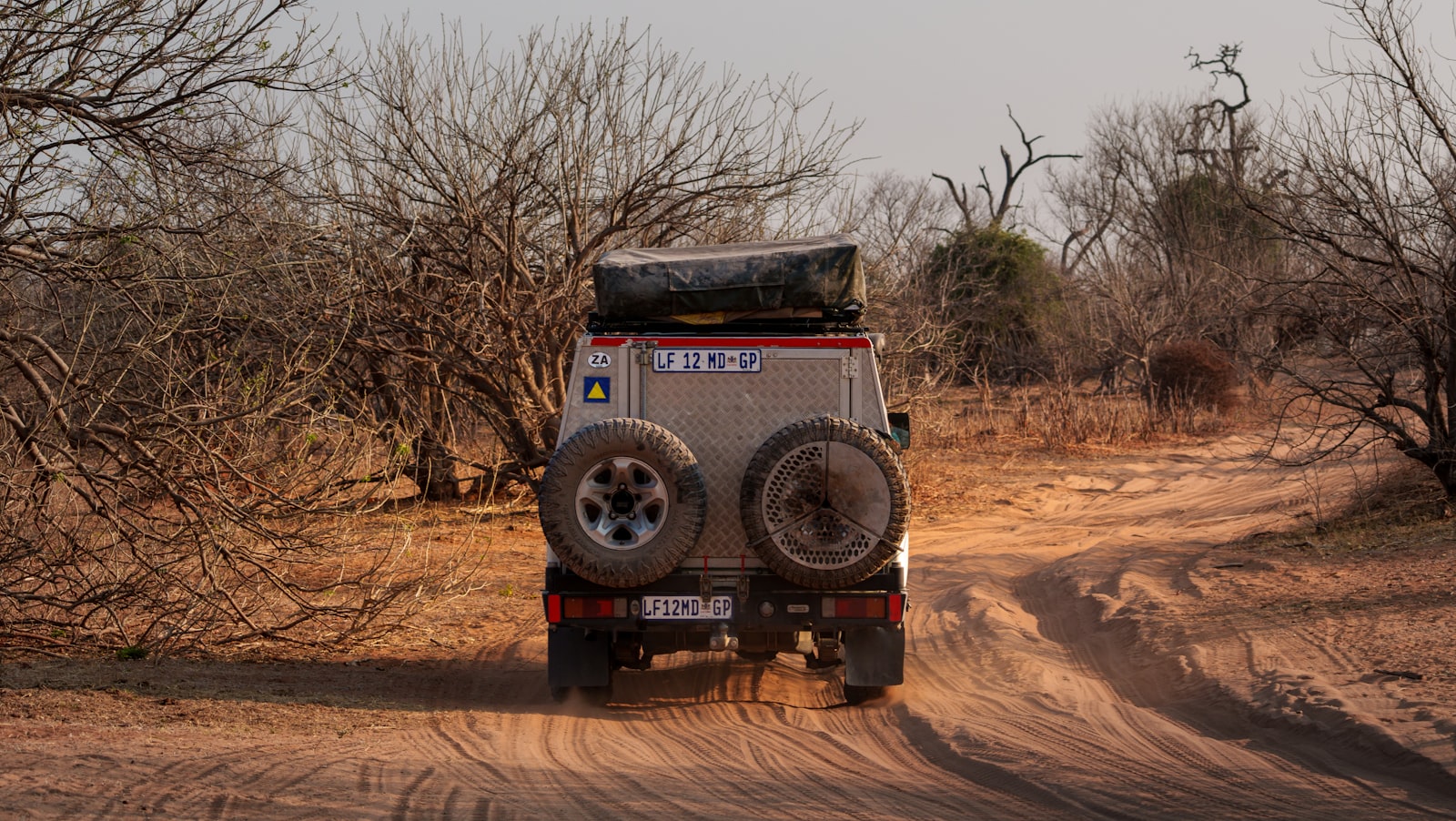
The white INEOS Grenadier that rolled up to the Kenya High Commission in London on 12 June still wore the dust of two continents. Its panels were wrapped in the black, red and green of the Kenyan flag, and the two people who climbed out of it had not seen Nairobi in four months. Inside, the outgoing Deputy High Commissioner, Dr Joseph Warui, was waiting to receive them. By his own account, the moment carried "a profound sense of national pride and quiet reverence."
Becky Kim and her co-driver, Bonnie Koko, had driven there. Not flown, not shipped a vehicle ahead to meet at the far end, but driven — a journey their own reckoning, echoed by Kenya's diplomats, puts at 45,470 kilometres from the Kenyan capital to the British one, across deserts, river basins and mountain passes that most people only ever cross as lines on a map.
It is the kind of story that moves quickly through the Kenyan diaspora, and for reasons that reach well beyond the odometer.
A welcome two continents in the making
The pair set out from Nairobi on 13 February and pulled into London on 12 June, roughly four months and, by Tuko's count, 122 days later. The Star, which also reported the arrival, placed the journey at about 120 days. The small discrepancy is the sort that creeps into any feat measured across so many time zones; what neither outlet disputes is the shape of it — south to north, across the length of a continent and into another.
At the High Commission, Warui described receiving "a daughter and a son of our Republic," and said their "four-month passage reads like a continental epic, sweeping across Africa." After a brief reception, the travellers were taken to meet Kenya's High Commissioner to the United Kingdom, Ambassador Maurice Makoloo. The choreography was deliberate: a state mission, half a world from home, treating two private adventurers as envoys.
That framing matters. For a diaspora that often reaches its host countries after long, expensive and anxious passages through visa queues and airport secondary screening, the image of two compatriots arriving overland under their own flag lands differently. It rewrites the arrival as a choice rather than a flight.
Sixty countries, one dusty vehicle
The route, as the travellers described it, was not a straight line so much as a grand detour through the world's harder geographies. They counted some 60 countries, threading through the Congo River region, the Sahara, the Kalahari and the highways of Europe, and at one point pushing north of the Arctic Circle before bending back toward Britain. Koko served as navigator and second driver, the role that turns a solo stunt into a survivable expedition: someone to read the maps, share the night shifts and keep the vehicle moving when one pair of hands is not enough.
The machine beneath them, an INEOS Grenadier, is a utilitarian off-roader built for exactly this kind of punishment, and its Kenyan livery became part of the message. Photographs from London show the two posing beside the flag-wrapped body, the paintwork carrying the grime of the road like a badge.
There is a long lineage of overland Africa-to-Europe journeys, but few have been claimed so publicly as a Kenyan accomplishment, and fewer still have ended with a diplomatic reception. That is part of why the story caught: it is both an individual adventure and, in the way Kenyans online and at the mission chose to read it, a collective one.
The passport paradox
Beneath the celebration sits a quieter, more complicated truth about who gets to move through the world, and how.
The Kenyan passport is a middling travel document. Holders can enter a modest number of states without a visa in advance, but much of Europe — including the United Kingdom that crowned this journey — requires applications, fees, biometric appointments and proof of funds before a single border is crossed. Ordinary Kenyans planning far less ambitious trips routinely confront refusals, long waits and the suspicion that they intend to overstay. Any drive that touches 60 countries is, in practice, also a months-long exercise in paperwork: transit permits, carnets for the vehicle, insurance, and visas gathered consulate by consulate.
That is the paradox the expedition gently exposes. The freedom to wander the planet by road is, for an African traveller, less a matter of fuel and tyres than of stamps and approvals. Becky Kim and Bonnie Koko did not transcend that system; they navigated it, patiently, which is its own kind of endurance test. Their triumph is real, and it is also a reminder of how much administrative effort sits behind a journey that travellers from wealthier-passport nations could undertake far more casually.
What the diaspora read into it
The reaction online leaned heavily on the language of pride and possibility. One commenter wrote that "Kenyan ambition knows no borders"; another said the pair had "carried Kenya's flag across 60 nations with courage and dignity." Warui, for his part, called the expedition "not merely a chronicle of distance but a testament to Kenyan resilience, cross-border exploration, and the audacity of global ambition."
For Kenyans abroad, that vocabulary resonates because it inverts a familiar script. Diaspora life is frequently narrated through hardship — the relative stranded in the Gulf, the nurse working punishing shifts, the family scraping together fees. Here was a story in which the protagonists set their own route, chose their own pace and were met not at a deportation desk but at an ambassador's door. It offered, briefly, a picture of mobility as mastery rather than necessity.
The road as a different migration story
Overland journeys have a particular hold on the imagination precisely because they refuse the abstraction of flight. A plane erases the space between two cities; a car insists on it, mile by mile, checkpoint by checkpoint. To drive from Nairobi to London is to physically connect a homeland and a diaspora hub that air travel keeps psychologically separate, and to remind everyone watching that the distance, while vast, is not unbridgeable.
Whether the feat inspires imitators is almost beside the point. A handful of Kenyans have floated similar ambitions — one man has spoken of driving from London back to Eldoret — and most such plans never leave the group chat. What Becky Kim and Bonnie Koko have already done is supply the diaspora with a rare and uncomplicated good-news story: two of their own, a flag, a long road, and a welcome at the end of it that treated the arrival as something worth honouring.
The dust will wash off the Grenadier soon enough. The image of where it travelled, and who was driving, is likely to stay with the community far longer.