The Mission That Came Back: How a Kenyan Nun in Barcelona Reads Pope Leo's Pilgrimage to Spain
Sister Anne Illia was evangelised by Spanish missionaries in Kenya. Now she teaches in Barcelona — and waits for a Pope whose journey ends among Africa's migrants.
In a classroom in Barcelona, a Kenyan woman in a nun's habit spends her mornings much as she has for years — teaching children their letters and their catechism, and coaxing a restless room into the kind of quiet where learning happens. Sister Anne Illia did not grow up picturing a life in Catalonia. She grew up in Kenya, in a community that first heard the Christian message from Spanish missionaries who had travelled thousands of kilometres to bring it. This week, the direction of that old journey reversed itself in the most visible way imaginable: the head of the Catholic Church arrived in her adopted city.
Pope Leo XIV's pilgrimage to Spain has filled Barcelona's streets and stadiums, but for the small community of Kenyans who have made the country their home, it has also been something quieter — a moment to weigh how far their faith, and they themselves, have travelled.
A teacher far from home
Sister Anne belongs to the Congregation of the Sacred Heart of Jesus, a religious order founded in 1891 by the Spanish priest Juan Collell Cuatrecasas. The congregation has always built its work around education, youth development and social welfare, treating them as the foundations of a healthier society. In Barcelona, Sister Anne lives out that mission in a school run by her order and in the catechism classes of her parish.
"As a professional teacher, my mission is to educate, accompany, and guide the young people in our community with love," she told Tuko, describing a vocation she says brings her "immense fulfilment and purpose." Her days are ordinary in the way that mission work often is — lessons, marking, the patient repetition of catechism — and it is precisely that ordinariness she has come to treasure. Working alongside the very Church that first introduced her to the faith, she added, gives her a sense of belonging she continues to cherish.
The mission that reversed
It is the symmetry of her story that Sister Anne returns to again and again. "Spain was one of the first nations to send missionaries across the world to proclaim the Gospel," she said. "Many of us, including myself, first came to know the Lord through their witness. Now, in a beautiful exchange of faith, we who were once evangelised by those missionaries have come to Europe to support and collaborate in the same mission of evangelisation here."
Her experience is no longer rare. Across Western Europe, where local vocations have thinned and many parishes struggle to staff themselves, priests and religious sisters from Africa and Asia increasingly fill the gap. The phenomenon has a name among Church scholars — "reverse mission" — and it has quietly reshaped congregations from Dublin to Barcelona. Dioceses that once dispatched missionaries abroad now lean on clergy ordained in Nairobi, Lagos or Bangalore to keep their altars staffed and their classrooms open. Kenyans, schooled in a Church that European missionaries helped to plant little more than a century ago, are among those now sustaining the faith in the very countries that sent it to them.
The Pope comes to Spain
Pope Leo XIV arrived in Spain on 6 June for the first papal visit to the country in fifteen years. The Holy See had mapped out a dense itinerary — twelve speeches, four Masses and around ten meetings with political, religious and civic leaders — spread across Madrid, Barcelona and the Canary Islands.
In the capital, the Pope was welcomed by King Felipe VI, celebrated Mass in the Plaza de Cibeles on the feast of Corpus Christi, and met Prime Minister Pedro Sánchez and members of parliament. He also visited a homeless shelter, an early signal of the concern for the marginalised that would shadow the entire trip. On 9 June he travelled to Barcelona for what many regard as the journey's centrepiece.
A Bible in stone
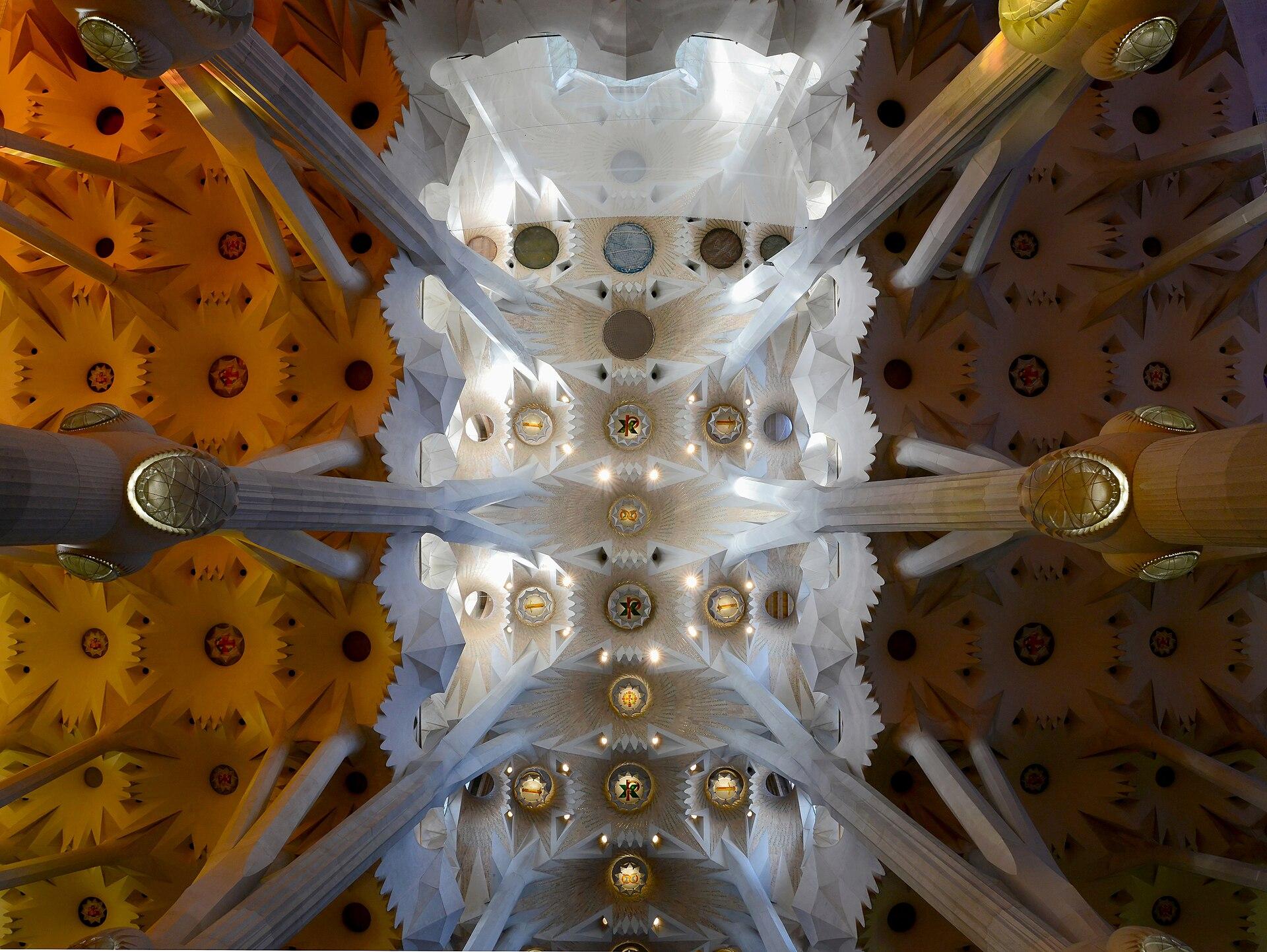
That centrepiece was the Sagrada Família. Pope Leo inaugurated and blessed the basilica's newly completed Tower of Jesus Christ, which at roughly 172.5 metres becomes the tallest church structure in the world. The tower crowns the landmark designed by the Catalan architect Antoni Gaudí, whose unfinished masterpiece is often described as a "Bible in stone" and whose death is being commemorated this year on its centenary. The basilica itself was consecrated by Pope Benedict XVI in 2010; its construction has been a labour of devotion stretching across more than a century.
For Sister Anne, the spectacle is not the point. "I hope that by the time Pope Leo leaves Barcelona, the Church will experience a deep renewal of heart and a strengthening of faith," she said, voicing a wish for those "who have grown distant or indifferent" to "rediscover the joy of belonging."
The journey ends at the sea
If the Sagrada Família is the visit's soaring high note, its final leg returns to ground level — and to a subject that touches Africa directly. On 11 June the Pope flies to the Canary Islands, the volcanic Spanish territory off the north-west coast of Africa that has become one of the principal maritime gateways for migrants trying to reach Europe. In Las Palmas de Gran Canaria and Santa Cruz de Tenerife he is due to celebrate Mass and to encourage those working on the front lines of migrant reception.
The choice of ending is deliberate. The Atlantic route to the Canaries is among the deadliest migration corridors in the world, travelled mostly by West Africans but also by people drawn from across the continent, and it claims hundreds of lives each year. By closing his Spanish journey there rather than beneath a cathedral's vaults, Pope Leo placed the question of how Europe receives the stranger at the heart of his message — a question that the African diaspora, including Kenyans who reached the continent by far safer routes, follows closely.
A letter from Nairobi
The visit reached Kenya in smaller ways too. Opposition leader Kalonzo Musyoka wrote to Pope Leo XIV ahead of the journey, asking for prayers over the country's political and economic strains and expressing a hope that Kenya might one day host the Holy Father. In a nation with millions of devout Catholics, it was a reminder that the papacy remains, for many Kenyans at home and abroad, a living point of connection to a wider world.
For Sister Anne, that wider world is the whole of it. "I believe the Pope's words and presence can remind the whole Church that we are not alone," she said. "We are part of one universal family, united in prayer, mission, and love." Her prayer for the days the Pope spent in her adopted city was simple, and it pointed beyond Barcelona: that his voice would be, as she put it, "a clear call for justice and peace in our time."