The Call That Comes at 2 a.m.: How Kenya's First National Ambulance Line Could Ease the Diaspora's Heaviest Burden
For Kenyans abroad, a parent's medical emergency back home has long meant a frantic scramble for money and a vehicle. A new national dispatch centre promises to change that.
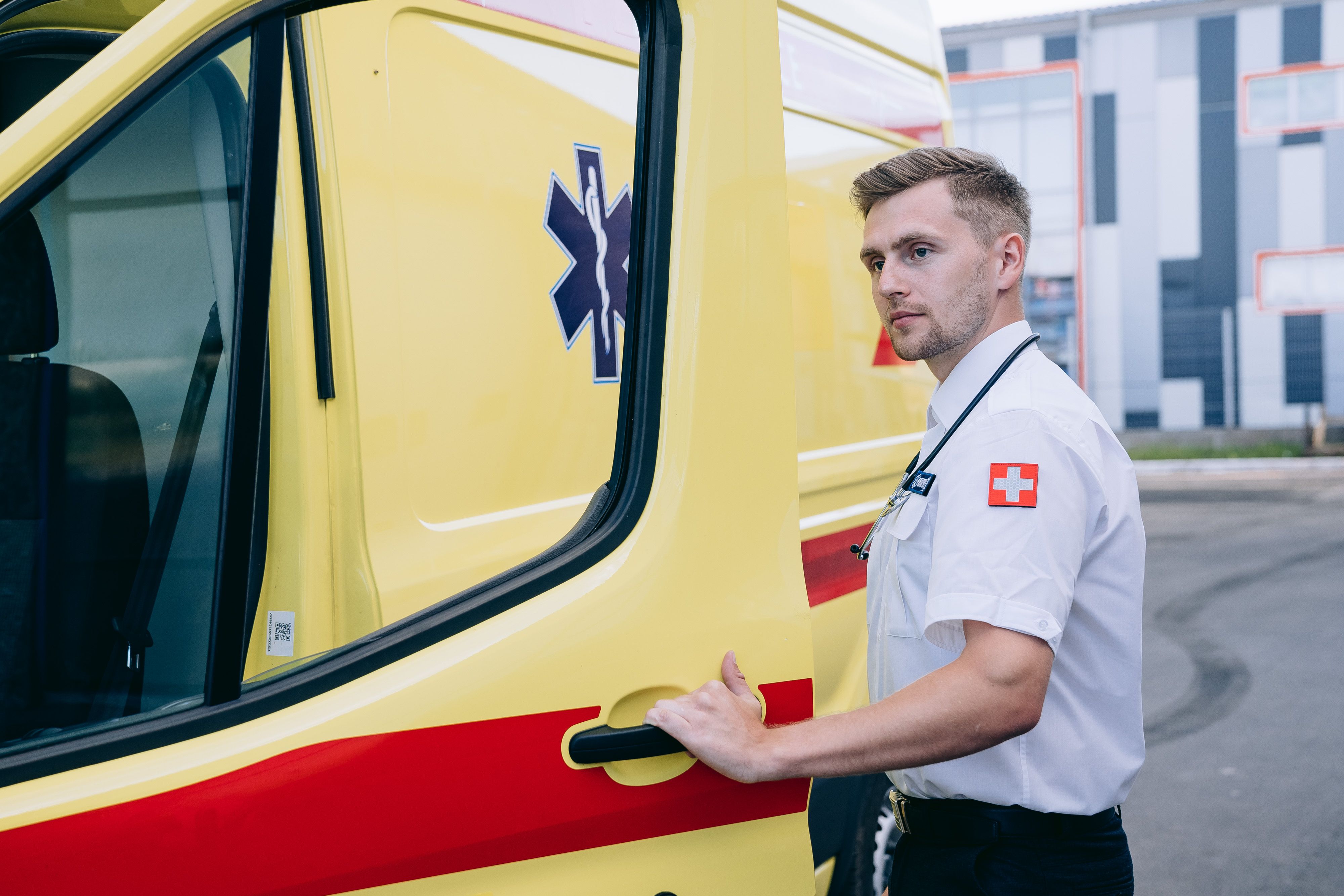
For years, the worst phone calls reached the diaspora in the dead of night. A nurse in Manchester, a warehouse supervisor in Dallas, a care worker in Doha — each has a version of the same memory: the screen lighting up at 2 a.m., a sibling's voice cracking on the other end, a parent who has collapsed in Nyeri or Kakamega or Kisii, and no ambulance anyone knows how to summon. In the hour that follows, the person abroad becomes a logistics desk. They call cousins. They send M-Pesa to a neighbour with a pickup. They wire whatever a private clinic demands as a deposit before it will touch the patient. Distance turns grief into arithmetic.
It is that arithmetic that President William Ruto promised to dismantle on Sunday, when he announced that Kenya will launch its first National Ambulance Dispatch Centre by the end of July. Speaking at the 95th St John Ambulance annual parade and inspection on June 21, Ruto said the centre would make emergency ambulance evacuation free for every Kenyan and would, for the first time, give the country a single number to call when a body fails and minutes matter.
A Dispatch Centre, and a Promise of Speed
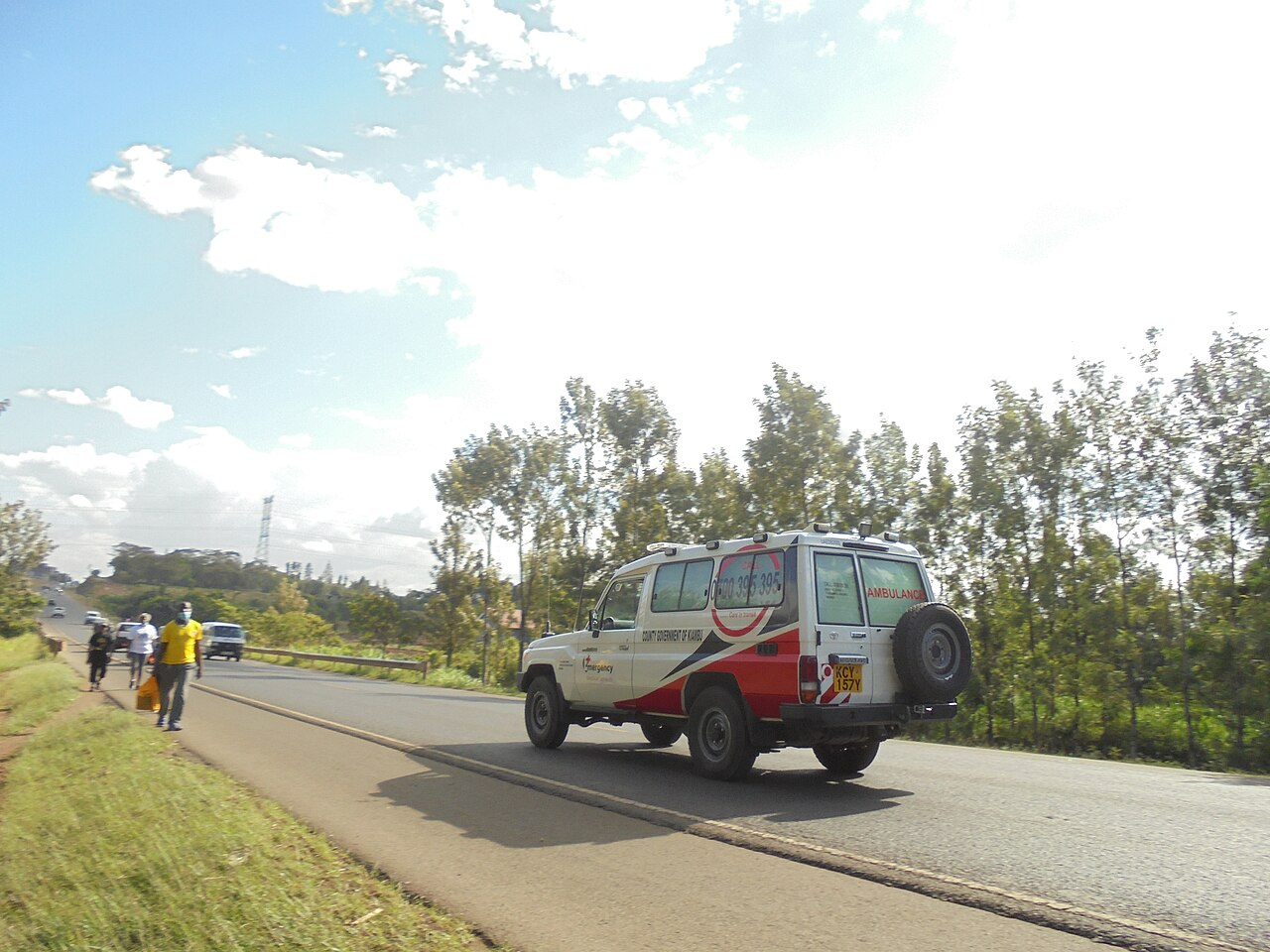
The plan, as the president described it, is deceptively simple. A Kenyan in distress will call a central dispatch centre. The nearest available ambulance will be located and sent, and the patient carried to the closest hospital rather than the one a panicked relative happens to name. Behind that simplicity sits a piece of national plumbing Kenya has never had: a coordinated system that knows, in real time, where its ambulances are.
Ruto said the centre would be powered by the Digital Health Agency and folded into the country's wider digital health infrastructure, allowing faster deployment and tighter communication between responders and the hospitals waiting to receive patients. Once operational, he said, it is expected to coordinate roughly 100,000 emergency evacuations a year. Kenya, by his account, would become only the second African country to run a nationally coordinated ambulance dispatch system.
For a health system long defined by fragmentation — county-run ambulances that answer to different bosses, private fleets that answer to invoices, and stretches of road where no one answers at all — the idea of a single coordinating brain is the most consequential part of the announcement. Speed, in emergency medicine, is not a luxury. It is the difference a stroke or a postpartum haemorrhage measures in minutes.
The Bill That Falls on Those Who Left
To understand why this lands so heavily in the diaspora, it helps to follow the money that already flows the other way. Kenyans abroad send home billions of dollars a year, and survey after survey has found that a large share of it is absorbed not by investment or savings but by daily survival and, above all, by health shocks. The Central Bank of Kenya's own remittance research has underlined how much of the diaspora's money goes to feeding households and covering hospital bills rather than building anything lasting.
Inside that statistic is a private experience almost every Kenyan abroad recognises. The emergency back home does not wait for payday. The clinic asks for a deposit before treatment. The ambulance — if one can be found — wants cash up front. And the person best placed to pay is often the one furthest away, awake at an odd hour in another time zone, reading hospital messages on a phone. A free national ambulance service and guaranteed early hospital coverage would not erase that burden, but it would remove its sharpest edge: the moment when a life depends on how fast someone overseas can move money.
What "Free" Will and Won't Cover
The ambulance is only half of the promise. Ruto said the first 24 hours of treatment — admission, surgery and other necessary interventions — would be fully funded by the Social Health Authority. That cover would flow through the SHA's Emergency, Chronic and Critical Illness Fund, the mechanism the government has been building to catch patients in exactly the window when families are most likely to be turned away for lack of a deposit.
This is not an entirely new pledge. Health Cabinet Secretary Aden Duale outlined the same first-24-hours guarantee earlier in the year, describing a nationwide dispatch service paired with SHA covering hospital costs at the outset of an emergency, and pointing to a rollout around the middle of the year. Sunday's announcement set a firmer date and a national centre behind it.
The careful reader will notice the limits. The guarantee covers the first 24 hours, not the long tail of a serious illness — the dialysis, the cancer regimen, the months of rehabilitation that bankrupt families and that diaspora remittances so often quietly underwrite. Whether the SHA can actually pay providers fast enough to keep ambulances and wards from reverting to cash demands is the question that will decide if this becomes a system or a slogan. For now, what has changed is the floor: the principle that no Kenyan should be left on a roadside, or stranded at a hospital gate, because the family member with the money is nine time zones away.
A Volunteer Service, Rebuilt
The setting for the announcement was not incidental. St John Ambulance has carried much of Kenya's emergency response for the better part of a century, largely on the backs of volunteers, and the president used the parade to commit new money to it. He announced a 500-million-shilling package for a new national headquarters for St John Ambulance Kenya — 300 million from Parliament and 200 million from the government — along with a pledge of land and 15 new ambulances to expand the fleet. He praised the organisation's volunteers as an invaluable national asset.
That investment matters because a dispatch centre is only as good as the vehicles it can dispatch. A single coordinating number cannot conjure ambulances onto roads where there are none, and the gap between Nairobi's relatively dense coverage and the long silences of the arid north and the rural west is where the system will be tested first.
The Distance Between an Announcement and an Ambulance
Kenyans have learned to hold health promises at arm's length until they arrive. The country has announced universal coverage schemes before, watched them stall on funding and provider disputes, and rebuilt them under new names. The SHA itself is young, and its capacity to reimburse hospitals on time remains unproven at the scale this plan implies.
But for the diaspora, even a credible promise reshapes something. The next 2 a.m. call may still come. What may change is what follows it — a single number instead of a scramble, an ambulance dispatched by a system rather than summoned by a neighbour, and a first day of care that does not begin with a demand for cash. Between the announcement in July and the ambulance that actually turns up, there is a great deal of distance. For the millions who have lived that distance from abroad, the promise that it might finally narrow is worth watching, and worth holding the government to.