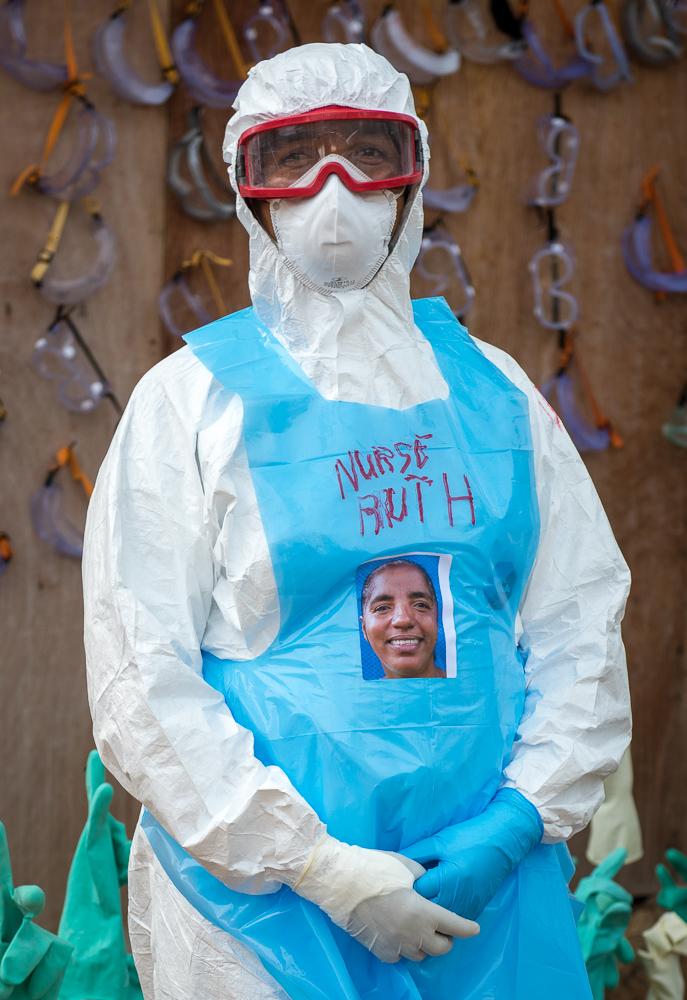
One Antibody, Two Continents: Why an Experimental Ebola Drug for Americans Tests Kenya's Place in the Outbreak
Washington has cleared an unproven antibody therapy for Americans exposed to Ebola, even as Kenya hosts a quarantine facility — raising hard questions about who gets treated.
In a kitchen outside Atlanta, a Kenyan nurse who has spent eleven years in American care homes keeps two browser tabs open after her night shift. One is the family WhatsApp group from Nyeri, full of voice notes about the quarantine site rising near Nanyuki. The other is a US news page she refreshes between cups of tea, because this week it carried a sentence she has been turning over ever since: Americans exposed to Ebola can now receive an experimental antibody drug, while the rest of the response plays out, in part, on Kenyan soil.
That sentence is not a rumour. It is the practical shape of a decision taken in Washington, and it lands differently depending on which passport sits in your drawer. For the Kenyan diaspora — nurses, students, traders, parents who send money home every month — it has reopened an old and uncomfortable question. When a global health emergency moves through the countries they came from, who is first in line for the medicine, and who is asked to host the risk?
The drug that crossed a line
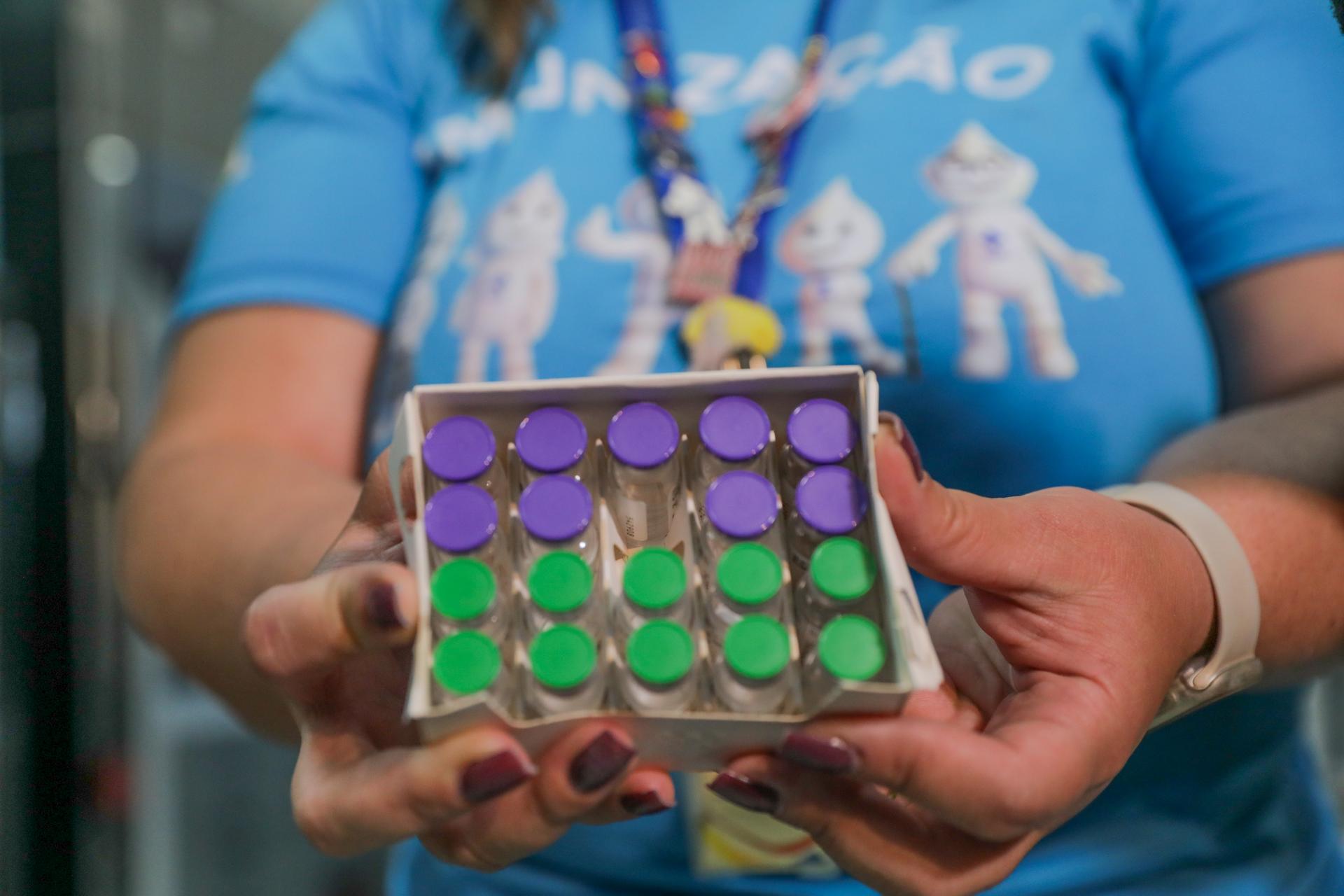
The treatment at the centre of the story is MBP-134, a monoclonal antibody therapy made by Mapp Biopharmaceuticals, a small San Diego biotechnology firm. According to reporting by the US health outlet StatNews, the Department of Health and Human Services has cleared the therapy for Americans who suffer high-risk exposure to Ebola during the current outbreak in Central Africa. It is being made available under emergency mechanisms the Food and Drug Administration uses for unapproved products during outbreaks, rather than as a fully licensed medicine.
What makes MBP-134 notable is also what makes it uncertain. It has performed strongly in animal studies — primate testing suggests it works against the Zaire, Sudan and Bundibugyo strains, which is why scientists describe it as a potential pan-Ebola therapy. But it has not completed the human clinical trials that would normally prove a drug both safe and effective. Funding has come through BARDA, a US agency that develops countermeasures for emerging biological threats. In short, this is a promising but unproven drug, and the United States has decided its own exposed citizens should be able to reach for it now.
A facility on Kenyan soil
The decision does not exist in a vacuum. For weeks, the most contested element of the regional response has been a proposed bio-isolation and quarantine facility at Laikipia Air Base, near Nanyuki. Kenyan outlet Kenyans.co.ke reports the centre is planned at roughly 50 beds, intended for individuals with Ebola exposure, and built as part of a health-security partnership with Washington.
It has not gone down quietly. Residents of Laikipia have protested, raising questions about safety, transparency and why such a centre belongs in Kenya at all. The government has pushed back hard. President William Ruto has defended the project as preparedness rather than provocation, arguing that critics are politicising a pandemic; "People should relax," he said. Health Principal Secretary Mary Muthoni has stressed that Kenya has recorded no confirmed Ebola case, that 27 suspected samples have all tested negative, and that more than 77,000 travellers have been screened at 26 points of entry. The proposed isolation centres, she insists, are precautionary, not a plan to import patients.
Two queues, one outbreak
Put the two facts side by side and the diaspora's unease becomes easy to understand. On one continent, exposed Americans gain early access to an experimental therapy. On the other, a partner country debates hosting a quarantine centre on its own land while insisting it has no cases of its own. Neither fact is sinister on its face — wealthy governments routinely stockpile countermeasures for their citizens, and regional facilities can genuinely strengthen detection. But together they sketch a familiar map, one in which the medicine and the risk do not always travel in the same direction.
For Kenyans abroad, this is not an abstract debate about global health governance. It is personal logistics. If a relative in the diaspora is exposed while visiting family, or a frontline worker is exposed on the job, the question of which protocols and which medicines apply to them is suddenly real. Diaspora WhatsApp groups have spent the week trading half-answers about eligibility, about whether the experimental therapy follows nationality or geography, and about what a Kenyan passport-holder in a US hospital could expect.
What the diaspora is actually asking
The honest answer is that much remains undisclosed. Authorities have not published how many doses of MBP-134 exist, citing supply and distribution arrangements, and they have not spelled out how eligibility would be handled for non-citizens exposed inside the United States. That silence is its own kind of message to the more than 150,000 Kenyans who call America home, many of them working in exactly the healthcare settings where exposure risk is highest.
There is also a quieter, financial dimension that diaspora readers grasp instantly. Remittances are the family safety net, and medical emergencies are one of the most common reasons that money moves home in a hurry. An outbreak that disrupts travel, raises insurance questions, or forces relatives into quarantine does not stay in the health pages; it lands in the household budget. For a community that sent billions of dollars home last year, uncertainty about treatment access and movement is also uncertainty about money.
The science still unfinished
It would be a mistake to read MBP-134 only through the lens of inequality. The same outbreak that exposes these gaps is also, in the words of several researchers, a rare chance to finally test Ebola drugs in the real world. Scientists racing to trial therapies argue that emergencies are when evidence is gathered fastest, and a pan-Ebola antibody that works across strains would be a genuine advance for everyone, Kenyan and American alike. The World Health Organization has positioned more than a thousand protective-equipment kits in regional hospitals, and Kenyan referral facilities in Nairobi and Eldoret have been stocked as part of preparedness.
The tension, then, is not between progress and no progress. It is between a treatment that exists and a system that has not yet explained who, beyond American citizens, will be able to reach it.
A test of partnership
Kenya and the United States describe their arrangement as a partnership, and on paper the language is generous: shared preparedness, billions committed to the African response, a facility framed as regional protection. The diaspora is not asking Kenya to reject that partnership. It is asking for the partnership to be legible — for clarity on who qualifies for the new therapy, on how a hosted facility protects the people living beside it, and on whether the benefits of this outbreak's hard-won science will be shared as widely as its risks.
For the nurse outside Atlanta, that clarity is what would let her close one of those two browser tabs. Until then, she does what the diaspora has always done in the gap between two countries' decisions: she keeps both tabs open, forwards what she learns to the group in Nyeri, and waits to see which way the medicine moves.