Held at the Departures Hall: How Eric Omondi's JKIA Arrest Lands in the Diaspora's Feed
Kenya's best-known comedian-turned-activist was taken into custody at the airport on Friday over fuel-protest allegations — and within hours the news had crossed oceans.
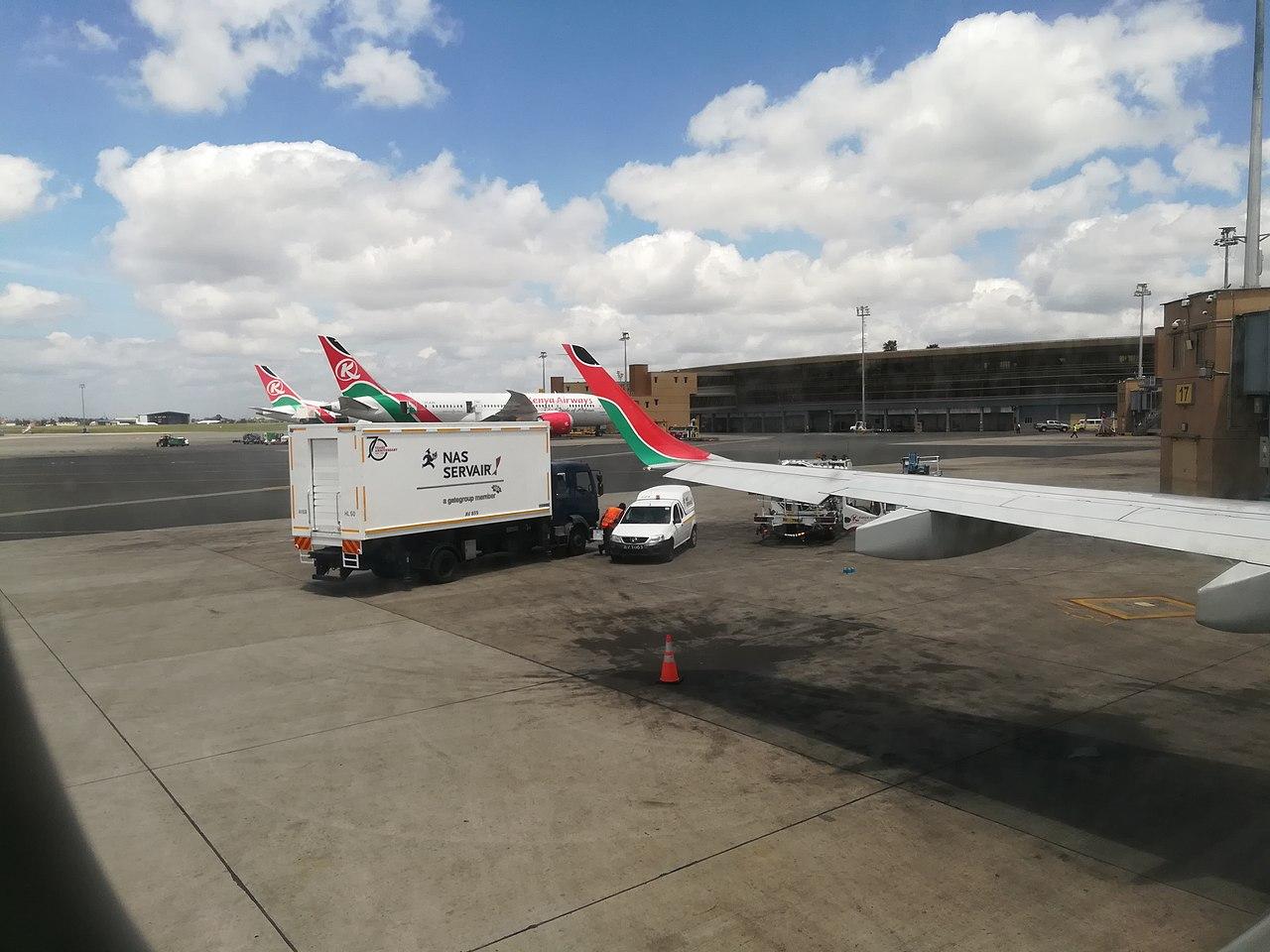
At a quarter past noon on Friday, the international departures concourse at Jomo Kenyatta International Airport was doing what it always does: swallowing suitcases, stamping passports, and sorting Kenyans into two groups — those staying and those leaving. Eric Omondi, the comedian whose face is as familiar in Dallas church halls and London comedy nights as it is on Nairobi billboards, was in the second group. He never made it past the terminal.
By his own account, posted to his millions of followers while events were still unfolding, he had been taken by a group of men who wore no uniforms. For roughly two hours, that single post was all anyone knew — in Nairobi, in Atlanta, in Doha. Then the Directorate of Criminal Investigations ended the speculation with a statement: yes, it had arrested him.
What the DCI Says Happened
The DCI's account, issued Friday afternoon and carried by Tuko and The Star, is precise about the mechanics. Detectives from DCI Nairobi Central, working jointly with the Crime Research and Intelligence Bureau for Nairobi Region, arrested Omondi at JKIA "following credible intelligence" gathered during ongoing inquiries.
The alleged offences, the agency said, were "committed under the guise of the recent fuel-related protests in Nairobi" — demonstrations that have flared as pump prices and transport costs have squeezed household budgets across the country. The DCI did not specify the charges in its public statement. Omondi, it said, was recording a statement at the Nairobi Region DCI headquarters and being processed ahead of a possible court appearance.
The arrest, investigators added, is not a standalone act. It forms part of a wider probe in which several other suspects linked to the same incidents were arrested earlier and arraigned in court on May 18.
From Punchlines to Placards
For Kenyans who left the country a decade ago, the name Eric Omondi still means comedy — the Churchill Show alumnus who built one of East Africa's biggest entertainment brands and toured diaspora cities where a night of Kenyan humour doubles as a night of home. The Omondi of recent years is a different public figure. He has repeatedly traded the stage for the street, styling himself as the self-declared "president of comedy" turned cost-of-living campaigner, marching with traders, staging stunts outside Parliament, and putting his celebrity between ordinary Kenyans and the price of food and fuel.
That pivot has made him a repeat visitor to police cells. It has also made him one of the few figures whose arrest is instantly legible to Kenyans everywhere: no translation needed, no background reading required. When the DCI confirmed Friday's arrest, Embakasi East MP Babu Owino was already at the Nairobi Area Regional Police Headquarters. "Eric was arrested today at JKIA at 12.15PM," he wrote, before closing with the line that set the tone for the weekend: "Let's meet in Court on Monday and come prepared. #FreeEricOmondi."
The Airport Is the Diaspora's Front Door
There is a reason this particular arrest, at this particular place, travels so well abroad. JKIA is not just an airport to Kenyans overseas; it is the hinge on which their double lives swing. It is where the December homecoming begins and the January goodbye ends, where the barrels of shopping clear customs, where the body of a relative who died abroad is received. An arrest in a market or a courtroom is news. An arrest at the departures hall — the place where a Kenyan is at their most in-between — lands differently for people whose whole lives are in-between.
It also raises a quieter, more practical anxiety that diaspora WhatsApp groups will be working through this weekend: if a celebrity with lawyers, an MP on speed-dial and millions of followers can be intercepted at check-in, what does that mean for the activist cousin, the outspoken blogger, the relative who attended a march before flying out? For Kenyans abroad who have amplified protest movements from a safe distance — sharing livestreams, donating to bail funds, posting under protest hashtags — the question of what awaits at the airport on the next trip home is not abstract.
The Protests Behind the Arrest
The fuel-related demonstrations the DCI cites have become the sharpest expression of a broader discontent. Households are cutting spending as fuel and transport costs climb, and a TIFA poll published this week found 74 percent of Kenyans believe the country is heading in the wrong direction. For the diaspora, the same fuel price is arithmetic: when matatu fares and cooking gas rise in Nakuru, the M-Pesa request lands in Minnesota. Remittances remain Kenya's largest foreign-exchange earner precisely because the people who left underwrite the rising cost of staying.
That is why protest crackdowns are never purely domestic stories. The diaspora funds the households that protests speak for, and increasingly it funds the protests' legal aftermath too.
The Right to Assemble, and Its Edges
The DCI's statement walked a familiar line. The Constitution, it acknowledged, guarantees every Kenyan the right to assemble, picket and demonstrate peacefully. But those freedoms, it said, must be exercised within the law, and "any criminal acts committed under the guise of protests, demonstrations, or civic action will be investigated and dealt with firmly."
Then came the sentence that will be quoted far beyond Kenya's borders: "No matter where you hide, the long arm of the law will catch up with you." Read charitably, it is boilerplate deterrence. Read from a diaspora apartment in Berlin or Brisbane, by someone who has shared a protest thread, it sounds like a sentence with an address on it.
What Monday Will Tell
The facts now in the public record are narrow: an arrest at 12:15 p.m., a statement being recorded, an expected arraignment, a wider investigation reaching back to the May 18 court dates. What the charge sheet says on Monday — and whether it describes specific criminal acts or stretches to cover the protest itself — will determine whether this becomes a one-week story about one comedian or a longer argument about how much room Kenya's loudest civic voices still have.
Either way, the departures hall at JKIA has already done what it always does to Kenyan stories: put them on a plane. By Friday evening, Eric Omondi's arrest belonged as much to the diaspora's feeds as to Nairobi's streets — one more reminder that in a country held together by remittances and return tickets, nothing that happens at the airport stays there.