After Nineteen Months Without an Ambassador: What Trump's Pick of Henry Wooster Means for Kenyans on Both Sides of the US Visa Line
Donald Trump has nominated career diplomat Henry Wooster to fill the long-vacant Nairobi post. The choice arrives at one of the tensest moments in recent US-Kenya relations.
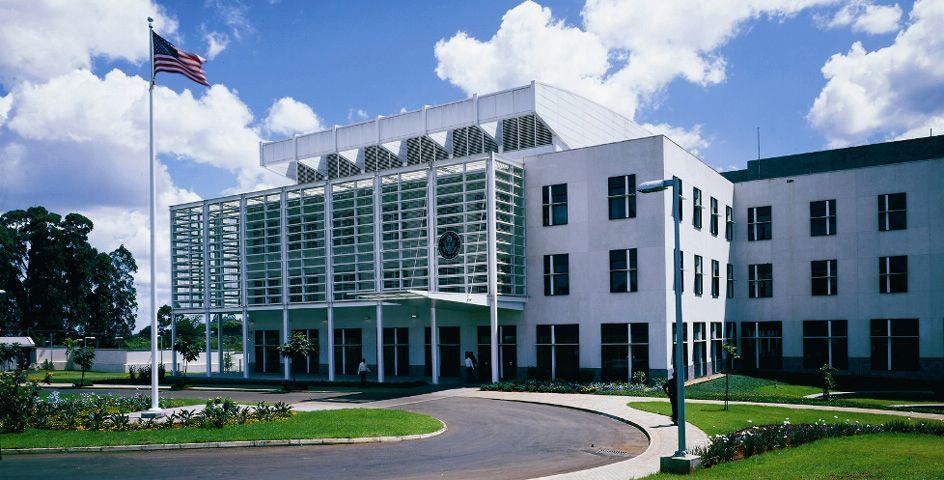
Outside the United States Embassy on United Nations Avenue in Gigiri, the line begins forming before sunrise. By the time the gates open, students with admission letters from Texas universities stand beside parents holding cancer-treatment paperwork from Houston and small-business owners clutching trade-mission letters from chambers of commerce in Atlanta and Dallas. They are all waiting for an interview with a consular officer, and they have been waiting, in one form or another, since November 2024.
That was the month Meg Whitman, the billionaire tech executive who served as Joe Biden's ambassador to Kenya from August 2022, stepped down in the wake of the US presidential election. Donald Trump's victory triggered the routine departures of political appointees across the State Department, and Whitman was among them. What was not routine was what followed: nineteen months in which the embassy in Nairobi operated without a confirmed ambassador at its head.
On Monday 1 June 2026, that vacancy moved closer to ending. The White House announced that Trump had nominated Henry Wooster, a career member of the US Senior Foreign Service with the rank of Minister-Counselor, to be the next Ambassador Extraordinary and Plenipotentiary of the United States to the Republic of Kenya. The Senate has yet to confirm him. But for the families standing in the Gigiri line, and for Kenyans in Atlanta, Boston, Houston and Minneapolis who have been routing requests through a deputy chief of mission, the announcement was the first piece of news in nearly two years suggesting that the post might soon be filled by an actual ambassador, not a placeholder.
A Career, Not a Political Reward
Wooster's biography is striking for its absence of political donor history. Citizen Digital, drawing on the White House statement and US Embassy bio, describes him as a Virginia-based career diplomat who currently serves as Deputy Assistant Secretary for the Maghreb and Egypt in the State Department's Bureau of Near Eastern Affairs. Earlier postings include Deputy Chief of Mission at the US Embassy in Paris, Deputy Chief of Mission and later Chargé d'Affaires at the US Embassy in Amman, and Political Counselor at the US Embassy in Islamabad. He has also served as Director for Central Asia at the National Security Council and as Foreign Policy Advisor to the commanding general of the US Joint Special Operations Command. Wikipedia's entry for Henry T. Wooster records that he held the post of US Ambassador to Jordan from 2020 to 2023, a period that overlapped with the regional aftershocks of the Abraham Accords and a long refugee crisis on Jordan's eastern border.
That résumé matters in Nairobi for a specific reason. Whitman, whatever her gifts as a business executive, arrived in Kenya without prior diplomatic experience and was widely read in the Foreign Service as a political reward for her support of the Biden ticket. Wooster's nomination, assuming the Senate confirms him, would return the Nairobi post to the hands of a State Department lifer. For Kenyan officials trying to negotiate everything from a trade agreement to a security-cooperation memorandum, that is the difference between conversations with someone who knows the cable traffic and conversations with someone who must read in.
A Senate Calendar, A Diaspora Diary
Confirmation is not automatic. Wooster's nomination has been sent to the Senate Foreign Relations Committee, which has been moving Trump nominees in batches but has, in past years, sometimes held Africa-bureau picks for months over policy disputes ranging from Sahel coup responses to Sudan sanctions enforcement. A typical career-track ambassadorial confirmation has run between two and four months in recent administrations; a politically contested one can stretch past a year.
For Kenyans in the United States, the calendar is more than procedural. Diaspora outlets have reported throughout the spring on US immigration changes that directly affect green-card holders born in African countries, including a Department of Homeland Security directive in May ordering some applicants to depart the country to file their cases from abroad. The legal complexity of those rules is precisely the sort of issue the US Embassy in Nairobi is expected to interpret and apply at the local level. Without a confirmed ambassador, the embassy can implement the policy. It cannot, in the way Foreign Service veterans describe, "advocate up the chain" when the policy collides with the realities its officers see every morning at the consular window.
A Tense Backdrop in Nairobi
Wooster's nomination arrives at one of the more strained moments in recent US-Kenya bilateral history. On the same day that the White House released his name, Citizen Digital and other outlets were reporting that two people had died in Nanyuki during violent protests over a US-funded Ebola quarantine facility, that a Kenyan court had earlier issued a halting order on parts of the project, and that the US House Foreign Affairs Committee had publicly criticised the administration's plan to treat Ebola patients in Kenya rather than at home. President William Ruto, on Monday, gave a public defence of why he had agreed to the construction in the first place.
Whoever assumes the ambassadorship will inherit that file from week one. He will also inherit a docket of consular issues that the Kenyan diaspora has been pressing for years: the slow processing of US passports for Kenyan-American dual citizens, the bottleneck around immigrant-visa interviews for parents of US citizens, and the running question of how Kenyans abroad will vote in the 2027 general election from polling stations the Independent Electoral and Boundaries Commission has been promising to expand.
What a Career Diplomat Can — and Cannot — Change
Career ambassadors are not free agents. They implement the foreign policy of the administration that sent them. Wooster, if confirmed, will arrive in Nairobi as Trump's representative, and that means delivering Trump's positions on remittance taxation, on visa categories, on aid conditionality and on Ebola cooperation, even when those positions cut against the wishes of the host government or the diaspora community.
What a career officer can do, and what political appointees often cannot, is run the embassy's internal machinery with intent. Consular sections work better when the ambassador has been a consular officer. Visa interview wait times shorten when the front office knows which Washington bureau to call. Adjudications on humanitarian parole, medical-emergency visas, and student-visa appeals can be elevated within days rather than months. None of that changes Trump-era policy. It changes the velocity at which Trump-era policy is felt by an applicant in Nairobi, Atlanta or Minneapolis.
Until the Senate Acts
For now, the post in Gigiri continues to be run by the deputy chief of mission acting as chargé d'affaires. The line at the consular gate will be the same length on Wednesday as it was on Monday. Trade-mission letters will still travel through Washington for the slowest pieces of clearance. The Ebola dispute will continue to occupy more of the embassy's bandwidth than visa applicants would like.
But somewhere in Virginia, Henry Wooster is preparing for a Senate hearing. He has spent three decades in places where the consequences of bad embassy decisions are immediate and personal — Islamabad in the aftermath of the Lal Masjid siege, Amman during the Syrian refugee surge, the Maghreb desk during a period of repeated coups in the Sahel. He will know, perhaps better than most of his predecessors, that the diaspora reading his confirmation hearing transcript from Dallas or Eldoret is not waiting for a speech. They are waiting for an interview slot, for a passport renewal, for a phone call returned. That is the work he is being nominated to take up.