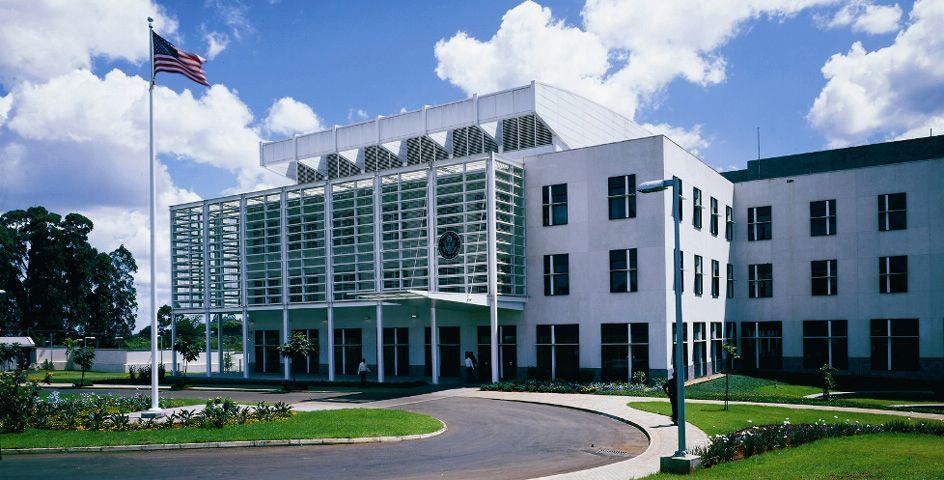
The Air Base With No Patients Yet: How Nanyuki's Protest Deaths Forced Kenya's Court to Open the US Ebola File
Two protesters died in Laikipia on Monday. By Tuesday morning, a judge had told Nairobi to publish every page of its deal with Washington.
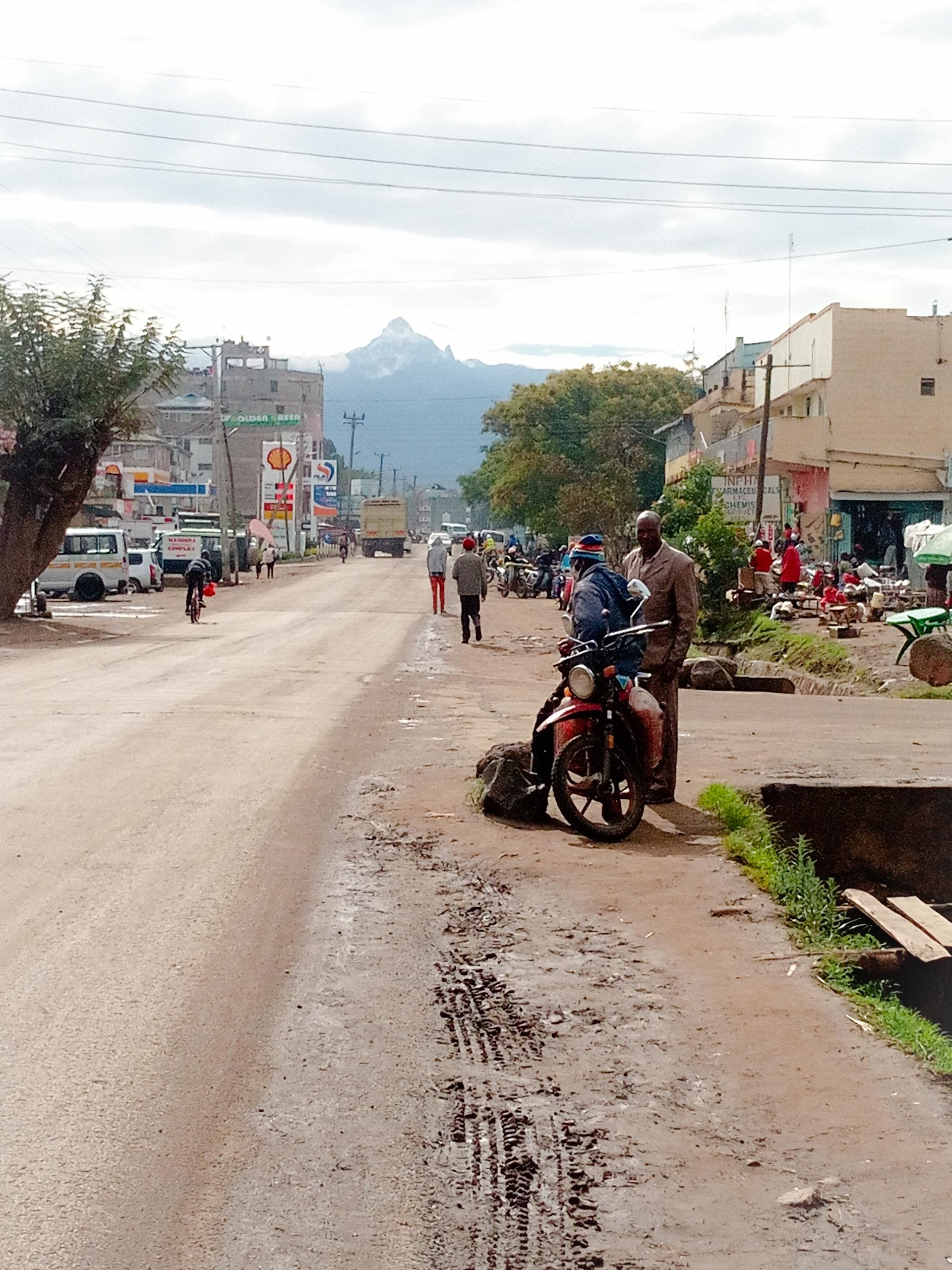
The fires on the Nanyuki road were still smoking on Tuesday morning when Patrick Wahome counted the dead. Two young men, gunshot wounds, both confirmed by a security source to Reuters, both lost in a march that had begun the day before with placards and Kiswahili songs and ended with smoke rising over a town that lives, like a small constellation, around the southern slopes of Mt. Kenya. The march had a target: the perimeter of Laikipia Air Base, where the United States and Kenya have been quietly preparing a fifty-bed Ebola quarantine facility for American citizens who might be exposed to the Bundibugyo strain now killing people in the Democratic Republic of the Congo. Hundreds of residents walked toward the gates of that base on Monday. They wanted the project closed by 9 June. By Tuesday, Wahome had a death toll, the High Court in Nairobi had a new order, and the Kenyan family that follows news from across Eldoret to Edmonton had a fresh, ugly question to put to the chat group: what exactly did our government sign with Washington, and why is the answer not yet public?
A court order that asked for receipts
On Tuesday, 2 June, the High Court extended the conservatory orders that have suspended the Laikipia facility since Friday and pushed the next hearing out by three more weeks. The order, issued in the petition filed by the Katiba Institute, did something the protesters in Nanyuki had been asking for from the start. It directed the Cabinet Secretary for Health, Aden Duale, to publish the actual agreement between Kenya and the United States, along with the health and biosafety assessments, the regulatory approvals, and the operational protocols for any person who might be brought to the air base while infectious. The Law Society of Kenya and the country's main doctors' union, both opposing the facility, were in court. Al Jazeera's correspondent in Nairobi, Catherine Wambua-Soi, summarised the petitioners' argument in a single sentence: the deal is not transparent, and the public has a right to read it before any American patient lands.
What the fifty beds were supposed to do
The facility itself is small in physical terms. According to senior US officials cited by the Associated Press and by Reuters, it is a fifty-bed unit at Laikipia Air Base in Laikipia County, intended for Americans exposed to Ebola while in the Democratic Republic of the Congo or Uganda but still asymptomatic. It was meant to be operational by last Friday. Secretary of State Marco Rubio said the United States would commit 13.5 million dollars toward Kenya's Ebola preparedness as part of the partnership. Officials in Washington argued the arrangement built on a decades-long US-Kenya health relationship that already covers HIV programmes and earlier Ebola work. The arithmetic, on paper, is unremarkable: a small isolation unit on a secure base in a country that has hosted American health logistics for years.
The arithmetic on the Nanyuki road is different. The town sits within walking distance of the air base, and many of its residents either work inside the perimeter or have family who do. Laikipia Governor Joshua Irungu told local journalists his county had not been consulted; he said the placement would expose Kenyans, not protect them. Local clergy joined the calls. The march on Monday began with chants about anti-Ebola messaging and quickly became a confrontation. According to Mwakilishi's reporting, military personnel halted the demonstration before it reached the gate, and the stand-off lasted nearly two hours before senior officials intervened. Security forces opened fire at some point in those two hours; the police spokesperson, Michael Muchiri, told Reuters he was not yet aware of any deaths.
Ruto's defence, Washington's critics
President William Ruto chose to speak from northern Kenya on Monday night, as the protest news was still landing. He defended the project in plain terms. The Laikipia unit, he said, was no different from preparedness facilities the government had quietly set up in twenty-three counties, and the United States had asked Kenya to host it after long cooperation on outbreaks from HIV to COVID-19. He urged Kenyans to trust the government's readiness. That message met a counter-message in the United States itself. The House Foreign Affairs Committee criticised the Trump administration's decision to use Kenya rather than a facility on US soil, arguing that secure American hospitals already exist and that the federal government should bring exposed citizens home rather than ask another country to hold them. The committee also pressed the administration on cuts to US health funding to Kenya, asking why Nairobi was being asked to host American patients at the same moment Washington was reducing its support.
What the diaspora is asked to hold
The diaspora reading this on a phone in Atlanta, Manchester or Doha is asked to hold several things at once. The Bundibugyo strain in the DRC has killed forty-eight people and been declared a public health emergency of international concern by the World Health Organization, with at least two hundred and eighty-two confirmed cases and more than a thousand suspected cases in Congo, and nine cases in Uganda. The US embassy has urged its citizens in Kenya to stay vigilant. Direct flights between Nairobi and the major North American and Gulf hubs continue, and the diaspora's flow of remittances, visits and funerals depends on those routes staying open. At the same time, the Nanyuki story is also a story about sovereignty. The Katiba Institute did not file its petition because it doubts that Kenya can run an isolation unit. It filed because it wants the contract on the public record before a single patient arrives. Many Kenyans abroad share that instinct: they want to know what was promised, what was paid, and who carries the legal risk if the unit ever opens.
A three-week pause, and the questions still on the table
The High Court will hear the next stage of the petition in three weeks. Until then, no Ebola quarantine, isolation or treatment facility may be established anywhere in Kenya, and no person exposed to the virus may be admitted under the proposed plan. The cabinet must, before that hearing, publish the agreement. The dead in Nanyuki have not yet been named publicly; the police service has not yet issued a statement on the shootings. The US travel advisory remains in place. A fifty-bed unit at Laikipia Air Base sits, prepared but empty, while a town that did not ask to host it tries to understand a deal it has not yet been allowed to read. For Kenyans abroad, the next three weeks will read like a small civics lesson about how a bilateral health agreement enters a courtroom, which is to say a very public room with a door the diaspora can also look through.