From Eldoret to the Meriton: How Sheila Chebii's Death and a Sydney March Forced Open an Australian Inquiry
Police in New South Wales now say there is no evidence of self-harm and a senior officer is overseeing the case. For Kenyans in Australia, that admission is the first answer on a much longer list.

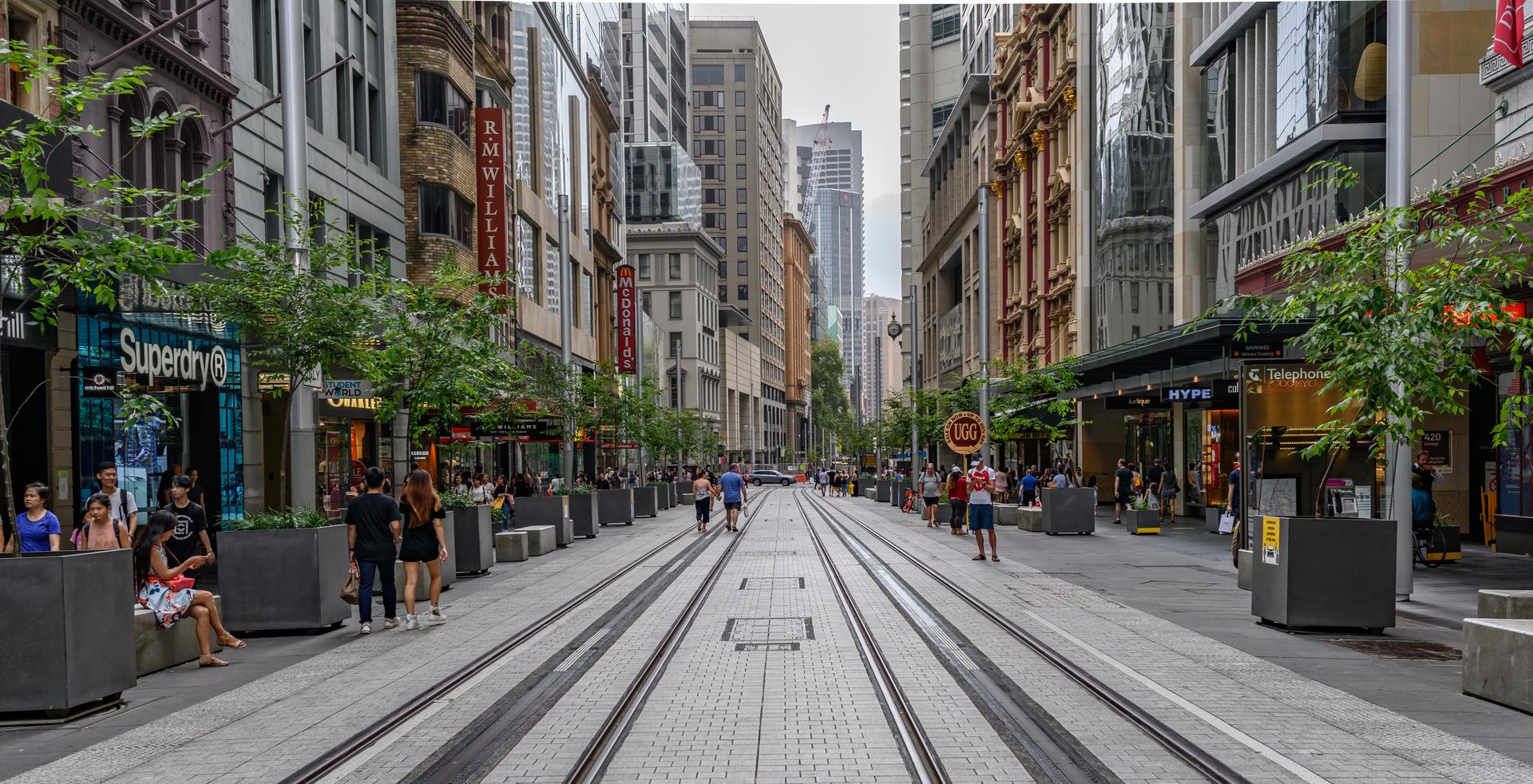
The march set off in the late afternoon on Sussex Street and moved at the pace of a community that had been waiting two weeks for someone to listen. There were placards in English and Swahili, a few people in church clothes, a great many in the kind of practical jackets that Kenyans in Sydney wear after a shift. They walked toward the Meriton complex where Sheila Jepkorir Chebii, twenty-five years old and six weeks into her new life in Australia, had fallen to her death on the seventeenth of May. They had come because the case file felt thinner than it should, and because no one in the family or the diaspora was prepared to accept the silence that had settled around it.
The march was orderly. The meeting that followed was not theatrical either. Family representatives and community leaders sat down with officers from the Sydney City Police Area Command and asked, in plain language, what investigators actually believed. According to the account given to Mwakilishi and corroborated through Kenyan-language coverage on Tuko and the Eastleigh Voice, police told the room there is no evidence to indicate that Chebii died by self-harm or suicide. They said a senior officer has now been assigned to oversee the investigation. They said the inquiry remains open along every available line. None of those statements is a conclusion. But for a family that had been told for two weeks that the death was "not being treated as suspicious," each was a small loosening of the door.
Six weeks, and then a fall from a tower window
Chebii arrived in Australia in early April. She had grown up in Eldoret, in Kenya's Rift Valley, and had travelled to Sydney on a student pathway that, like so many in the current diaspora, doubled as a working route. She took a job as a housekeeper at the Meriton Suites on Sussex Street, a thirty-two-storey block in the city's central business district that mixes serviced apartments with hotel rooms. On the seventeenth of May, she fell from one of its upper floors. British and Australian press reports placed the fall somewhere between the fifteenth and the nineteenth floor; the family has been more specific, telling Kenyan outlets she went from the nineteenth. Either way, the height should have made the circumstances obvious. The family has spent two weeks arguing that it did not.
For a young woman who had been in the country for less than two months, the death drew an unusually wide circle of attention. The Kenyan High Commission in Canberra opened its own inquiries. Kenyans in Sydney, Melbourne and Brisbane began passing the story between WhatsApp groups within days. Coverage in The Kenya Times and Tuko soon framed the case as a test of how Australian authorities treat migrant workers whose lives have not yet built a paper trail in the country where they died.
What the family says does not add up
The family's central objection is medical. Relatives who saw Chebii's body after it was recovered have described what they call "minimal" injuries for a fall of that height: a small wound to the forehead, a dent over one eye, bruising on the arms, an injury to the hip. Daily Mail Australia, citing the family, reported that the pattern struck them as inconsistent with a plunge of fifteen or more floors. The family has not made a specific accusation; what they have said, repeatedly, is that the injuries do not match the official version, and that they will not accept a finding that treats the death as a simple workplace tragedy until the questions about that mismatch are answered.
That is the gap into which the Sydney march walked. The community is not asking the police to abandon their report to the coroner. It is asking that the report explain, in terms a family in Eldoret can read, why a body found at the foot of a thirty-two-storey tower carried so few of the marks one would expect.
A senior officer, but no conclusion yet
The shift announced on Tuesday is procedural rather than evidentiary. Investigators told the family that a senior officer has taken direct charge of the inquiry, an arrangement intended to strengthen oversight while the work continues. The family's legal team is also receiving additional documentation, which their representatives say will allow them to examine the available material in greater detail before the matter reaches the coroner's court. Police said all possible lines of inquiry are being examined and that they have ruled out self-harm. They did not say what they had ruled in.
None of this resolves the case. It does, however, mark a measurable change from the position police held in the days immediately after Chebii's death, when the standard description was that the matter was not being treated as suspicious. For a diaspora that has learnt to read the small print of foreign investigations, that single sentence is the one that has now been retired.
A diaspora that has been here before
Kenyan families abroad have grown accustomed to the long, awkward distances of these cases. A migrant worker dies in a country that does not yet know her name. The local police complete their procedures in a register that no one at home can read. The body comes back, often weeks later, and the official explanation arrives in clauses that close every door at once. The community in Sydney has watched it happen before, most recently in the unexplained death of Kenyan student June Chebet days before her graduation in another Australian state. Across the Pacific the same questions have been asked about Benina Jepkoech, the young Kenyan woman whose vehicle was found in a Canadian river. The diaspora's organising muscle has become, by necessity, an investigative one. It writes to high commissions, it crowdsources translation, and increasingly it walks.
The Sydney march matters in part because it was not a protest against police; it was a request directed at them, with the implicit promise that the community would keep returning until the answers met the questions. That distinction makes it harder to wave away. The senior officer's appointment suggests, at least, that someone in the New South Wales chain of command has heard it that way.
What Eldoret is waiting to hear
There is now a small constellation of dates the family will be watching. The legal team's additional documentation begins arriving this week. The coroner will, in time, receive the police report. A separate process at the Kenyan High Commission will continue to file what diplomats describe as parallel inquiries, including questions about Chebii's employment status and any workplace safety issues at the Meriton site. None of these processes is fast. None will deliver an answer in the kind of time that grief operates on.
For the relatives in Eldoret, the next test is narrower. They want a medical explanation, written for laypeople, of how a fall from the nineteenth floor can produce the injuries they describe and no others. They want the workplace's safety records examined and made available. They want the woman who left Kenya in April to be returned to her family with a story attached that the family can recognise as the truth. The diaspora in Sydney has signalled that it will keep walking, if necessary, until that story is written.
For now, the door has moved. It has not opened.