Twenty-Six Days Before the Gown: How June Chebet's Death in Newcastle Pulled an Eldoret Family Under Again
She had a graduation date marked for 26 June. Her father had already buried one child. Wallsend's Kenyans now gather each evening for the second Kili goodbye.

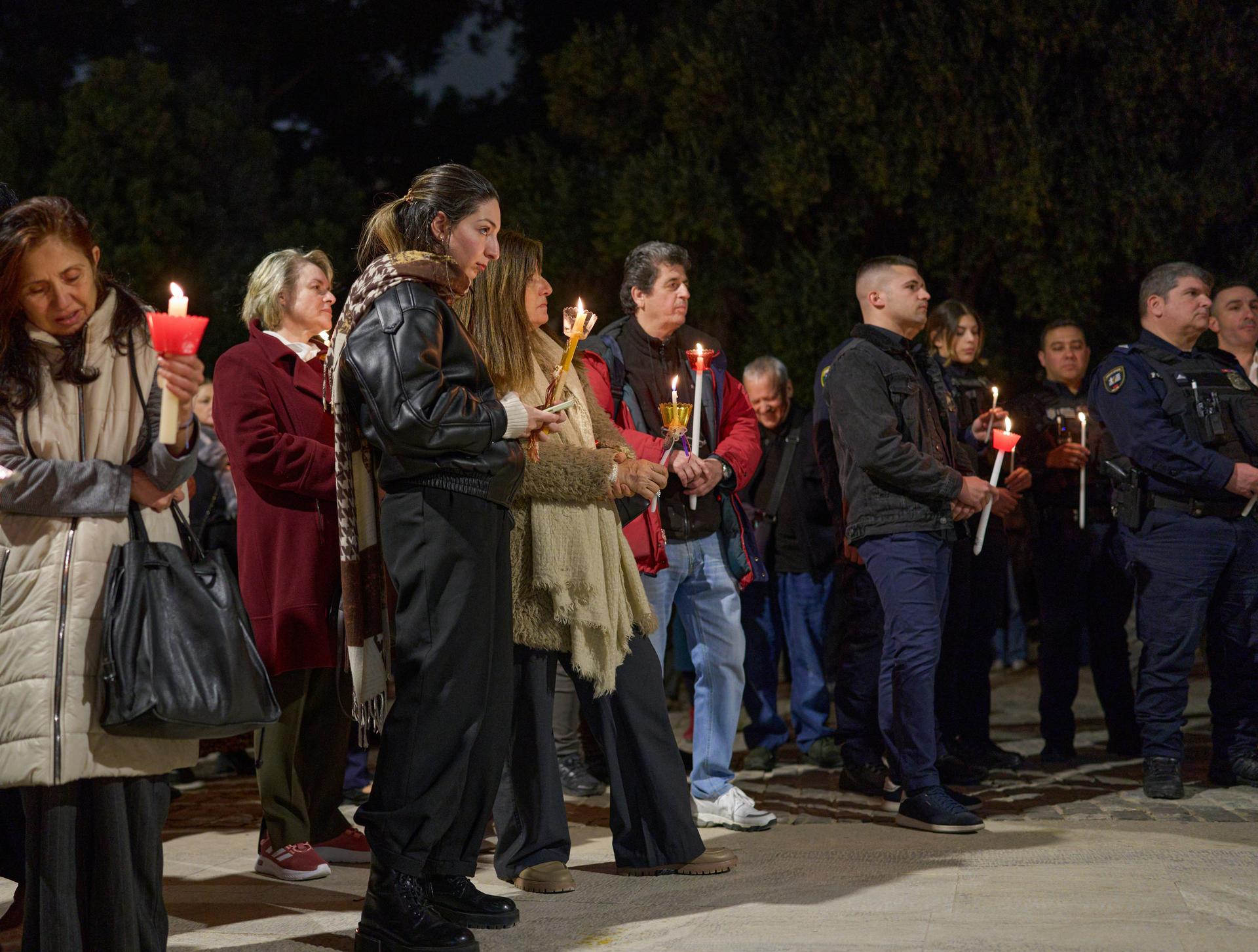
Each evening at 1/58 Devon Street, Wallsend, the door to a small apartment in the northern suburbs of Newcastle stays open later than usual. Kenyans drift in one or two at a time, carrying foil-wrapped chapati, water bottles, and Bibles whose spines have begun to crack. They take off their shoes at the threshold. Then they sit on the carpet, on dining chairs, on the edge of an unmade sofa, and they pray for a family they have never met in person — the Kili family of Eldoret, who twenty-four hours ago lost a daughter, and twenty-four months ago lost a son.
The daughter was June Chebet Kili. She died on Sunday, 1 June, in a hospital bed at Calvary Mater in Newcastle. She was twenty-six days short of the graduation ceremony she had been preparing for since she landed in Australia in 2024. Her family in Eldoret has not yet released the cause of death. Community leaders in Wallsend confirmed her passing on Monday and asked friends to refrain from speculating until the family is ready to speak.
The University She Did Not Finish
June had enrolled at the University of Newcastle two years earlier, joining the small but steady Kenyan cohort that the university's international office has begun to track as a category of its own. The university's main campus sits at Callaghan, a long bus ride inland from the harbour, and most of the Kenyans there live in the cheaper rental belt that stretches from Wallsend down to Mayfield. June was, by her family's account, a dedicated student who was committed to her education and future, with plans to return to Kenya after completing her studies. Her graduation was scheduled for 26 June 2026. A black-and-white invitation card had already been printed.
Friends from the small Kenyan student circle in Newcastle described her in modest terms. She studied. She cooked githeri in a borrowed pot on the stove in shared accommodation. She had been saving aerogramme-style voice notes from her father, the Eldoret farmer George Kili, in a phone folder marked simply Baba. The university itself has not made a public statement, but international student offices in New South Wales typically wait for the family to authorise any release before commenting on the death of a student.
A Second Kili Funeral in Two Years
The grief that has fallen on Eldoret is not new grief. Two years ago, June's brother Rodney Kili died in a farm accident at the family's holding in the highlands above the town. The Kili family had already buried him by the time June left for Newcastle. Several Kenyan outlets — including Parents Africa, Streamline Feed, and Nairobi Leo — have noted this week that George Kili is now mourning a second child in less than two years.
The pattern is one that Kenyan counsellors who work with rural farming families have begun to flag publicly: when a child dies abroad, the surviving parents often endure a second, slower grief — the wait for the body to come home, the cost of repatriation, the cardboard box of belongings that arrives by courier. The waiting is harder when an earlier loss is still close. In the case of Bishop George Kaye, whose family in western Kenya waited 210 days to bury him after a death in the United States, the financial toll was eventually crowdsourced through diaspora groups. The Kili family has not yet asked for help publicly. Wallsend's organisers say they are waiting for that decision before launching any appeal.
Why Newcastle Has Become a Quiet Hub
Newcastle, the smaller coastal city two hours north of Sydney, does not appear on most lists of Kenyan diaspora hubs. Sydney, Melbourne, Perth and Brisbane do; Newcastle does not. But the University of Newcastle has, over the past five years, become a quietly significant destination for Kenyan undergraduates priced out of the better-known Australian universities. Tuition is lower. The rental market, while tightening, is less unforgiving than Sydney's inner west. And the local Kenyan community has grown large enough to sustain a roster of monthly chamas, a Sunday worship circle, and a WhatsApp tree that can move 200 messages on a quiet night.
That same tree is what carried the news of June's death across the country between Sunday evening and Monday morning. By the time the Mwakilishi news desk in Nairobi published its first short report on Tuesday, Kenyans in Newcastle, Sydney, Brisbane and Melbourne had already begun pooling money in informal collections — not yet for repatriation, organisers stress, but for the daily prayer meetings, the food, and the eventual cost of communicating with Eldoret in real time.
A Diaspora That Is Counting
June Chebet's death is the second loss of a Kenyan student in Australia that the diaspora has been forced to absorb in the space of weeks. On 21 May, Mwakilishi first reported that the death of Sheila Chebii, a Kenyan student also based in New South Wales, was being investigated by local authorities. On Tuesday — the same day June's passing was confirmed — Australian police told the Chebii family they had ruled out suicide as a cause but had not yet concluded their inquiry.
For Kenyan parents whose children have left for Australia in the last three years — the post-pandemic wave that took advantage of the country's loosened student visa rules and post-study work pathway — the cumulative effect of these stories is heavy. They are not, by any clinical measure, a cluster. But to a parent in Eldoret reading a WhatsApp forward at four o'clock in the morning, the distinction is academic. The diaspora is now keeping its own informal ledger: where the death happened, how long the family waited, who paid for the casket.
What Happens Next
The Kili family has not yet announced repatriation plans. Community organisers in Wallsend said memorial arrangements would be communicated through the Kenyan Students' Association and a local Hunter Valley welfare group in the coming days. A formal statement from the University of Newcastle is also expected once the family has been consulted and any privacy preferences confirmed.
In Nairobi, the announcement on 1 June by Prime Cabinet Secretary Musalia Mudavadi that the government will create a Diaspora Welfare Fund for Kenyans abroad arrived too late to help the Kili family with this particular loss. The fund has no floor plan yet, and no money has been disbursed. But for the Kenyans gathered each evening in a small apartment on Devon Street, the news that someone in Nairobi is at least counting them — and counting children like June Chebet — is, for now, something to pray about.