Sussex Street in White: Why Sydney's Kenyans Marched to a Meriton Tower to Demand Answers About Sheila Chebii
A 25-year-old accounting graduate from Eldoret had been in Australia six weeks. The diaspora gathered to ask why her injuries did not match a nineteen-storey fall.
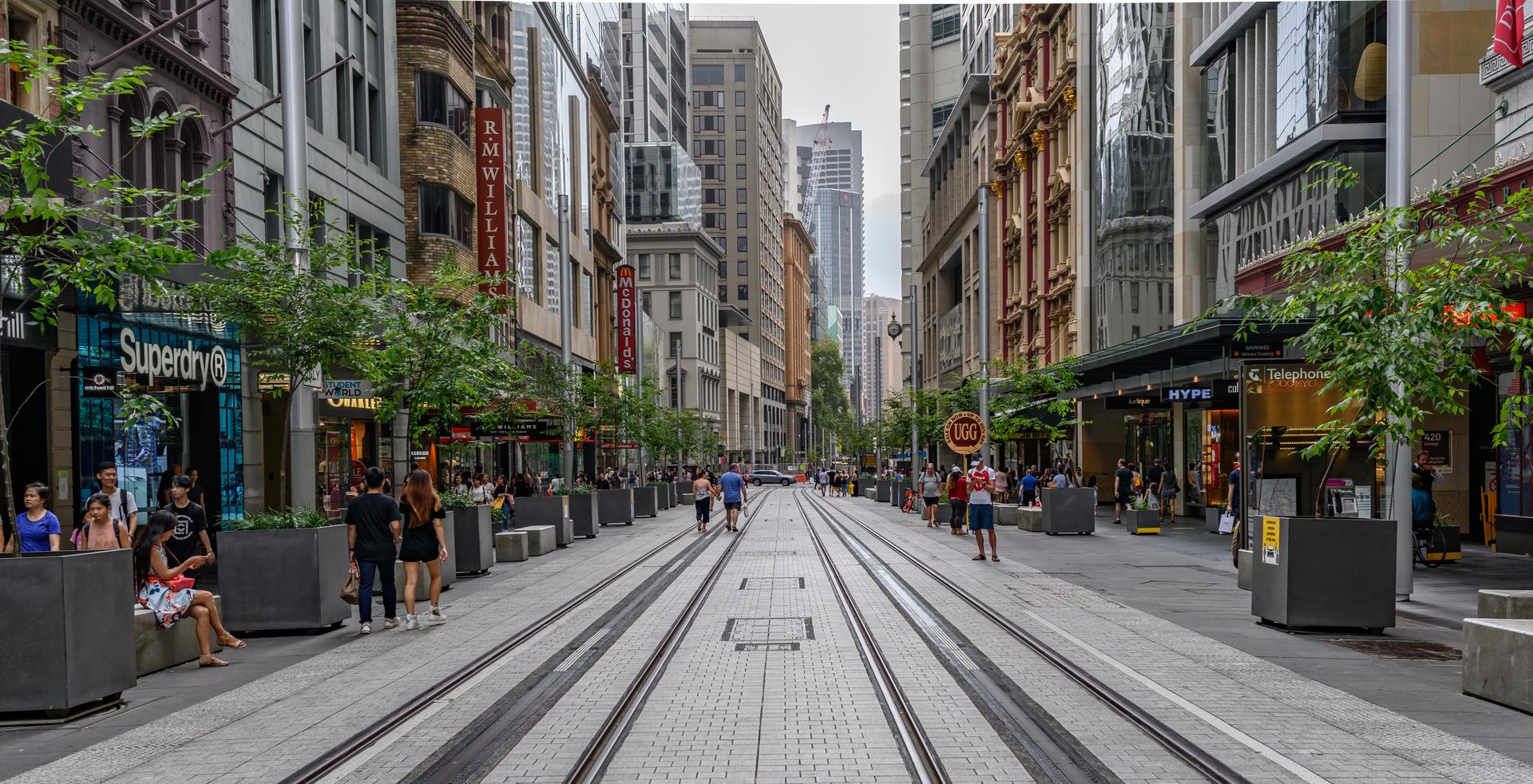
They came up Sussex Street in white. Hundreds of Kenyans living in Australia, some who had flown in from Melbourne and Brisbane, walked from the centre of Sydney's central business district toward the bronze-and-glass face of Meriton Suites, where the woman they came to mourn had clocked in for cleaning shifts only weeks earlier. They carried Kenyan flags and homemade placards. A few wore traditional cloth over their shoulders. The banner at the front of the column read, "Justice for Sheila Chebii, Fight for Our Sister." When they reached the tower's entrance, they stopped, and several of the women began to sing.
The march on Monday was the public face of a grief that has been building inside the Kenyan-Australian community since the morning of 17 May, when 25-year-old Sheila Jepkorir Chebii was found dead at the base of the 32-storey Meriton Suites on Sussex Street. She had been in the country for about six weeks. Police told her family they were not treating the death as suspicious. Her relatives, looking at the body, did not understand how that could be the conclusion.
A Six-Week Australian Life
Sheila came from Kimumu, on the northern edge of Eldoret, the kind of neighbourhood where a graduation gown is still a household event. She had finished an accounting degree at Kabarak University in 2024, worked briefly at home, and then made the move many of her classmates had been weighing for years. In April she landed in Sydney on a student visa, planning to pair further study with part-time work that would help her pay her fees and send something home.
The work she found was at Meriton Suites Sussex Street, one of the largest serviced-apartment buildings in the Sydney CBD. She was on the housekeeping team. People who travel often to Sydney know the routine inside towers like this one: turnover days that start before sunrise, trolleys steered down narrow service corridors, linens carried into rooms whose doors are propped open with door wedges. New arrivals tend to land on these shifts, and Kenyans abroad — particularly women in their twenties who are working their way through a course — have become a quiet, recognisable part of the workforce that keeps Australia's hospitality sector running.
She had been doing it for less than a month and a half when she died.
The Fall the Family Cannot Reconcile
Reports shared with Sheila's family say she fell from the nineteenth floor. The numbers themselves are part of what has driven the protest. A fall of that height onto hard surface almost always produces catastrophic injuries: shattered limbs, severe head trauma, internal damage that is unmistakable. According to accounts circulated by relatives and community organisers, what they found on Sheila did not match. They have described a small mark on the forehead, a dent over one eye, bruises along her arms, and an injury to one hip. To families that have buried other young Kenyans abroad, that profile is closer to the marks of a struggle than the aftermath of a fall.
The family has not accused anyone publicly. They have asked, instead, for a fuller and more transparent investigation, and for any internal records — security footage, key-card logs, witness statements taken by hotel staff — to be released or reviewed by an independent body. They have also asked Australian authorities to consider whether the circumstances of her work shift in the hours before her death were properly examined.
A Diaspora That Has Done This Before
The Sydney rally has the texture of an event the Kenyan diaspora in Australia has learned to organise on short notice. The community is comparatively small — a few tens of thousands across the country, with concentrations in Sydney, Melbourne and Perth — but it is connected by overlapping WhatsApp groups, church networks, and student associations on campuses from Macquarie to Curtin. When a Kenyan dies abroad under unclear circumstances, the same volunteers tend to surface: someone who knows a lawyer, someone who can liaise with the Kenyan High Commission in Canberra, someone who can run a GoFundMe to repatriate a body.
This is not the first such gathering in the past month. Just days before the Sussex Street march, the same community was mobilising around June Chebet Kili, another young Kenyan student who died at Calvary Mater Hospital in Newcastle, New South Wales, days before her own graduation. The two deaths are unrelated. But for Kenyans in Australia, the proximity of the two cases has reinforced a fear that the conditions under which their young people are studying and working are not being scrutinised closely enough.
What Australian Authorities Have Said
New South Wales Police, in initial statements quoted across Kenyan and Australian outlets, have indicated that they are not treating Sheila's death as suspicious and that no further information would be released while inquiries continue. That phrase — "not treating as suspicious" — has become a flashpoint. It is standard policing language used in early stages of many sudden-death investigations and does not, on its own, mean the case is closed. But within an immigrant community already worried about how migrant deaths are handled, the formulation reads as a door being shut.
A coroner's process is the more authoritative track. In New South Wales, deaths from falls, workplace incidents, or otherwise unexplained causes are routinely referred to the State Coroner, who can order autopsies, summon witnesses, and publish findings. The community's demand is, in essence, that this process be visible: that the coroner take the case, that the autopsy report be shared with the family in full, and that any conclusions about cause of death be supported by evidence the relatives can read.
Beyond One Investigation
What gives the march its broader weight is the awareness, on both sides of the placard, that this is not only about one young woman. It is about the conditions under which thousands of Kenyan students abroad are stitching together late shifts, early classes, rent, and remittances, often without the kind of family safety net that would catch them if something went wrong. Speakers at the Sydney event called on the Kenyan government, the High Commission, and Australian regulators to look at protections for student workers in serviced-apartment and aged-care sectors, where Kenyan women are increasingly visible.
For Sheila's family in Kimumu, the immediate task is smaller and harder. They are waiting for a body to come home, for paperwork to clear, and for an answer they can hold. The crowd that filed past Meriton Suites this week was, in part, telling them they are not waiting alone.


