Sussex Street in White: How a Sydney March for Sheila Chebii Made a Hotel Tower a Diaspora Address
Hundreds of Kenyans walked from Market X Sussex to a 32-storey hotel where a 25-year-old housekeeper fell, turning a private grief into a public demand for answers.

The procession began at Market X Sussex a little after one o'clock on Tuesday afternoon, and by the time it turned onto Sussex Street proper, the column of mourners had already pressed traffic to the kerb. Kangas the colour of new milk, white shirts, white headwraps, and the green-black-red of dozens of Kenyan flags moved in a single direction. Above them rose the glass of the Sydney central business district. Ahead, after a few blocks of office towers, stood the 32-storey Meriton Suites where a 25-year-old housekeeper named Sheila Jepkorir Chebii had been on duty on 17 May, and from which, according to police, she fell. The marchers walked the route she would have walked to work. For three hours, a private grief from Kimumu in Eldoret occupied a stretch of Australia's busiest commercial city.
The banner at the front of the column read "Justice for Sheila Chebii, Fight for Our Sister." It was carried by Kenyans who had flown in from Melbourne, Brisbane and Perth, by nurses still in scrubs from morning shifts, by students who had taken the afternoon off lectures. Many had never met Sheila. Almost all said they had come because they had a daughter or a sister or a cousin who had also flown to Australia on a student visa in the last two years, and because they wanted to know what had happened in a hotel where one of those young women had gone to work and not gone home.
The fall, and the questions the family will not stop asking
Sheila Jepkorir Chebii arrived in Australia in April, six weeks before her death. She had completed an accounting degree at Kabarak University in Nakuru and had enrolled for further studies in Sydney. To cover her costs she had taken a part-time job as a housekeeper at Meriton Suites on Sussex Street, a serviced-apartment tower in the heart of the CBD. On the afternoon of 17 May, according to the account reported to her family by police, she fell from the 19th floor and landed on the 4th.
The figures do not sit easily with the people who washed and dressed her body. Relatives told Mwakilishi and The Kenya Times that the injuries they saw were not the injuries of a 15-storey fall. There were bruises, they said, and a small wound on her forehead. There were no broken bones consistent with that drop, and no signs of the catastrophic trauma a fall of that height would normally produce. Police have not confirmed the cause of death. Until they do, the family has said, the official account is one possibility among several.
That uncertainty is what brought Sussex Street to a standstill. Speaker after speaker returned to it: that a young woman who had spent six weeks in Australia had died in a workplace in a country that prides itself on the safety of its workplaces, and that her relatives in Kimumu still did not have an answer to give to her mother about how.
A diaspora that has learned how to convene
The Sydney march did not happen by accident. In the days after Sheila's death on 17 May, Kenyan WhatsApp groups across New South Wales, Victoria and Queensland filled with the same two photographs of her — one in graduation regalia, one in the navy blazer of her first office job in Nairobi. By 21 May, organisers were circulating a permit application. By 24 May, a route had been agreed. By 26 May, posters were going up in Kenyan churches in Auburn, in Blacktown, in Liverpool, in Wollongong.
That speed is itself a measure of how the Kenyan community in Australia has changed in the past five years. The number of Kenyans on student and skilled-worker streams has risen sharply since 2021, with hotel housekeeping, aged-care and nursing among the most common entry-level roles. Many of those workers arrive on visas that tie their immigration status to a specific employer or course of study, and many carry debts at home — fees at private universities in Australia routinely run past A$30,000 a year — that make it costly to walk away from a job, even an unsafe one.
The marchers did not need the statistics. They walked behind a 25-year-old's photograph because they could see in it the shape of their own arrival.
What Sussex Street looked like on Tuesday
The route was deliberate. From Market X Sussex the column moved down Sussex Street, past the Chinatown end of the CBD, and on towards the entrance of Meriton Suites. Sydney's afternoon office traffic absorbed the marchers without much fuss; pedestrians stopped to read the banners; a small group of supporters with Australian flags joined the back near Bathurst Street. At the front, organisers had asked everyone to walk in silence for the final two blocks. By the time the procession reached the tower, the silence held.
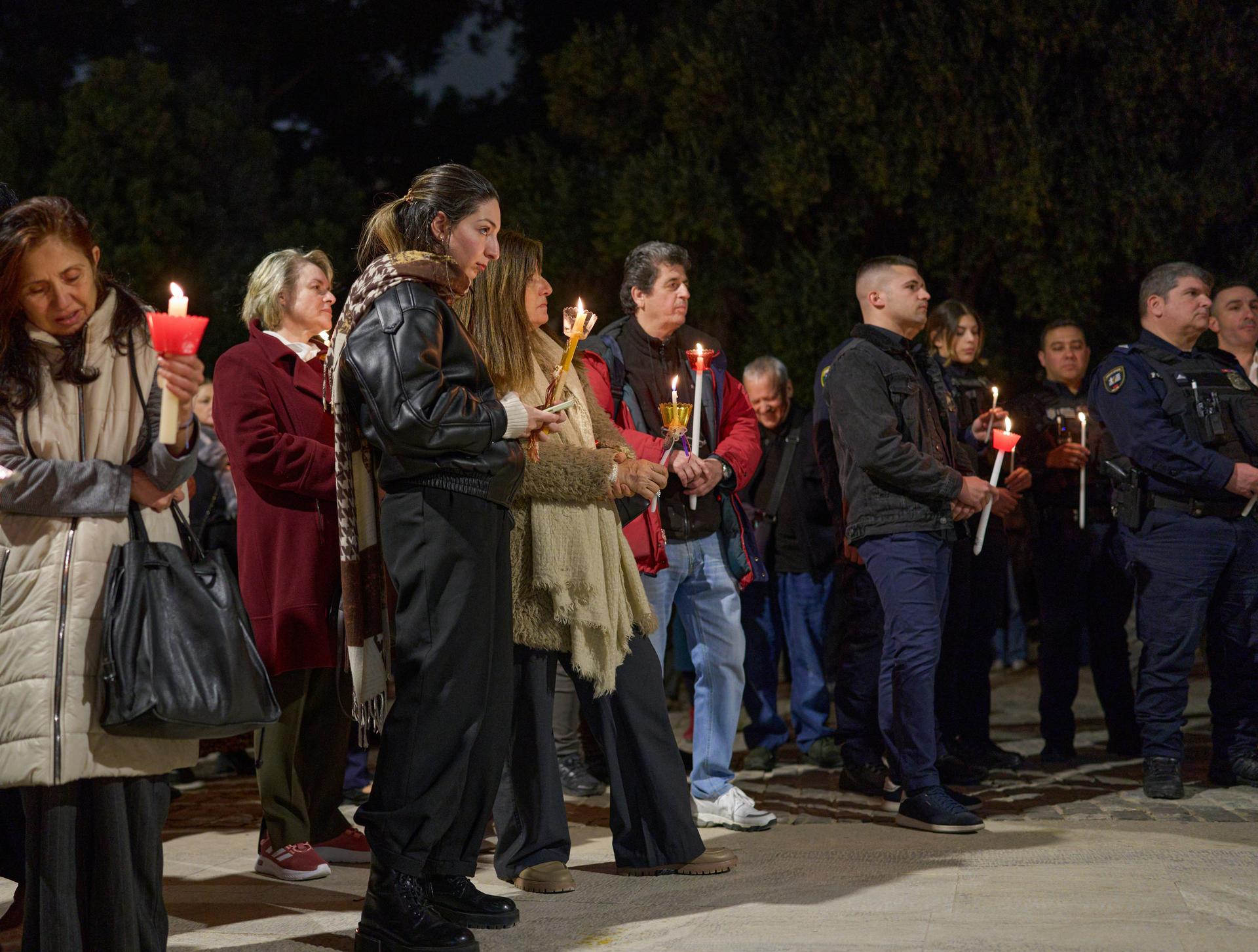
A vigil was held outside the building. Names were read. Hymns in Swahili and Kalenjin were sung. A statement from Sheila's family in Kimumu was read aloud by a cousin who had flown over from Melbourne. It thanked the Kenyan community for not letting their daughter's name slip out of the news cycle, and it asked for two things: a transparent and independent investigation, and a meeting with Meriton Suites management to understand what was known about her shift on 17 May.
What the diaspora is now asking for, beyond Sheila
By the time the vigil ended a little after three o'clock, the demands had grown beyond a single case. Organisers told the crowd they would write to the New South Wales Coroner and the Kenyan High Commission in Canberra, and would ask for three things. First, full disclosure of the police investigation file once it is complete. Second, an independent occupational-health review of conditions for housekeeping staff at Meriton Suites and at comparable serviced-apartment towers in the Sydney CBD. Third, a formal channel — a desk, a phone line, a named officer — at the High Commission for Kenyan migrant workers in distress, modelled on similar arrangements other African missions have set up for their nationals in the Gulf.
None of those asks is a thing the New South Wales police can grant in the next week. None is a thing the High Commission can deliver in the next month. But once spoken aloud on a city street, they become difficult to put back down. The march was not only for Sheila Chebii. It was also for the next housekeeper, the next student, the next 25-year-old who lands at Kingsford Smith airport with a single suitcase and a five-year plan.
Back in Kimumu
Sheila's mother spent the morning of the march at home in Kimumu, taking calls from relatives in Sydney as the procession formed. A neighbour later told Mwakilishi that she had asked, when the first photographs from Sussex Street reached her phone, whether all those people were really her daughter's friends. She was told that almost none of them had ever met Sheila. She asked the neighbour to repeat that twice.
The investigation in Sydney remains open. The Meriton Suites tower returned to its usual rhythms by Tuesday evening. The march will not change either fact on its own. But for one afternoon, a stretch of Sussex Street belonged to a young woman from Kimumu who had been in Australia for six weeks, and to a diaspora that had decided her name was not going to drop out of the conversation about who keeps Sydney's hotels running, and at what cost.