The Word Spoken at Kelelwa: How a Pastor's Mental-Health Plea at Tom Talam's Funeral Reopens an Old Silence in the Diaspora
Investigators have ruled out homicide and suicide in the death of Zacchaeus 'Tom' Talam. The conversation his pastor started at the burial may matter even more.
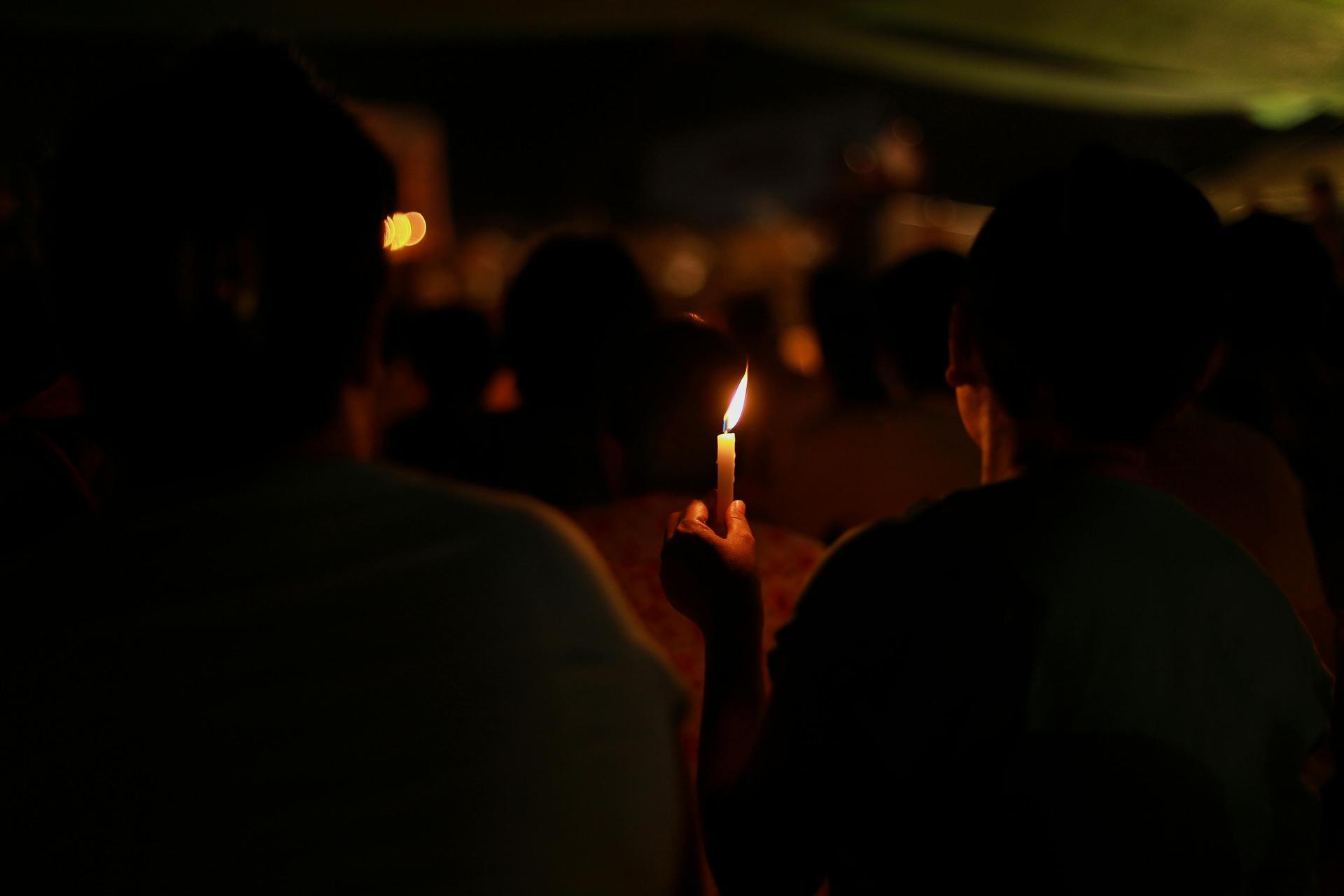
The microphone passed to Apostle Isaac Nganga on a Sunday morning in Kelelwa, a village in Mogotio Constituency where the air still held the dust of the long-rain season. The American pastor had flown in to bury one of his own — Zacchaeus "Tom" Talam, 46, who had been reported missing on 29 April in Bethany, Oregon, and whose body was found ten days later in circumstances his family had spent the last month trying to piece together from seven thousand miles away.
Nganga did what any pastor does at such moments. He prayed. He read scripture. He spoke about a man's life — the kindness, the steady hands, the years quietly stitched into a Kenyan congregation in the Pacific Northwest. Then he did something else. He paused, looked out at the mourners under the tent, and asked the African men in the crowd to talk.
It was not a typical funeral remark. But by Sunday afternoon, when the news of his words reached Kenyan diaspora pages from Maryland to Melbourne, the line that travelled was not about a coffin. It was about a silence.
The Findings, And What They Are Not
What Nganga also brought to Kelelwa was the closest thing the family has yet had to an answer. According to information he relayed from American investigators, the medical examination of Talam's body found no injury, no fractured bone, no sign of violence, and no evidence consistent with suicide. Both homicide and self-harm have been ruled out as causes of death, the pastor told mourners, words that were reported on Sunday by Mwakilishi.com under a headline of cautious finality: "Kenyan Man Found Dead in US Buried as Investigators Rule Out Murder and Suicide."
"When they examined the body, there was no injury that was seen, no sign of violence, no broken limb, no broken bone, and there was no sign of suicide," Nganga said, in remarks the outlet quoted at length.
He added a procedural note that may matter to families who have lived through similar months of waiting. Had investigators suspected foul play, the body would not have been released for repatriation. The Kelelwa burial, in other words, was itself a sign that whatever closed the case was not a hand and not a rope. The pastor urged mourners to stop circulating unverified theories and to allow investigators time to finish their work.
What the findings do not yet provide is an answer to the question every Kenyan funeral asks aloud at some point: why did this man die. The investigators have narrowed the field. They have not, at the time of burial, filled it in.
A Pastor Steps Past the Eulogy
It was into that narrowed field — the gap between "not a murder" and "not yet known" — that Nganga walked when he turned to mental health. Talam, he told the mourners, had been struggling with depression. He did not give clinical detail. He did not need to. He used the moment to make a wider plea: that African men, particularly those living far from home, learn to speak about what is heavy inside them, and learn to ask for help before the weight begins to choose for them.
There is a particular weight to those words at a Kenyan funeral. The script for such gatherings is well grooved. Eulogies are warm. Pastors comfort. Politicians, when they attend, talk about national values. The deceased's struggles, when they involve the mind, are very often passed over in silence — partly out of respect, partly out of stigma, partly because the language for them has never been laid down in Kiswahili or in Kalenjin the way it has been laid down in English.
Nganga did not pass over. That alone is news.
A Silence Long Carried Across Oceans
Kenyan diaspora media has, in the past few weeks, begun cataloguing the cost of that silence in single names. The names accumulate quietly and then force their way into a headline. Sheila Jepkorir Chebii in Sydney. The Kenyan nurse Jackie Omino in Sweden. The restaurateur William Mukabane in the United States. Now Tom Talam in Oregon, with depression named openly at the burial itself.
These cases differ in their facts. Some are accidents. Some are illnesses. Some are still open. What they share, when seen from a distance, is a context — a Kenyan abroad, often working hard, often supporting people back home, often surrounded by community but not by the kind of intimate help that pries an admission of struggle out of someone who has been raised to bear it alone.
The Kenyan-born population in the United States is now estimated by community associations at well over 150,000, with large clusters in Maryland, Virginia, Texas, Minnesota, Massachusetts and the Pacific Northwest. They are nurses, drivers, lab technicians, software engineers, students and restaurant owners. Many hold two jobs. Many send money home every fortnight. Few, in private conversation with their pastors and friends, will say that they are not coping.
What the Research Shows, and What It Misses
There is now a steady body of academic work, in the United States, the United Kingdom and Australia, on the mental health of African migrants. It tells a consistent story. Rates of depression and anxiety are higher than in non-migrant populations. Help-seeking rates are lower. The gap is widest among men. Cultural mistrust of mental-health services, language barriers, the cost of therapy, immigration anxiety, and an inherited message that strength means silence all contribute. The literature is not new. What is new, in any given week, is the willingness of a community leader to say its findings out loud.
What that research does not capture is the texture of a particular Kenyan evening — the long shift at a nursing home, the Skype call home in which you do not tell your mother that the rent has gone up again, the deposit you promised your brother for the boda boda, the funeral contribution you make twice a month into a SACCO you only half believe in. It is not depression in a strictly clinical sense. It is the slow accretion of obligation, distance and pride, in a body that did not move across an ocean to ask for help.
A pastor in Kelelwa, standing over a coffin, named that quietly. It is a small thing and a large thing at once.
The Small, Local Lifelines
For Kenyans in the diaspora reading the headline on Sunday, the practical question is what to do with the words. Community-led options exist and are, on the whole, underused. The Kenya Diaspora Alliance and county-based associations in Maryland, Virginia, Minnesota and Texas run informal peer-support networks. Several Kenyan-led churches in the United States, including the one Nganga serves, have begun training elders in basic mental-health first aid. In the United Kingdom, organisations such as Black Minds Matter UK and African and Caribbean community counselling services offer therapy from clinicians familiar with diaspora pressures. In Australia, the New South Wales Transcultural Mental Health Centre offers intake lines in multiple languages. None of these replace formal care. All of them lower the door.
The reach-out itself is what Nganga asked for. Not a diagnosis. A conversation.
Talam was remembered in Kelelwa, finally, as a compassionate man — the kindness, the steady hands, the years quietly stitched. Kenyan communities in Maryland and Virginia, the family said, helped with the legal work to bring him home, navigating documents tied to his United States citizenship so that his remains could rest in Mogotio. That, too, is what diaspora is. The same network that organises the repatriation can organise the phone call. The pastor's plea, carried home on a Sunday by a Kenyan news site, is that more of those phone calls happen before the repatriation, not after.