The Uniform He Lost, the Life He Found: A Kenyan Sailor's Road Through Addiction, Deportation and Recovery
Martin Aringo won the Green Card lottery, joined the US Navy and lost it all to alcohol. Now sober in Kenya, he is turning his lowest years into a warning and a lifeline for others.
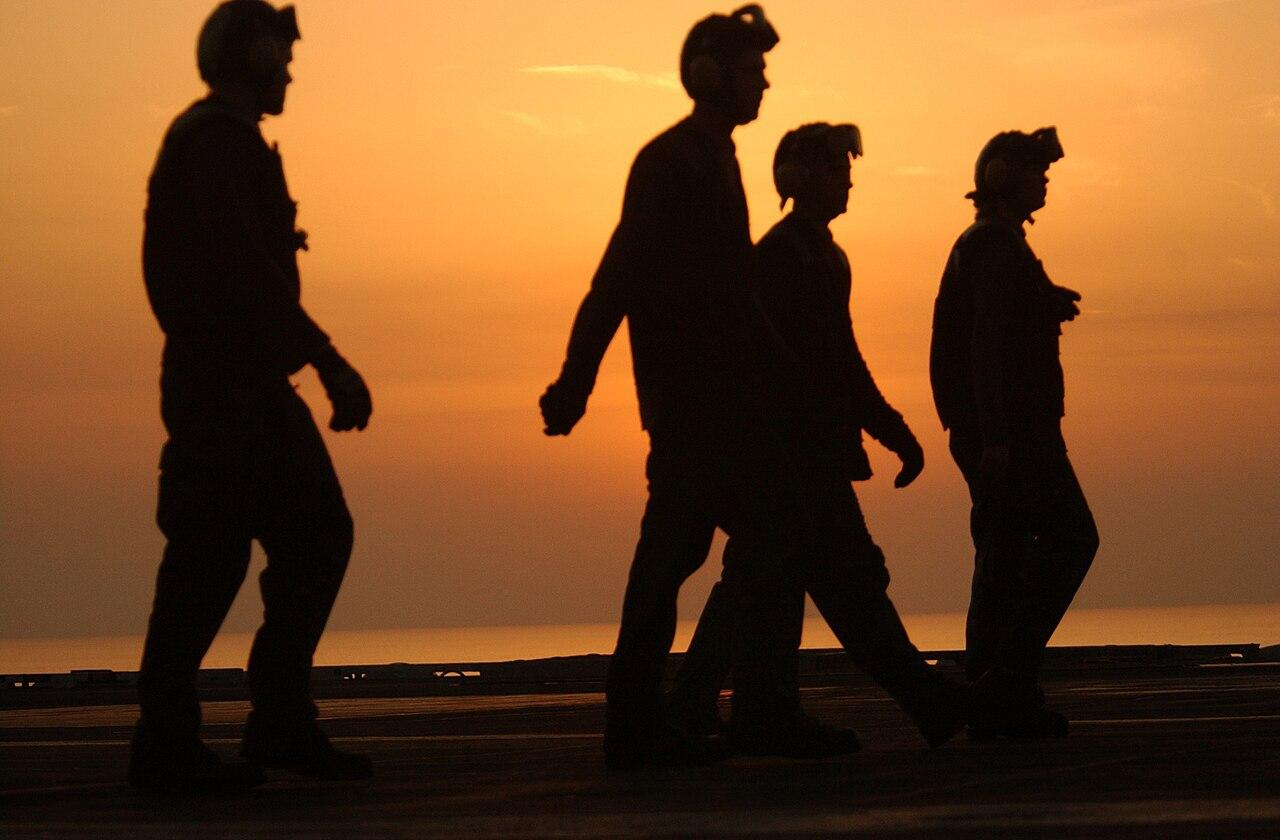
"I felt like I had lost my identity," Martin Aringo says of the day he understood what the bottle had taken from him. Not just the uniform of the United States Navy, which he had worn with the pride of a young man who had made it further than most people from his neighbourhood ever dreamed. Not just the life in Texas that his family's winning Green Card lottery entry had opened up. All of it — career, country, sense of self — gone, and in its place a plane ticket back to a Kenya he barely recognised.
Aringo's story, told this week to the diaspora news outlet Mwakilishi, is not the kind Kenyans abroad usually share in family WhatsApp groups. There is no graduation photo at the end of it, no new house going up in the village. It is instead a story about what alcohol dependence and untreated mental illness can do to even the most promising immigrant journey — and about the harder, quieter achievement of getting sober after everything has already been lost.
The Lottery Ticket to Texas
Aringo moved to the United States as a teenager, according to Mwakilishi, after his family obtained permanent residency through the Diversity Visa programme — the Green Card lottery that remains, for thousands of Kenyan households, the single most realistic doorway into American life. The family settled in Texas, and the young Aringo did what ambitious new arrivals do: he enrolled in nursing school, eyeing one of the professions that has carried so many Kenyans into the American middle class.
Then he made a choice that set him apart. He joined the US Navy.
For immigrant families, military service has long carried a particular promise. It offers steady pay, training and an accelerated path to citizenship for lawful permanent residents who serve honourably. Non-citizens have fought in every major American conflict, and recruiters have historically leaned on green-card holders to fill the ranks. For a Kenyan teenager who had just won the lottery in the most literal sense, the Navy looked like the fastest way to repay the country that had let him in — and to anchor himself in it permanently.
When the Drinking Stopped Being Casual
It was during his military service, Aringo told Mwakilishi, that the drinking began — casual at first, the kind of off-duty habit that military culture has never been good at discouraging. Gradually it became dependency. The dependency began to show up in his work and his personal life, and then in a record of repeated offences.
The Navy dismissed him. With the uniform went the structure that had held his American life together, and the legal troubles that followed eventually put him in front of an immigration system that shows little mercy to non-citizens with criminal records. His family fought to keep him in the United States, according to Mwakilishi. They lost. Aringo was deported to Kenya.
What he carried home was heavier than his luggage. His addiction crossed the ocean with him, straining relationships and deepening his isolation. And somewhere in those years he received a diagnosis that reframed everything that had come before: bipolar disorder, a condition that very often travels hand in hand with substance abuse, each feeding the other in a cycle that clinicians call dual diagnosis and that families usually just call watching someone disappear.
The Veterans America Sends Away
Aringo's path from military service to deportation is less rare than most Americans — or Kenyans — assume. A 2019 report by the US Government Accountability Office found that at least 250 non-citizen veterans were placed in removal proceedings between 2013 and 2018, and that 92 were deported in that period. The watchdog also found that immigration authorities did not consistently follow their own policies requiring extra review for veterans' cases, and kept such incomplete records that the true number of deported former service members is unknown.
Military service, it turns out, speeds up naturalisation but does not guarantee it. A green-card holder who serves and never completes the citizenship paperwork remains deportable for life, no matter what they wore or where they were posted. Advocacy groups have documented deported veterans scattered from Tijuana to Nairobi, many of them discharged over conduct rooted in the same conditions — post-traumatic stress, depression, addiction — that their service either caused or worsened.
For the Kenyan diaspora, which has sent a steady stream of young men and women into the US armed forces, the lesson in Aringo's story is uncomfortably practical: the uniform protects you only as far as the paperwork behind it.
Coming Home to a Treatment Gap
Deportation ended Aringo's American story, but it dropped him into a country poorly equipped for the twin conditions he brought back. Kenya's own mental-health taskforce reported in 2020 that the burden of mental illness in the country was high enough to warrant being treated as a national emergency, with a severe shortage of specialists and most sufferers never receiving care. Consistent treatment for bipolar disorder — medication, monitoring, therapy — remains out of reach for many ordinary Kenyans, and the national campaign authority NACADA has for years identified alcohol as the country's most widely abused substance.
That is the landscape a deportee with dual diagnosis lands in: no VA hospital, no insurance, often no income, and a social environment where mental illness still attracts more stigma than sympathy. Aringo told Mwakilishi that his recovery was made harder by exactly this combination — the addiction, the diagnosis, and the limited access to consistent treatment and support.
That he got sober anyway is the most remarkable line in his story.
Recovery as Testimony
Today, Aringo says, he is sober and rebuilding. He has chosen to speak publicly about the addiction, the dismissal, the deportation and the diagnosis — not to relitigate his past, but to reach the people still inside theirs. He wants others to seek help before the drinking costs them what it cost him, and to show that recovery is possible with commitment and support.
It is a form of service, in its way. The diaspora is full of quiet strugglers — students self-medicating loneliness, shift workers drinking through night rotations, professionals whose families back home see only the remittances and never the man behind them. Diaspora life amplifies mental-health pressure and hides it at the same time; distance keeps secrets well.
Aringo's testimony punctures that silence. The Green Card lottery, nursing school, the Navy — all of it could not protect him from an illness no one taught him to name. What saved him, in the end, was the thing that costs nothing and feels hardest: saying it out loud, and asking for help. For every Kenyan abroad quietly fighting the same fight, that may be the most valuable thing a countryman has sent home in years.