The Surname From a Blacksmith's Village: How a Kikuyu Name Became a Landlord's Empire in Poland
Sławek Muturi left corporate life at 43 and built one of Poland’s largest property businesses. His story complicates what the Kenyan diaspora calls "making it abroad."
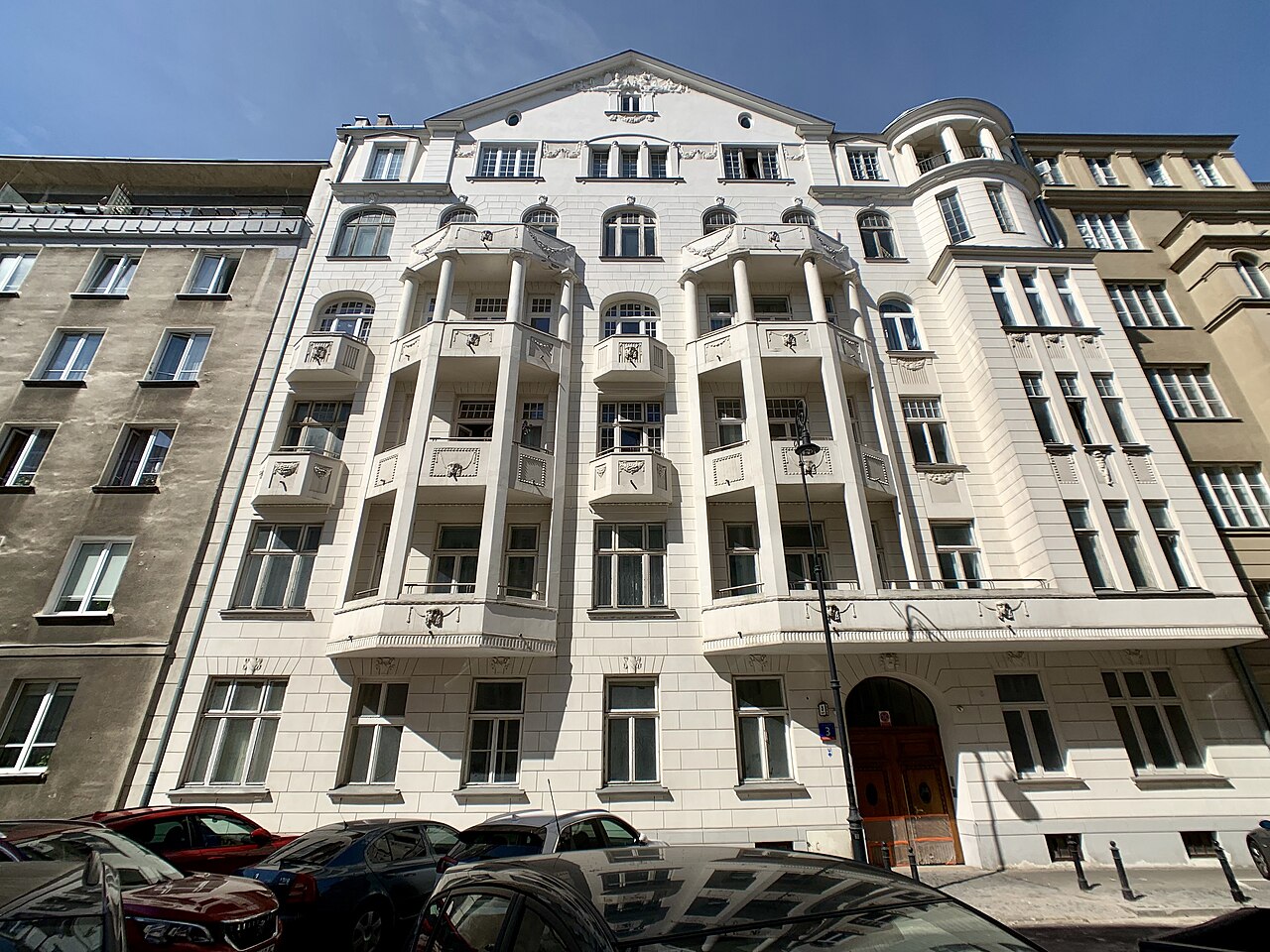
In May 2009, a 43-year-old man in Warsaw did something that most people spend their working lives only imagining: he stopped. He did not retire because a company pension had matured or because illness forced his hand. He stopped because the rent cheques arriving each month from apartments he had been quietly buying since 1998 had grown larger than the salary he earned at a senior consulting job. The arithmetic had tilted. He walked away from corporate life and never went back.
The man is Sławek Muturi, and the surname is the first thing a Kenyan reader notices. It is a Kikuyu name, carried by a Polish-Kenyan investor who has become one of the most recognisable figures in Poland's residential property market. His story has resurfaced this week in the Kenyan diaspora press, and it is worth telling carefully, because it sits at an unusual angle to the familiar diaspora narrative of struggle, remittance and return.
A Name That Crossed a Continent
Muturi was born to a Kikuyu father and a Polish mother, a pairing that placed him between two worlds from the start. His father had left colonial-era Kenya for Poland, where he built a life as a lecturer and senior civil servant rather than as a migrant labourer. That detail matters. It means Muturi grew up not in the Kenyan immigrant enclaves of London or Boston, but inside the Polish professional class, fluent in its institutions and its language.
The family name itself reaches back further than Warsaw. Muturi is a surname associated with the Kikuyu blacksmith tradition, a lineage tied to metalwork, patience and skilled craft. It is the kind of detail that can sound merely decorative until you notice how neatly it maps onto the career that followed: a man who built something durable, piece by piece, over years rather than months.
By his own account Muturi speaks nine languages, among them English, Swahili and Kikuyu. He treated education as a lifelong project, studying at Warsaw Business School and later completing an MBA at London Business School. Before property consumed his attention, he held senior positions at the consulting firm Andersen and at Deloitte Central Europe, accumulating exactly the kind of analytical training that he would later turn on the housing market.
The Quiet Exit at Forty-Three
Muturi's investment journey began in 1998, not with a dramatic gamble but with residential flats in Warsaw, Łódź and Katowice. He applied the discipline of his corporate career to the slow business of being a landlord: buy carefully, hold patiently, reinvest the income, repeat. There was no single windfall, no viral moment. There was a portfolio that compounded.
By May 2009 that portfolio had done its work. The income it produced was enough to free him from employment altogether, and at 43 he left. In the language of personal finance, he had reached financial independence; in plainer terms, his buildings now paid him more reliably than any boss could.
What he did next is the part that turned a private success into a public role. Rather than disappear into a comfortable retirement, Muturi became an evangelist for the very path he had walked. He has written five books and hundreds of articles on investing and personal finance, and he helped establish Poland's first landlords' association, lending structure to a rental sector that had grown faster than its institutions.
Building Mzuri
The most visible product of that second act is the Mzuri Group, a property management and investment platform that has become one of the largest of its kind in Poland. The name is itself a small bridge between his two heritages: "mzuri" is Swahili for good or beautiful, a Kenyan word stamped onto a Polish company.
Mzuri's scale is substantial. Across its management and crowdfunding arms, the group oversees thousands of residential units and employs a large staff, and its crowdfunding model has opened property investment to people who could never buy a building on their own. By pooling small investors into larger projects, Mzuri turned Muturi's personal strategy into something closer to a public utility for the patient saver. It is, in effect, the institutionalisation of the approach that let one man retire early.
For a Kenyan audience, the resonance is hard to miss. Muturi's emphasis on systematic, investor-led housing development echoes ambitions back home, where firms such as Centum Investment Company have pursued large-scale projects like the Two Rivers development in Nairobi and the Vipingo community on the coast. The instinct is the same; the setting is different.
The Kenya He Studied but Did Not Build In
That difference is the uncomfortable centre of the story. Muturi has spoken in the past of his interest in Kenyan real estate, yet his empire rose in Poland, where, in his assessment, property was cheaper to acquire and the returns came with fewer obstacles. A man with a Kikuyu surname and a deep curiosity about home chose, as an investor, to plant his capital in Central Europe.
It is not a comfortable lesson, and it should not be flattened into a slogan about Kenya "losing" its talent. Muturi is not a Kenyan who emigrated; he is a son of the diaspora's first generation, shaped as much by Warsaw as by any ancestral village. But his career does pose a quiet question that Nairobi's policymakers have been circling for years: what makes a market easy enough to build in that the children of its diaspora choose to come back with their money, not just their visits?
A Diaspora Lesson in Patience
Beyond the balance sheets, Muturi has cultivated a reputation as a restless traveller, reportedly having visited every country in the world twice over. The image fits the man: someone who treats both geography and finance as systems to be understood rather than feared.
For the wider Kenyan diaspora, his life offers something less glamorous than the usual success story and perhaps more useful. It is not a tale of one lucky break but of decades of disciplined accumulation, begun in his early thirties and compounded quietly until the numbers set him free. The surname came from a village of blacksmiths. The fortune came from doing the unspectacular thing, repeatedly, until it became spectacular. That is a Kenyan inheritance worth claiming, wherever the buildings happen to stand.