The Apartment That Bought His Freedom: How a Kikuyu-Polish Investor Retired at 43 and Reshaped Poland's Rental Market
Born to a Kikuyu father and a Polish mother, Sławek Muturi turned a single Warsaw flat into one of Poland's largest property platforms — and a quiet blueprint many in the Kenyan diaspora now study.
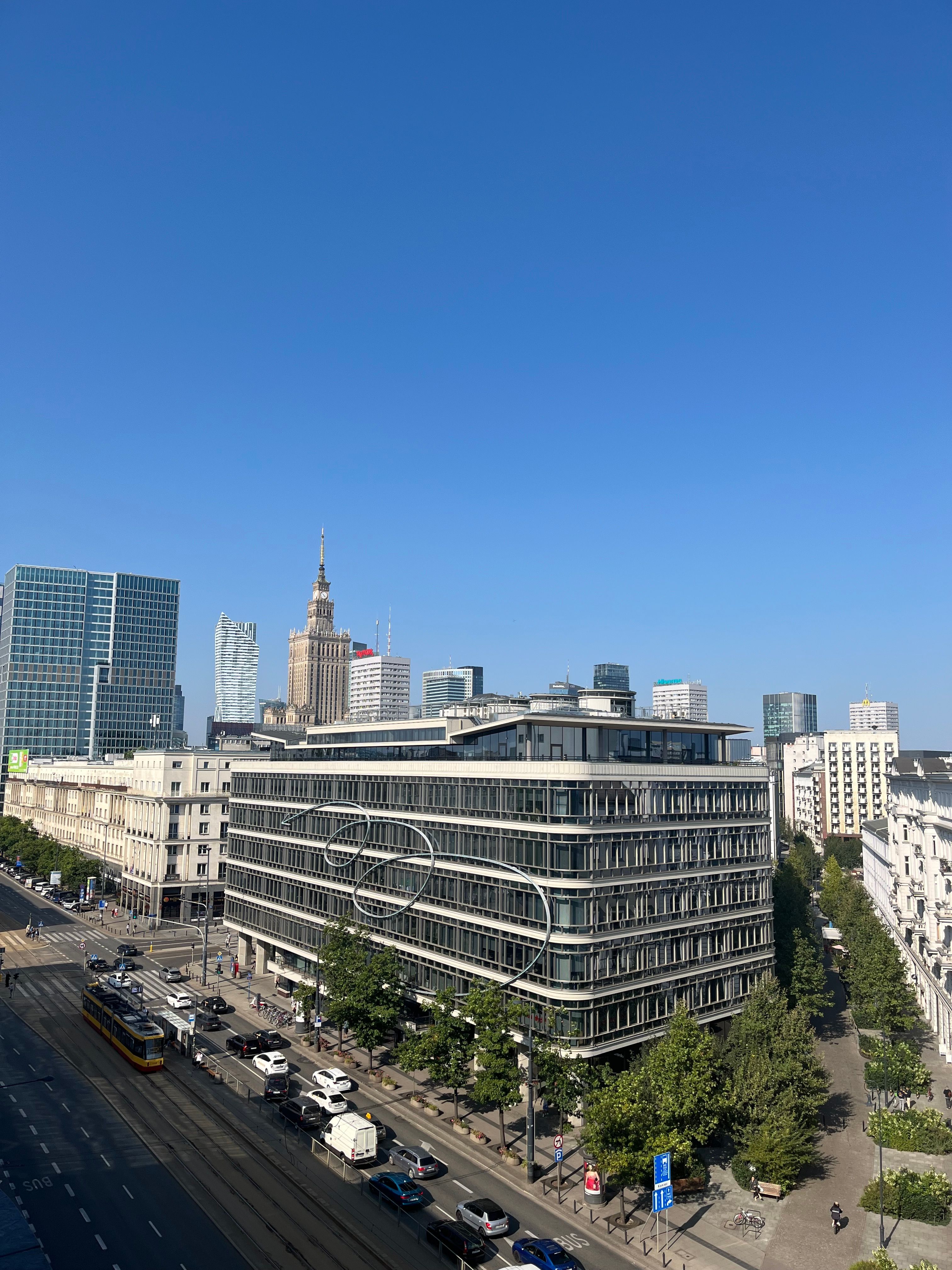
In May 2009, a 43-year-old consultant in Warsaw did something most of his colleagues at the big professional-services firms only daydream about between deadlines. He stopped going to the office. Not for a sabbatical, and not because anyone had pushed him out. Sławek Muturi simply added up the rent cheques arriving each month from a portfolio of apartments he had been quietly assembling for more than a decade, compared the total to the salary he was about to walk away from, and concluded that the salary was now the smaller number. He handed in his notice and never went back to corporate employment.
The decision sounds reckless until you trace the eleven years of discipline that made it possible. Muturi's story has been retold this week across the Kenyan diaspora press, and it lands differently than the usual headlines about Kenyans abroad. There is no deportation order here, no fundraiser to bring a body home, no warning about visa fees. There is instead a patient, almost unglamorous account of how a man with one Kenyan parent and one Polish parent built financial independence brick by brick — and then spent the rest of his life teaching other people how to do the same.
From Colonial Kenya to a Warsaw Lecture Hall
To understand Muturi, you have to start a generation earlier, with a father who made an improbable journey. The elder Muturi left colonial Kenya for Poland, where he settled, married a Polish woman, and built a life as a university lecturer and senior civil servant. It was an unusual path for a Kenyan of his era, when most who travelled abroad for study gravitated toward Britain or the United States. The family name itself, Muturi, carries an echo of the Kikuyu blacksmith tradition — a lineage associated with skilled, deliberate craftsmanship, the kind of work that rewards patience over flash.
That inheritance of two worlds shaped the son. Sławek Muturi grew up fluent in the cultures of both his parents and, by his own account, in an extraordinary number of languages. He speaks nine, among them English, Swahili and Kikuyu, alongside the Polish of his upbringing. Education was never treated as a finishing line but as a continuous project; he studied at the Warsaw School of Economics and later completed an MBA at London Business School, one of Europe's most competitive programmes.
The First Key
Muturi did not begin as an investor. He began as an employee, and a successful one. He held senior roles at Arthur Andersen and later at Deloitte's Central European operations, accumulating the kind of consulting experience that teaches a person how businesses actually make and lose money. Crucially, he also accumulated savings, and he treated those savings as seed rather than comfort.
In 1998 he bought his first apartment in central Warsaw, reportedly converting a slice of his consulting income into hard currency and using it as a deposit. It was a modest start by the standards of the empire that followed. But the logic he applied to that single flat — buy, rent out, reinvest the income, repeat — was the same logic he would scale relentlessly over the next decade. He expanded beyond Warsaw into other Polish cities, including Łódź and Katowice, choosing residential property in markets where prices were reasonable and rental demand was steady. By the time the rent cheques outgrew his salary in 2009, the method had quietly proven itself.
He has been candid, in interviews over the years, about why he built this in Poland rather than in Kenya. He has said he would have liked to invest back home, but found property prices high relative to returns and the business environment difficult to navigate from a distance. Poland, where he already lived and understood the rules, offered cheaper entry and more predictable yields. It is a calculation thousands of diaspora investors recognise: the heart points one way, the spreadsheet points another.
Building Mzuri
Retirement, for Muturi, turned out to be a misnomer. Freed from a single employer, he poured his energy into systematising what he had learned. He helped establish Poland's first landlords' association, lending structure to a rental sector that had grown faster than its rules. He wrote prolifically — five books and hundreds of articles on investing and personal finance — becoming one of the most recognisable voices in the country's conversation about money and independence.
The most durable product of that second act is the Mzuri Group, whose very name borrows the Swahili word for "good." What started as one man's portfolio became a property-management and investment platform that now oversees thousands of apartments across Poland and employs a substantial team. Through its management arm and its crowdfunding activities, Mzuri opened the door for ordinary people — not just the wealthy — to put money into residential real estate and to outsource the unglamorous work of being a landlord. In a sense, Muturi turned his personal escape route into infrastructure that others could use.
A Bridge Between Two Property Worlds
Muturi's approach has obvious echoes in East Africa, even if he chose not to build there himself. The idea of pooling investor capital to develop housing at scale is precisely the model behind some of Kenya's most ambitious projects, including Centum Investment Company's Two Rivers development in Nairobi and the Vipingo community on the coast. Where those Kenyan ventures chase scale through large institutional capital, Muturi's contribution has been to democratise the smaller end of the market — to show that a teacher, a nurse or a mid-level manager can become a landlord through a platform rather than through inherited wealth.
There is also the matter of his restlessness. Beyond the balance sheets, Muturi is known for having travelled to every country in the world — twice — and once for driving roughly 9,000 kilometres overland from Europe to Kenya, retracing in reverse the kind of journey his father made decades earlier. The image is hard to resist: a man whose fortune was built on staying put long enough for compound interest to work, who then spent that fortune on going everywhere.
What the Diaspora Takes From It
It would be easy to file Muturi away as a feel-good profile, a pleasant break from heavier diaspora news. That would miss the point. His life is, in effect, an argument — that the wealth-building strategies available to Kenyans abroad are not limited to sending remittances home or buying a plot back in the village to sit idle. He represents a third path: investing patiently in the country where you actually live and understand the system, then using the proceeds to support family and community on your own terms rather than under financial pressure.
That message carries weight at a moment when the diaspora is being squeezed on several fronts, from rising visa costs to economic uncertainty in host countries. Muturi's example does not erase those pressures. But it does complicate the prevailing narrative of vulnerability with a reminder that some of the most consequential diaspora stories are slow, deliberate and built one apartment at a time. For a community that sent home tens of billions of shillings last year, the question his career poses is a sharp one: how much of that money is working as hard as he made his first flat work, back in 1998.