The Year the Contracts Ran Out: What a New Government Count of Returning Kenyans Reveals
A first-of-its-kind KNBS survey counts 50,465 Kenyans who came home from abroad in a single year — and finds most returned not by choice, but because the work simply ended.
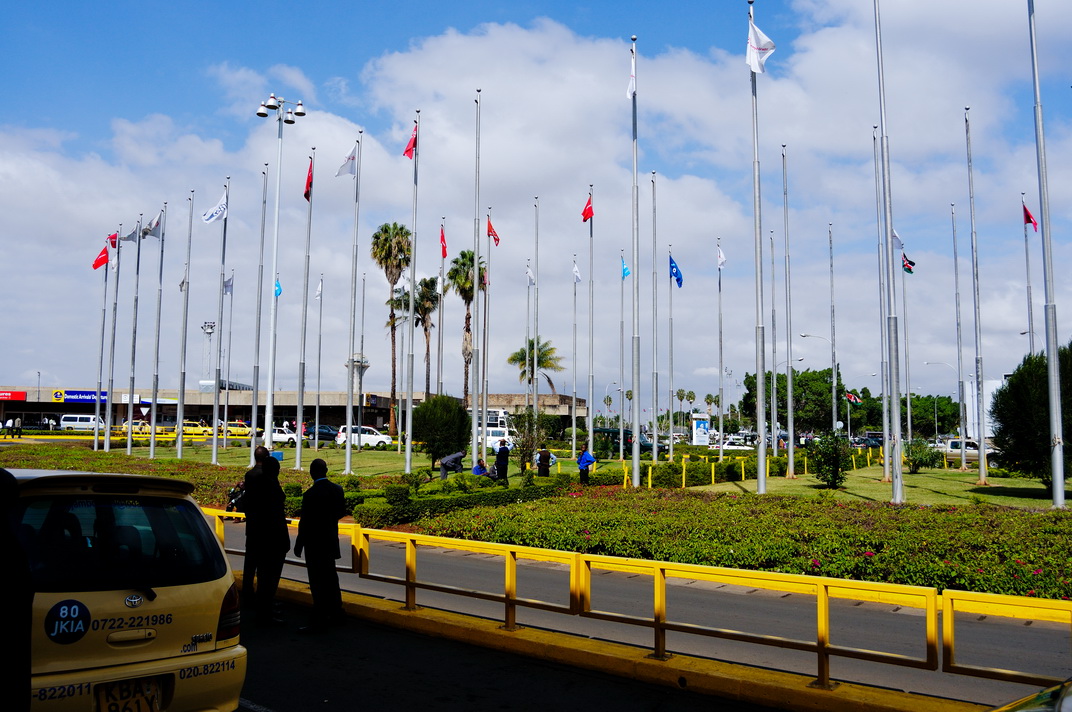
The arrivals hall at Jomo Kenyatta International Airport rarely sleeps. In the small hours, when the long-haul flights from the Gulf touch down, the doors slide open on a particular kind of homecoming: workers wheeling overstuffed suitcases, a few clutching nothing but a phone and a folder of documents, scanning the rail for a face they have not seen in years. Some are returning in triumph. Many are returning because there was nothing left to stay for.
A new report from the Kenya National Bureau of Statistics now puts a number on that quiet nightly procession. According to the 2025 Remittances Household Survey Report, released on 16 June, 50,465 Kenyan emigrants returned home between June 2024 and May 2025. It is among the first times the government has tried to measure not just the money Kenyans send back, but the people who come back themselves — and why.
The Reason Most Often Given
The survey's central finding is sobering. Of the more than fifty thousand returnees counted, 59.2 per cent — close to 30,000 people — said the main reason they came home was that their employment contract had expired or their job had been terminated. In other words, the single largest driver of return migration is not nostalgia, not family, not a business plan back in Nairobi. It is the simple fact that the work ran out.
Only 0.3 per cent of returnees said they had come back because of a job transfer, the kind of orderly, employer-arranged move that characterises secure professional careers. The contrast is the story in miniature: for most Kenyans abroad, the job abroad is not a ladder but a fixed-term arrangement that ends, often abruptly, leaving the worker to find their own way home.
A Migration Built on Short Contracts
The structure behind those numbers is well known to anyone who has watched a relative pack for Riyadh, Doha or Dubai. A great deal of Kenyan labour migration, especially to the Gulf, runs on two-year contracts tied to a single employer. When the contract lapses or the employer decides to end it, the legal basis for remaining in the host country often lapses with it. The worker who arrived on a sponsored permit can find themselves, almost overnight, without a job, without status, and without the savings cushion that would make staying possible.
That fragility helps explain why return is so frequently involuntary. A worker on a permanent visa in Toronto or Manchester can ride out a redundancy and look for the next role. A domestic worker or security guard on a tied Gulf contract usually cannot. The KNBS figure of nearly 30,000 contract-driven returns in a single year is, in that sense, less a statistic about individual decisions than a description of how the system is built.
The Smaller Stories Inside the Data
Not every return is a setback, and the survey captures the more hopeful threads too. About 7.6 per cent of returnees said they had come back intending to start a business, bringing capital and ideas accumulated overseas. Another 4.9 per cent returned in search of farming land, and 2.2 per cent came home to look for paid employment within Kenya. A small share, 0.6 per cent, were linked to refugee or asylum circumstances, while education, health and family reasons each accounted for less than 0.3 per cent of recorded returns.
A striking 24.6 per cent fell into the category of "other" or unspecified reasons — a reminder that migration experiences are messy and rarely fit neatly into a survey's boxes. Behind that quarter of cases sit illnesses, broken contracts, disputes, deaths in the family and a hundred private calculations that no questionnaire can fully record.
From Counting Cash to Counting People
For years, Kenya's conversation about its diaspora has been dominated by a single, dazzling figure: the billions of dollars in remittances that flow home each year, now one of the country's largest sources of foreign exchange. That money matters enormously. But it has also tended to flatten the diaspora into an abstraction — a remittance pipeline rather than a population of people with careers that begin, falter and end.
The value of the new survey is that it widens the lens. By counting returnees alongside remittances, KNBS is implicitly asking a harder question: what happens to the worker after the money stops? Speaking at the report's launch, KNBS official Benjamin Muchiri said it was important to understand patterns of return migration and to consider how the knowledge, resources and experience of returning migrants could be channelled into national development. It was a bureaucratic sentence carrying a large idea — that a returnee is an asset, not a failure.
The Reintegration Gap
The trouble is that Kenya has built an elaborate machinery to send workers out and almost none to receive them back. There are recruitment agencies, pre-departure trainings, bilateral labour deals and a steady government drumbeat encouraging young people to seek work abroad. There is far less on the other side of the journey: no broad reintegration programme to help a returning welder convert Gulf experience into a local licence, no easy credit line for the 7.6 per cent who want to start a business, no structured pathway for the nurse or driver coming home with savings and skills but no obvious place to deploy them.
That gap has consequences. A returnee who cannot find a foothold may simply re-migrate within months, often on worse terms, restarting the cycle the survey has just measured. The skills, the savings and the hard-won experience that Muchiri spoke about leak away for want of a landing pad.
The 50,465 people counted in this report are not a crisis in themselves. Return migration is normal, even healthy, in any mobile workforce. The warning in the data is narrower and more specific: that for most of these Kenyans, coming home was not a plan but a default, triggered by the end of a contract they did not control. If the government can read that finding correctly — as a call to build the reintegration side of the ledger — the nightly homecoming at JKIA could become less an ending and more a beginning. For now, the doors keep sliding open, and the suitcases keep coming through.