The Stamp That Replaces the Card: How a Supreme Court Ruling Put Travelling Kenyan Green Card Holders on Notice
A 6–3 decision in Blanche v. Lau lets US border officers treat returning permanent residents as if they were arriving for the first time. For Kenyans who fly home and back, the math of travel has quietly changed.
When Muk Choi Lau stepped off his flight from China and into the arrivals hall at John F. Kennedy International Airport, he expected the kind of re-entry that millions of lawful permanent residents take for granted. He had carried a green card since 2007. He had a home in the United States, a life to return to, and the small green rectangle that, for decades, has functioned as a near-guarantee of admission. Instead, a border officer set his ordinary homecoming on a different track. There was a pending criminal charge waiting in New Jersey — trademark counterfeiting, not yet resolved — and on the strength of that allegation alone, Lau was not admitted as a returning resident. He was paroled into the country, his status suddenly provisional.
That moment at JFK, years in the making, became the seed of a Supreme Court decision that landed this week and now ripples outward toward every immigrant community that travels — including the tens of thousands of Kenyans who hold green cards and still fly home to Nairobi, Eldoret and Mombasa to bury parents, attend weddings, or simply stand again on the soil they came from.
A Routine Re-entry That Wasn't
Lau's case turned on a question that sounds technical but cuts to the heart of what a green card means. For a long time, a returning permanent resident was treated as someone already inside the American community — not as a stranger knocking at the door. The law carved out only narrow exceptions, and absent one of them, an officer could not simply decide to scrutinise a resident afresh. Lau argued that he fell on the protected side of that line: he had not been convicted of anything when he landed, only charged.
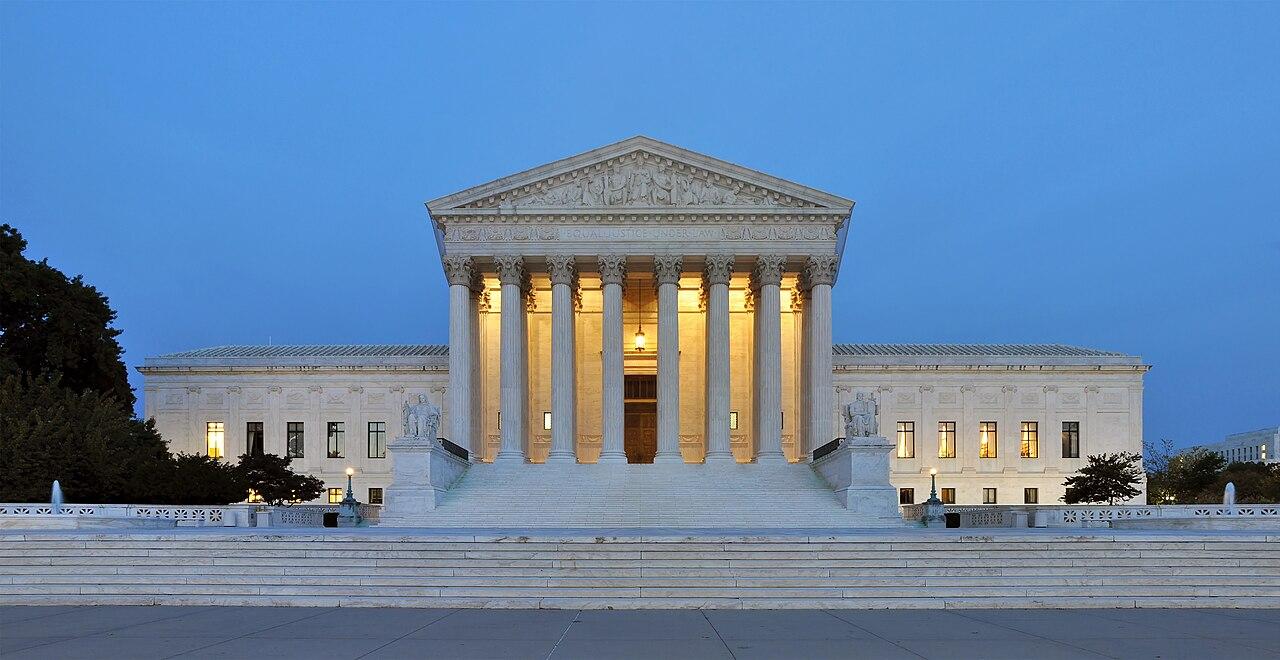
He later pleaded guilty and received a probationary sentence, and the Department of Homeland Security moved to remove him, arguing the offence was a "crime involving moral turpitude." The Second Circuit Court of Appeals sided with Lau, finding the government lacked sufficient evidence to deny him admission. This week, in Blanche v. Lau, the Supreme Court reversed that finding.
What the Court Actually Decided
By a vote of 6–3, the justices ruled that border officers do not need to prove "by clear and convincing evidence" that a returning resident has committed a crime before treating them as an applicant for admission. A pending charge — an accusation, not a conviction — can be enough to change how a permanent resident is processed at the border.
Writing for the majority, Justice Clarence Thomas held that the heightened evidentiary burden Lau wanted simply was not required. The practical effect is that a green card no longer functions as the firm shield it once was at the moment of re-entry. An officer who has reason to believe a traveller has a qualifying criminal issue may place them on the path of an arriving applicant rather than waving them through as a resident coming home.
In a sharp dissent, Justice Ketanji Brown Jackson, joined by Justices Sonia Sotomayor and Elena Kagan, warned that the ruling hands the government broad power to place lawful permanent residents in what she called "immigration limbo" on the basis of allegations alone. The decision, she argued, risks eroding due-process protections by exposing people to the machinery of deportation before any finding of guilt.
Why Kenyans With Green Cards Should Pay Attention
For the Kenyan diaspora in the United States, the ruling is not an abstraction. Permanent residency is the long, patient road most Kenyans walk before citizenship — years of renewals, of carrying the card everywhere, of timing trips home around work and school calendars. The unspoken assumption underneath all of it has been that a green card holder can always come back.
Blanche v. Lau does not erase that assumption for the law-abiding majority, who will keep travelling without incident. But it sharpens the stakes for anyone with an unresolved legal matter, however minor it may feel. A charge that is still working its way through a county court, a matter a traveller assumed was behind them, an old issue that never reached conviction — any of these can now colour how an officer reads a returning resident at the jet bridge.
That matters in a community where a single trip can carry enormous weight: a funeral that cannot be postponed, an ageing parent in Kiambu, a harambee that draws relatives from three continents. The decision quietly raises the cost of leaving and returning for the small number of people to whom it applies — and the anxiety for many more who now wonder whether it might.
The Mechanics of Limbo
Immigration lawyers reacting to the decision have sketched what "limbo" can look like in practice. A returning resident flagged at the border may have the physical green card taken and replaced with a temporary stamp valid for a limited period. That stamp can be enough to unsettle the scaffolding of an ordinary life — the documentation that employers, banks, landlords, insurers and universities all expect to see. In the worst cases, a traveller can be placed directly into removal proceedings, forced to litigate their own admissibility from the inside.
None of this is automatic, and none of it touches a resident with a clean record. But the burden has shifted. Where the government once had to clear a high bar to treat a returning resident as an outsider, it now has more room to act on suspicion, and the traveller carries more of the risk.
A Climate of Tightening
The ruling does not arrive in a vacuum. It lands amid a wider tightening of the immigration system that Kenyans abroad have been tracking with growing unease — proposed hikes in citizenship fees, expanded scrutiny of naturalised Americans, and shifting deportation priorities. Each development on its own is survivable; together they form a pattern that has made many in the diaspora more careful about their paperwork, their travel, and their timelines toward citizenship.
For some Kenyan families, the rational response will be to accelerate the move from green card to citizenship, since a US passport removes the re-entry vulnerability entirely. For others, it will mean a sober conversation with a lawyer before booking a ticket home — the kind of conversation that, a decade ago, no permanent resident imagined they would need.
What Travellers Are Being Told
The consistent advice from immigration practitioners is unglamorous but clear: know exactly where any legal matter stands before you fly, carry documentation showing the disposition of old cases, and seek counsel before travelling if anything is unresolved. For the Kenyan green card holder weighing a trip to Nairobi, the green card remains a powerful document. It is simply no longer the unconditional promise of return that a generation of immigrants understood it to be — and that shift, made real one ruling at a time, is what the diaspora will be reading closely in the months ahead.