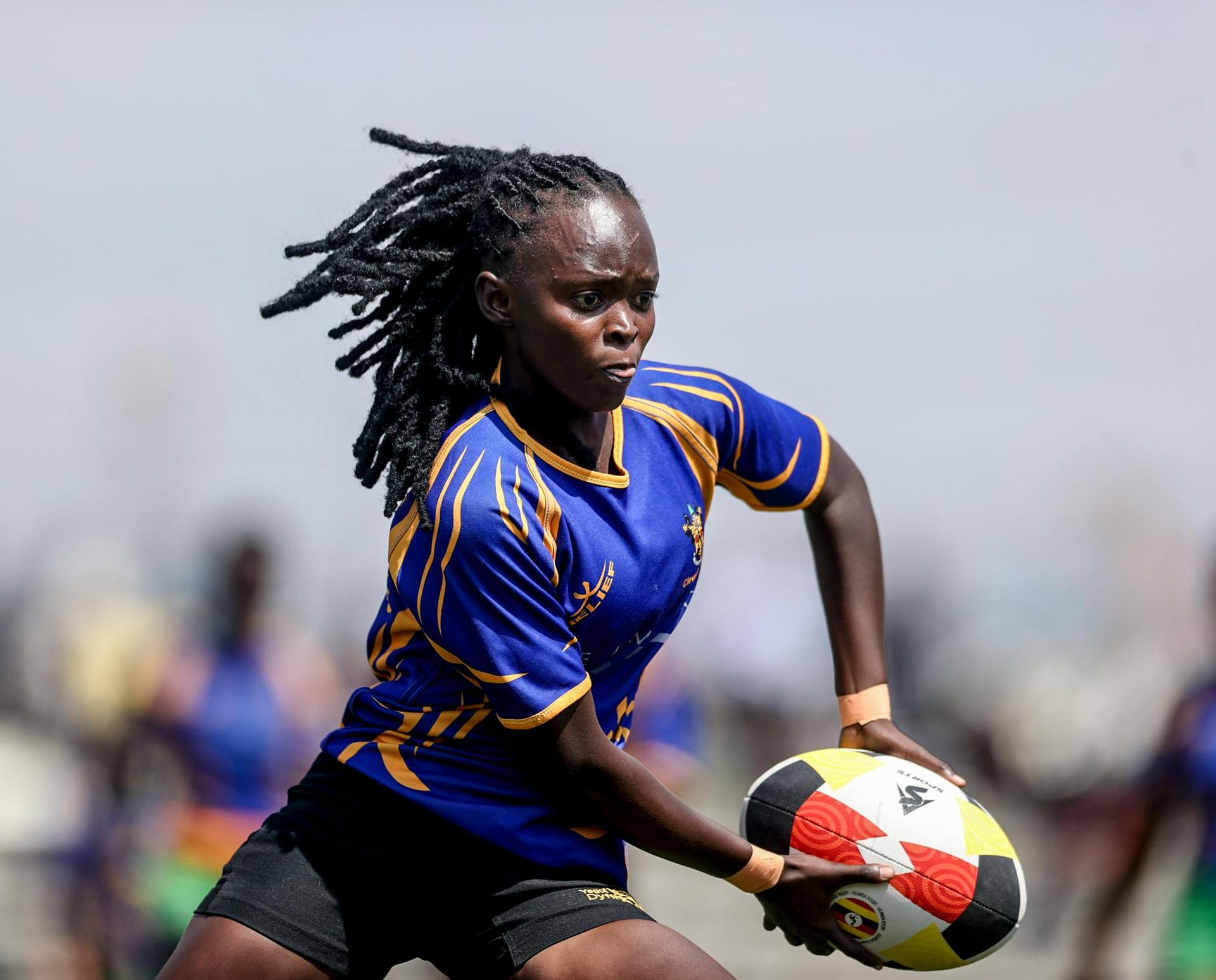
The Set That Lights Up at Midnight: How Treasury's Eleventh-Hour KBC Deal Lets Kenya Watch the Diaspora's World Cup
Days before kick-off in the United States, Canada and Mexico, Nairobi found the money to put the World Cup on free television — knitting living rooms in Kenya to the cities where its diaspora lives.

The trophy arrived at the National Treasury Building on Thursday afternoon the way trophies usually do in Nairobi — in a procession of green and white, carried by Gor Mahia players who had come to present the FKF Premier League silverware to the Cabinet Secretary. What left the building was something bigger than a photo opportunity. Somewhere between the handshakes, John Mbadi confirmed that the government had approved the money for the Kenya Broadcasting Corporation to put the 2026 FIFA World Cup on free-to-air television.
"World Cup is coming in a couple of days, and we are looking forward to this football extravaganza," the Treasury CS said, in remarks reported by Kenyans.co.ke and the Daily Nation. "I know we had some challenges in sponsoring KBC to air it, but we have unlocked that."
For millions of households in Kenya — and for the hundreds of thousands of Kenyans abroad who will experience this tournament from inside the host countries themselves — that single sentence reorganised the next six weeks.
A Trophy Visit That Turned Into an Announcement
Mbadi told his visitors that he had spoken that very morning to KBC's managing director, and that the broadcaster was finalising the arrangements to get the deal over the line. By lunchtime, the confirmation had moved from the Treasury's corridors to KBC's own bulletin. The Daily Nation reported that managing director Agnes Nguna told viewers the Cabinet had approved, through a directive, the funds needed to acquire free-to-air broadcasting rights for the tournament.
The choreography mattered. Less than a week earlier, the same newspaper had reported that no Kenyan free-to-air station had secured World Cup rights, raising the real prospect of a blackout for viewers without pay-TV subscriptions. Reports in the Kenyan press had put the cost of the rights at roughly Sh150 million — money the public broadcaster did not have on its own, and which the Treasury, squeezed by competing demands in a tight budget season, had been slow to release. Mbadi himself attributed the delay to financial constraints.
Six Days, Three Hosts, Forty-Eight Teams
The 23rd edition of the World Cup kicks off on June 11 and runs for 39 days, the longest and largest tournament in the competition's history. Forty-eight teams will play across the United States, Canada and Mexico — the first World Cup spread over three host nations, and the first hosted in North America since 1994.
That geography is the quiet diaspora story inside a back-home broadcasting headline. The host cities of this World Cup — Dallas, Houston, Atlanta, Boston, New York, Toronto, Vancouver, Seattle, Los Angeles among them — map almost exactly onto the places where Kenyan emigration has concentrated for three decades. The Kenyan nurse in New Jersey, the rideshare driver in Seattle, the graduate student in Toronto: for once, the world's biggest sporting event is not happening in someone else's far-away summer. It is happening at the end of their commuter line.
The Blackout That Almost Was
It is worth pausing on what was nearly lost. Free-to-air World Cup coverage on KBC is one of the oldest shared rituals in Kenyan public life, the broadcaster having carried the tournament to the country for generations. A rights lapse would not have meant no World Cup in Kenya; it would have meant a World Cup behind a paywall, accessible to those with satellite or streaming subscriptions and invisible to everyone else.
That distinction lands differently in diaspora households than almost anywhere. Pay-TV subscriptions for relatives are a familiar line item in the informal budget of the Kenyan abroad — one of those recurring small remittances that never show up in Central Bank statistics as anything other than household support. When the national broadcaster carries a tournament free, the cousin in Minneapolis is not topping up a decoder in Kakamega so that her father can watch the group stages. The Treasury's directive, whatever its motivations, quietly retired one small recurring cost from thousands of cross-border family ledgers for the next six weeks.
Why a Nairobi Broadcast Deal Matters in Dallas and Toronto
The deal also synchronises the two halves of the Kenyan football public. The matches will be played in North American afternoons and evenings — which means late nights and small hours in Kenya. The Kenyan in Texas will watch a 7 pm kick-off with dinner; his mother in Eldoret will watch the same match at 3 am with tea. The WhatsApp group that connects them will be awake for both.
Anyone who has followed a major tournament from inside a diaspora household knows that this synchronised viewing is not trivial. It is one of the few regularly scheduled moments when a family separated by an ocean is doing precisely the same thing at precisely the same time. The alternative — one side watching, the other side following score updates by text — is a thinner experience, and for the past week it was the likeliest outcome.
There is also the matter of presence. Some Kenyans in the host countries will go further than their televisions, buying tickets to group-stage matches in their adopted cities. For them, KBC's signal matters in the other direction: it is what lets the family back home see the tournament they will be inside, and understand the photographs that follow.
What to Watch Between Now and Kick-off
Two details remain unresolved, and both are worth honest caveats. First, as of Thursday's announcements, KBC was still described as finalising the arrangements — the funding is approved, but the rights paperwork was being completed against a deadline of days. Second, neither the Treasury nor KBC has publicly itemised the final cost or the package details, such as how many of the 104 matches the broadcaster will carry.
What is no longer in doubt is the principle. A government that spent a week being asked whether ordinary Kenyans would see the World Cup at all has answered. When the first whistle blows in North America on June 11, the sets will light up at midnight in Nairobi, Kisumu and Garissa — showing the same pictures, at the same moment, as the screens in the Kenyan living rooms of Dallas, Toronto and Boston.