From Kakuma to Group D: How a Boy Born in a Kenyan Refugee Camp Lined Up Again for Australia's World Cup
Awer Mabil's selection in the Socceroos squad for the 2026 World Cup is more than a sports headline. It is a quiet message from one of Kenya's largest refugee camps to a global diaspora that still calls it home.
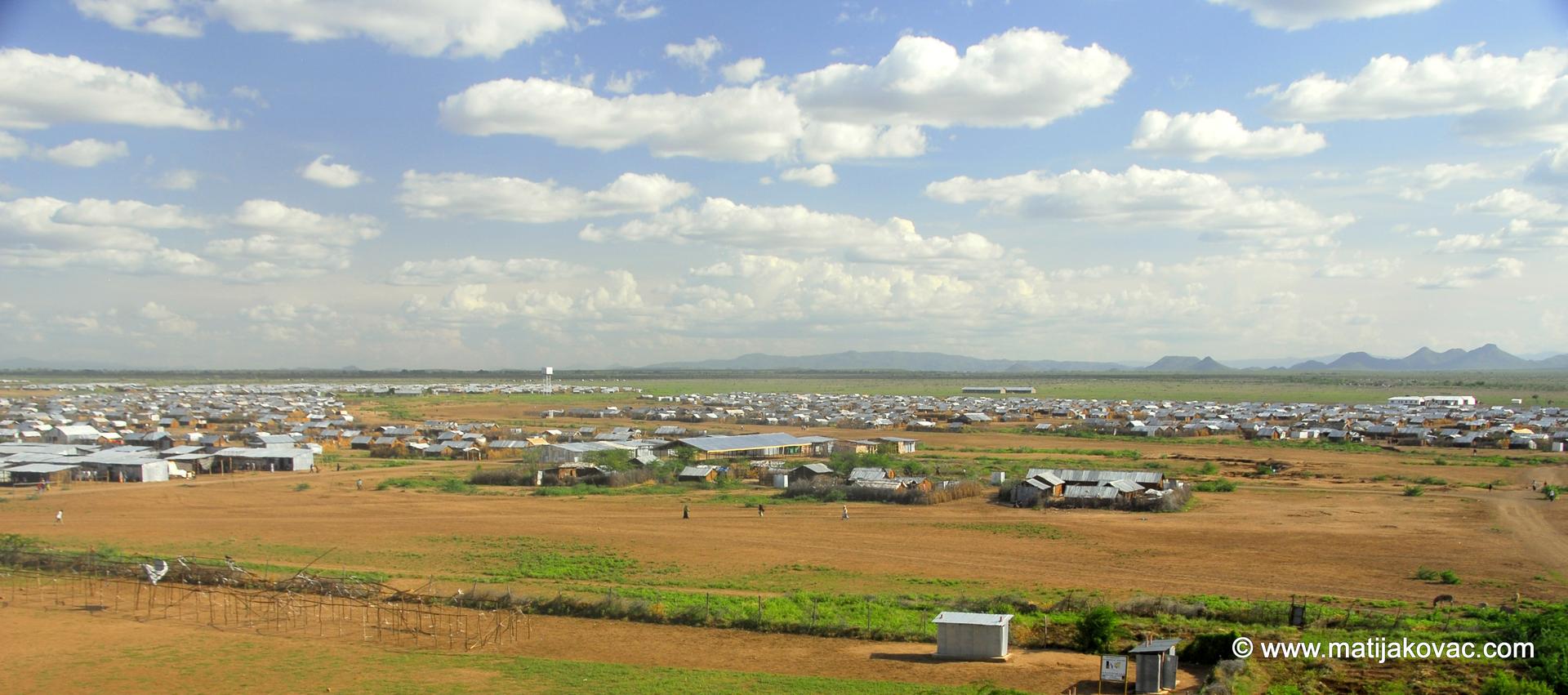
In the dust-coloured grid of Kakuma, the camp where Awer Mabil drew his first breath in 1995, news travels the old way. Someone with a phone reads it out loud at a tea kiosk, a teenager in a Manchester United shirt repeats it to his friends, and within an hour the story is moving from compound to compound: the boy who left here at ten has been named, again, in Australia's squad for the FIFA World Cup. It is the kind of headline that lives somewhere between a sports result and a small national fairytale, and for the South Sudanese families who still call Kakuma home it is also a quiet reminder that the road out of this camp does not end where the convoy turns left toward Lodwar.
On Monday, Socceroos coach Tony Popovic confirmed his 26-man squad for the tournament that opens later this month across the United States, Canada and Mexico, and Mabil's name was on the list. According to TUKO News, the winger will travel to his second World Cup after coming off the bench twice at Qatar 2022, where Australia bowed out in the round of 16 to eventual champions Argentina. The selection had been the subject of weeks of speculation inside Australian football; the official Socceroos site confirmed the squad on the day of the announcement.
Born in a tent, not a hospital
Mabil was born on September 15, 1995, at the Kakuma Refugee Camp in Kenya's Turkana County, to South Sudanese parents who had fled the long civil war in their country. Kakuma, set up in 1992 to receive the Lost Boys of Sudan, is one of the largest refugee settlements in East Africa, and the place where tens of thousands of South Sudanese families spent the years between displacement and resettlement. He played his first football there, on the sun-baked patches of ground that pass for pitches in the camp, before his family was resettled to Adelaide when he was ten years old.
That biography matters, and not only for the sentimental reasons. Mabil's path runs straight through Kenya's longest-standing refugee infrastructure. The Australia he now represents accepted his family from a UNHCR queue that thousands of Kenyans, in their own way, helped to staff: aid workers, teachers, drivers and shopkeepers who built the camp's daily economy. When a Kakuma-born forward jogs out at Lumen Field or BC Place in mid-June, a sliver of that economy walks out with him.
A long road through Adelaide and Europe
His Adelaide childhood was not a fast track. He attended St Columba College, played for St Augustine's and Playford City as a teenager, and signed his first senior contract with Campbelltown City before joining Adelaide United in the A-League. The European move came in 2015, when Danish side FC Midtjylland brought him to Herning, a club that has built much of its modern identity on recruiting from outside the obvious European pipelines.
What followed reads like the itinerary of a player who never settled but never stopped working either. Mabil featured in the Europa League and Champions League for Midtjylland, took loan spells at Esbjerg fB and Paços de Ferreira in Portugal, then moved on to Kasimpasa in Turkey, Cadiz in Spain, Sparta Prague in the Czech Republic and Grasshoppers in Switzerland. He is currently playing for CD Castellon in Spain's second division. He has won league titles in Denmark and the Czech Republic and, in 2023, was named Young Australian of the Year, an honour created to recognise civic contribution as much as athletic record. With Australia he has 37 caps and 10 goals.
For the diaspora reading the news this morning in Sydney, Melbourne, Adelaide and Perth, those numbers will look familiar. They look like the resume of a working professional who took every contract he was offered, in every league that would pay him, and stayed close enough to the national team to be in the conversation when the squad list was drawn up.
What Group D actually means
The 2026 tournament places Australia in Group D, alongside hosts the United States, Türkiye and Paraguay. Match dates are spread across mid-to-late June, with kick-offs in Vancouver, Seattle and Santa Clara. The match against the United States, scheduled for around June 19 at Lumen Field, will draw the biggest Australian audience and the most Kenyan-Australian eyeballs, because the time difference favours an early-morning watch-along on the east coast of Australia and a late-evening one in Nairobi.
Group D is not a kind draw. The United States enter on home soil with a squad that has matured since Qatar and a stadium-by-stadium logistical advantage that no visiting team will be able to match. Türkiye return after a long absence from the tournament and arrive with European pedigree. Paraguay are the kind of South American side that turns up and grinds; they will not be intimidated by the occasion. Popovic's selection, headlined by veteran goalkeeper Mat Ryan and the recently switched Italian Serie A forward Cristian Volpato, leans on experience for a squad that knows the cost of past round-of-16 exits.
Mabil's role is unlikely to be that of a starter. He is more likely to come on with twenty minutes to play, in the way that he did in Qatar, when a tiring opposition full-back is the difference between a draw and three points. That is still World Cup minutes, and for a player whose first football was a torn ball on a Kakuma pitch, it is the same currency every other footballer in the tournament will be spending.
A signal back to the camps
There is a reason the story is moving so quickly through Kenya's refugee networks today. Kakuma now hosts over 200,000 registered refugees, the majority from South Sudan but with growing numbers from Burundi, the Democratic Republic of Congo, Ethiopia and Somalia. The camp's Kalobeyei settlement, designed in 2016 to be more integrated with the host Turkana community, has been one of the rare experiments in long-term refugee planning anywhere on the continent. Many of its residents have been waiting years for resettlement decisions to be made in capitals far from Turkana.
For a teenager in those compounds, a name in a Socceroos squad list is not an abstract piece of news. It is concrete, contestable proof that the queue moves. It also reframes a place that the rest of the world tends to encounter only through emergency appeals. Kakuma is, on most days, a working town: schools, churches, mosques, markets, a small football league and a stream of UN vehicles bouncing along the main road. Mabil is one of the more visible products of that town, but he is not the only one. Camp-born musicians, doctors, teachers and engineers are scattered across Australia, Canada, the United States and the United Kingdom, and a Kenyan diaspora that has its own complicated relationship with refugees often forgets how much of their own community story overlaps.
For Kenyans abroad watching the World Cup later this month, then, there is a second reason to look at the Australia bench. The substitute warming up may be wearing yellow and green, but the ground he learned the game on is one most Kenyan readers know by name, even if they have never set foot in it. In a month in which Kenya itself is renegotiating its place in everything from US health partnerships to Gulf labour deals, that small fact is worth keeping in view.