Mwalimu Comes Home: How a Crossing on Interstate 405 Brought a Kenyan Rugby Coach Back to a Hillside in Siaya
The body of Felix "Ade" Oloo — the coach who took Kenya's Lionesses to the Tokyo Olympics — arrives at JKIA on Monday night. Seattle's Kenyans flew home with him.

The arrivals hall at Jomo Kenyatta International Airport on Monday night will not look like a memorial. There will be no haka, no jersey laid out across the concourse, no anthem to lift the moment above the hum of trolleys and the squeak of customs-hall floors. There will be a group of men and women, many of them rugby people, standing very still. They will be waiting for a casket and for the men and women from Seattle who travelled with it. They will be waiting for Felix "Ade" Oloo Otieno — Mwalimu — who left Nairobi for the Pacific Northwest and is coming back, at forty-one, in a way no one planned.
Oloo, the former Kenya Lionesses head coach and Nakuru RFC stalwart, died on 4 May after being struck by a vehicle on Interstate 405 in Bothell, Washington, a few miles north of Seattle. A funeral committee in the United States and a parallel one in Kenya have spent four weeks arranging this flight, the paperwork, the church service still to come. According to relatives quoted by Mwakilishi, his remains were expected to land at JKIA late on the night of 1 June, and burial is scheduled for 6 June at his family home in Asembo, Siaya County. By the time the sun rises over Lake Victoria that morning, a coach who spent two decades teaching the angles of the breakdown will be lowered into ground he last walked as a boy.
The Crossing on Interstate 405
The American police report, summarised by the Washington State Patrol and cited by The Star and Citizen Digital, is brief in the way these reports always are. At 4:59 in the morning, in the dark stretch of I-405 south of NE 160th Street, Oloo got out of a vehicle and ran east across the five northbound lanes. A northbound car struck him. He died at the scene. Investigators have not said publicly why he was out on the freeway at that hour. They have said the inquiry is continuing.
For the Kenyan rugby community, the geography of the crash is its own quiet cruelty. Bothell sits at the soft edge of greater Seattle, a city the Lionesses had visited on tour stops and where Oloo himself had made friends in the years after he stepped off the international touchline. Friends there became, in May, a logistical team: somebody to claim the body, somebody to coordinate with the consulate, somebody to keep calling the family in Asembo with what little there was to share.
The Lionesses He Built
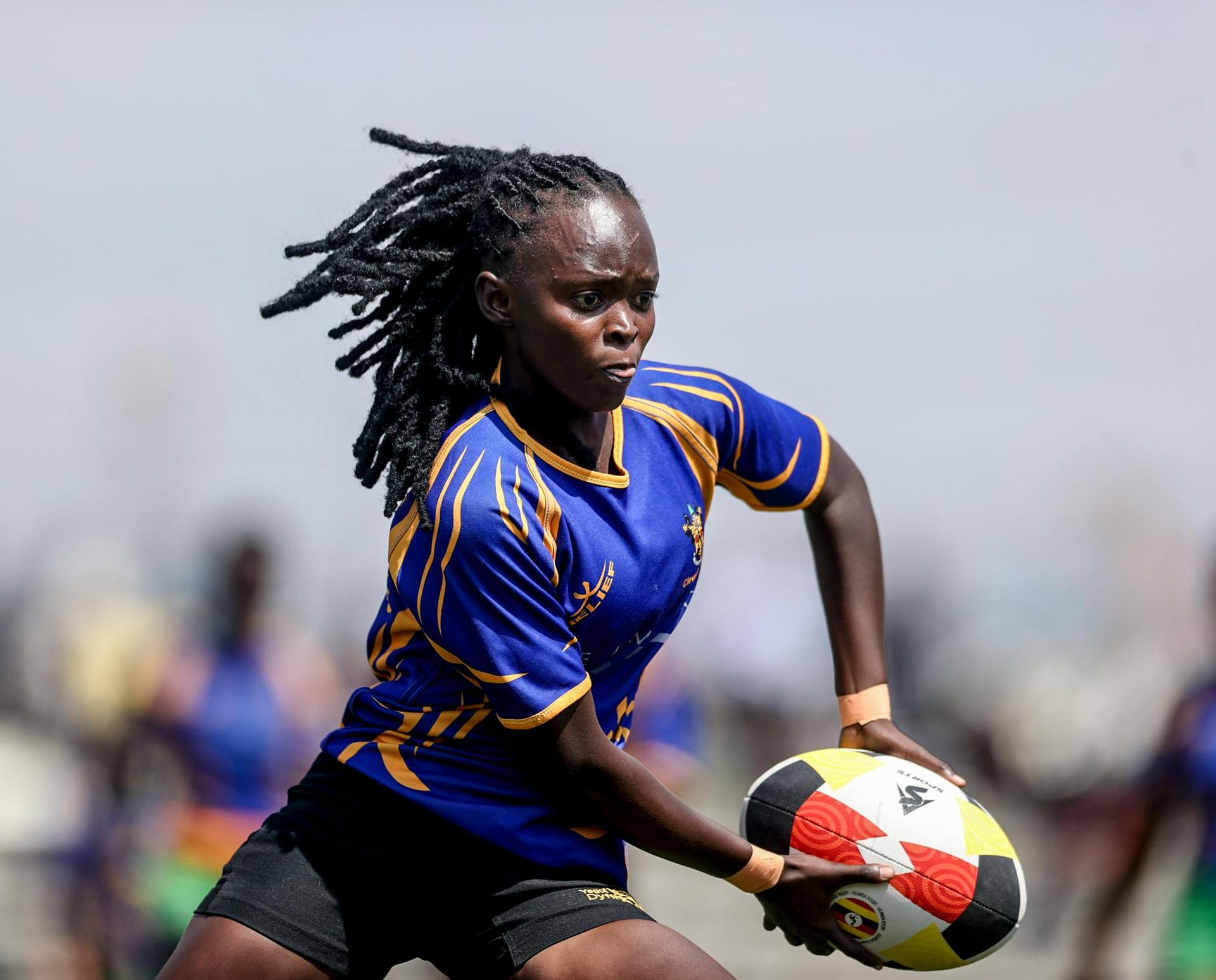
Oloo's career is woven through the most ambitious decade Kenyan women's rugby has ever had. He took charge of the Kenya Lionesses sevens side and steered it to a milestone the team had been chasing for years — qualification for the Tokyo Olympic Games, the first time Kenya's women had ever played sevens on an Olympic field. Under his hand, players who had grown up scrambling for kit at school tournaments were suddenly being tackled by Australians on a global broadcast.
Mwalimu — Swahili for teacher — was a nickname the players, not the press, gave him. Those who worked with him describe a coach who built relationships before he built playbooks. Dennis Mwanja, who succeeded Oloo at the helm of the Lionesses, has said publicly that Oloo invited him onto the technical bench, kept mentoring him from across the Atlantic, and called when results dipped to remind him that women's rugby was a long game played in small rooms. Former Impala Saracens coach Mitch Ocholla, in a tribute carried by several Kenyan outlets, called Oloo a man with a rare ability to make friends across continents.
Nakuru, Two Kenya Cups, and a Flanker's Patience
Before the coaching, Oloo was a flanker for Nakuru RFC during the club's most decorated era. He was part of the Wine Bearers' Kenya Cup-winning sides in 2013 and 2014 — back-to-back trophies that Kenyan rugby still treats as a high-water mark for provincial dominance. Teammates from those teams remember a player who treated rucks the way a carpenter treats joinery: square, unhurried, and exact. He was not the loudest forward in a Nakuru pack that contained a number of internationals. He was, several have said, the one you wanted at your shoulder when the referee's whistle had gone the wrong way three times in a row.
Ernest "Marine" Gikonyo, who shared a friendship with Oloo that stretched back twenty-six years, told Mwakilishi that the coach's life was easiest to read through the careers of the players he developed. Names that became Lionesses, names that became Sevens series men's-side regulars, names that became coaches themselves. The pattern repeats: a young player improves quickly, then credits a flanker from Asembo with the patience to keep telling them the same correction until it stuck.
A Seattle Funeral Committee, and a Diaspora That Closed Ranks
What happens in the weeks between a death abroad and a burial at home is rarely visible from Nairobi. In Oloo's case, the work fell on a small Kenyan community in greater Seattle that has, over a decade, learned the rhythm: collect money, work the phones, coordinate with the consulate, push through American hospital and county-coroner paperwork, then accompany the body all the way to JKIA. According to family statements relayed through Mwakilishi, members of that Seattle community boarded the same flight as the casket on Monday and will hand the coffin over personally to relatives in Nairobi before flying home.
It is the kind of organisational labour Kenyan diaspora associations have quietly built into their off-hours for years now. Every few months, the same volunteers who run end-of-year fundraisers or Madaraka Day picnics find themselves running a repatriation instead. Most of these efforts never make a headline. Oloo's profile — a coach the country had cheered for at the Tokyo Games — has made his return public in a way most are not. The work behind it looked the same.
June 6 in Asembo
The burial on 6 June will be at the family home in Asembo, the Luo heartland on the eastern shore of Lake Victoria where, according to relatives, Oloo asked to be laid. After the service in Nairobi and the convoy west, there will be the slow, familiar steps of a Luo funeral: the speeches, the choirs, the relatives who have travelled from three continents and need to be fed. The Kenya Rugby Union, which announced his death in early May, has indicated that Lionesses past and present plan to attend. So, his family says, do former Nakuru RFC teammates and at least one delegation from the Seattle community.
There will not be a haka in the arrivals hall on Monday night, but there will be one, in some form, at Asembo on 6 June. It will be a teacher's farewell — the kind a man who liked the long game would have wanted. Mwalimu is coming home.