The Oath That Can Be Unsaid: How America's Drive to Revoke Citizenship Reaches the Kenyan Diaspora
A Justice Department push to file 250 denaturalisation cases by October has unsettled naturalised Americans — including Kenyans who believed the oath was the end of the journey.
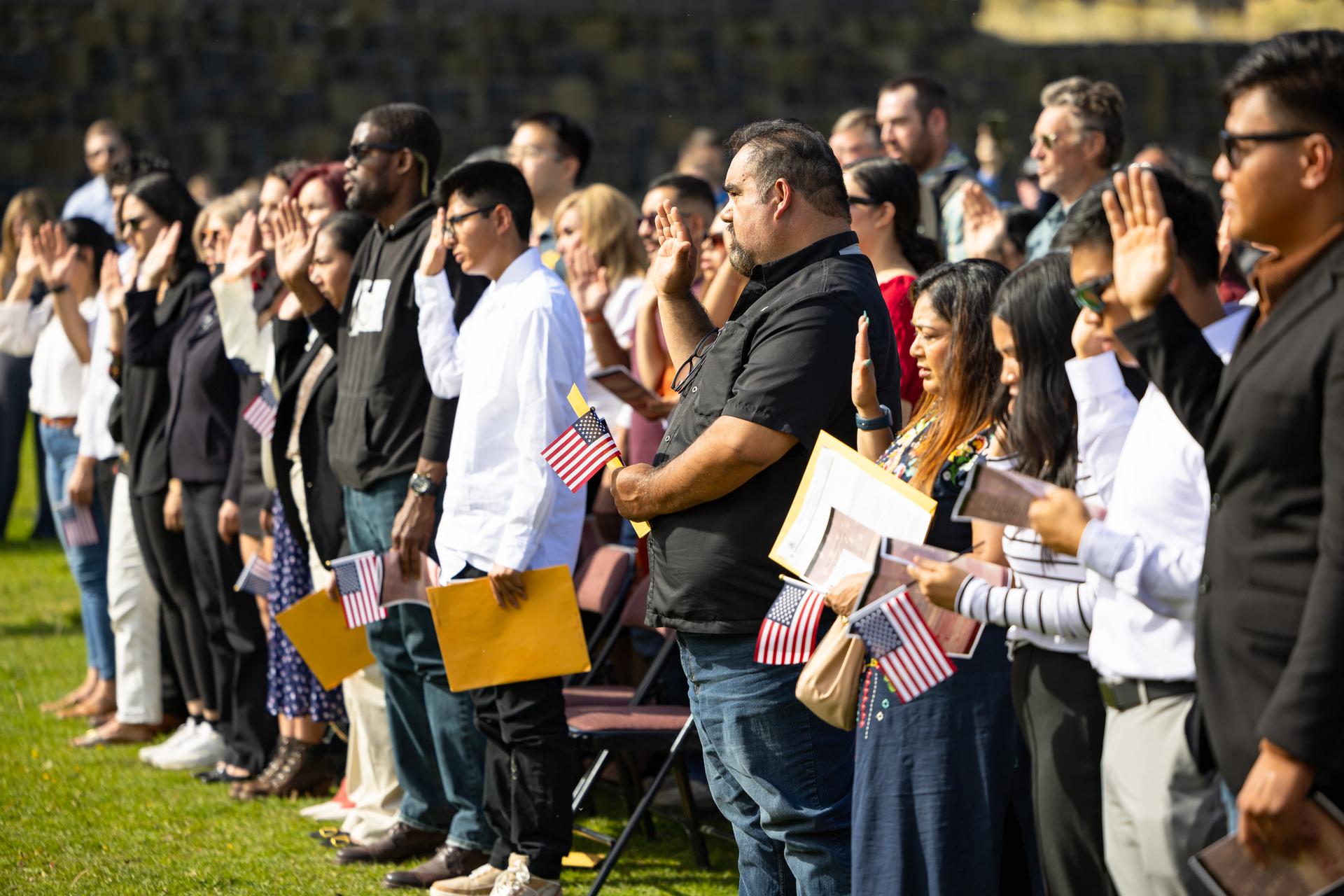
There is a moment near the end of every United States naturalisation ceremony when a room full of people from dozens of countries raises a hand and promises, in a single shared sentence, to set aside old allegiances and take up a new one. For many Kenyans who have made that promise in courthouses and convention halls from Dallas to Seattle, the oath felt like a door closing gently behind them — the end of years of paperwork, fees and waiting, and the start of something settled.
This summer, that sense of finality is being tested. The U.S. Department of Justice has signalled that it intends to file more than 250 cases by October seeking to strip citizenship from naturalised Americans, a sharp escalation of a power that, for most of modern history, has been used only a handful of times a year.
A Rare Power, Suddenly in Frequent Use
Denaturalisation — the legal process of revoking citizenship after it has been granted — is not new. It rests on the Immigration and Nationality Act, which allows a court to cancel citizenship that was illegally procured or obtained through willful misrepresentation or concealment of a material fact. What is new is the pace.
According to the Transactional Records Access Clearinghouse (TRAC) at Syracuse University, fewer than ten such cases were filed in a typical year over the past two decades; between 2008 and mid-June 2026, only 166 complaints were lodged in total. CNN, which first reported the 250-case target, noted that roughly 29 cases had already been filed in under two months this year. TRAC's own count recorded at least 15 civil complaints in May and 18 more in the first half of June alone.
The shift follows internal Justice Department guidance issued in 2025 directing its Civil Division to prioritise denaturalisation and to pursue it across a wider band of cases than the narrow war-crimes and serious-fraud matters that historically dominated. A specialised unit of about a dozen attorneys is now working through a backlog and fielding referrals from the Department of Homeland Security.
What the Government Must Prove
For all the alarm the numbers have generated, the legal bar remains high, and the process is slower and more uncertain than the headline figure suggests. Most of these are civil cases, which means they move through the federal courts and require the government to make its case before a judge. NPR reported that the administration's ambition to revoke citizenship at scale has, in practice, proven harder to execute than promised.
Citizenship cannot be cancelled by an official's signature. The government must file a complaint, present evidence, and persuade a court that the citizenship was obtained unlawfully or through deliberate deception. Those accused have the right to legal representation and to contest the allegations. Immigration lawyers across the country have spent recent weeks reminding naturalised clients of exactly this: that a filing is an accusation, not a verdict.
The Categories — and the Limits
TRAC's analysis found that immigration fraud, particularly the use of false identities during the application process, is the most common basis for the new filings. Other cases cite concealed criminal histories, war crimes, terrorism-related conduct, drug trafficking, and financial crimes such as wire fraud and money laundering. Last month the department publicised action against a group of immigrants accused of grave offences, including crimes against children.
Several of those named in recent filings are citizens born in India, accused of misrepresenting their histories during naturalisation interviews years earlier. The common thread the government emphasises is alleged deception at the moment of application — not lawful conduct, political views, or the ordinary imperfections of an immigrant life. That distinction matters enormously to the millions who answered every question honestly.
Why the Kenyan Diaspora Is Watching
Kenyans form one of the larger and fastest-growing African immigrant communities in the United States, concentrated in metropolitan areas such as Dallas–Fort Worth, the Washington–Baltimore corridor, Minneapolis and Atlanta. A significant share have naturalised after years on student, work or family visas, and the United States remains the single largest source of remittances sent home to Kenya.
For that community, a campaign that reaches back into the naturalisation file — sometimes a decade or more after the oath — lands differently than a debate about future visas. It raises an uncomfortable question that immigration advocates say now surfaces in WhatsApp groups and church halls: could an old error on a form, or a forgotten detail, ever be reinterpreted as fraud? Legal experts have largely answered that ordinary, honest applicants have little to fear, and that the law requires proof of deliberate, material misrepresentation. But the anxiety is real, and it is reshaping how some in the diaspora talk about the security they thought citizenship had bought them.
Due Process, and the Long Road in Court
The American Immigration Lawyers Association and other legal groups have stressed that the constitutional guarantee of due process still stands between an accusation and a stripped passport. Cases can take months or years, and the outcome rests with judges, not prosecutors. Civil-rights organisations have warned, meanwhile, that an aggressive denaturalisation drive risks creating a class of citizens who feel their status is provisional — a worry that extends well beyond any single nationality.
For now, the practical advice circulating through Kenyan diaspora networks is measured: keep copies of immigration records, answer any government inquiry truthfully and with a lawyer, and resist panic. The oath that so many took, hand raised, in a crowded room is not as fragile as the headlines can make it feel. But the events of this summer are a reminder that, in the American immigration system, even the document meant to mark the end of the journey can become the start of another chapter.