The Ward That Raised Them: How Kenya Trains the Nurses Britain and the Gulf Now Hire Away
Kenya graduates tens of thousands of health workers it cannot employ. A widening web of labour deals is sending its nurses to the NHS, the Gulf and Germany — reshaping families on both ends.
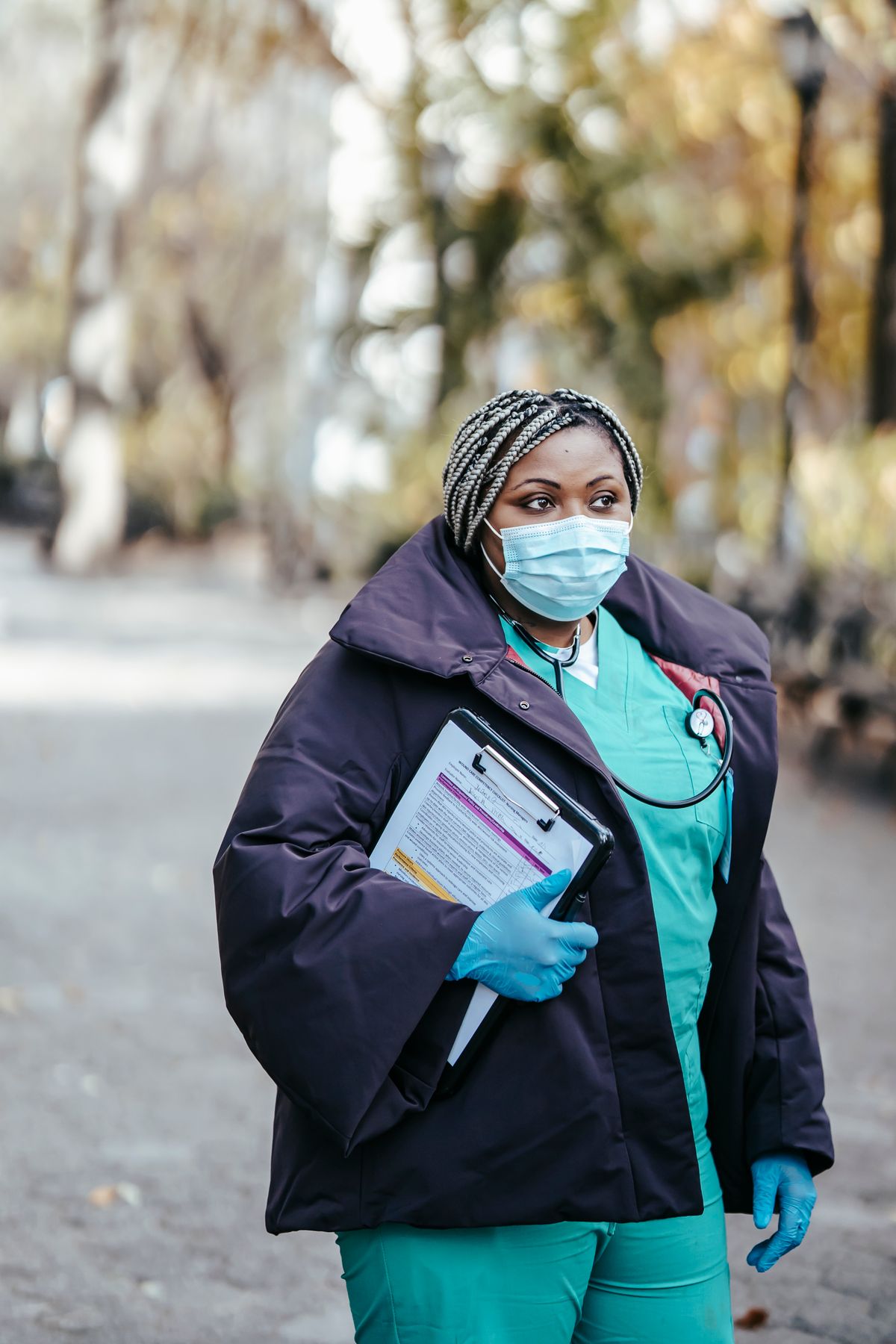
When a new cohort walks out of the Kenya Medical Training College, the graduation photographs look like a national triumph: rows of young women and men in starched white, families crowding the lawns, the smell of fresh certificates and roasted maize. In 2026, Health Principal Secretary Mary Muthoni put a number to the scene that made the celebration harder to read. More than 22,000 students, she said, had graduated from the college in a single cohort. It is one of the largest pipelines of trained health workers anywhere in Africa. It is also far more than the country's own hospitals can hire.
That gap — between how many nurses Kenya makes and how many it can pay — is the quiet engine behind one of the most consequential migrations the country has ever undertaken. A young nurse finishing her training in Nairobi today is as likely to be studying a Gulf job advert or a British licensing exam as she is to be waiting for a posting at a county hospital. The ward that raised her is increasingly not the ward that will employ her.
A pipeline the country cannot absorb
The arithmetic is stark. Speaking on Labour Day, President William Ruto acknowledged that Kenya can absorb only about 200,000 of the roughly one million people who enter the job market each year. Health workers are caught inside that squeeze. According to estimates cited by Ouma Oluga, a former secretary general of the Kenya Medical Practitioners, Pharmacists and Dentists' Union, around 4,000 doctors and nurses leave Kenya annually. A 2023 Ministry of Health report found that up to 64.4 percent of health professionals had expressed a desire to work abroad.
County governments, which run most of Kenya's public hospitals, say they simply cannot compete. Tharaka Nithi Governor Muthomi Njuki has described the situation as a paradox in which the country is, in his words, "giving away the crème de la crème" — the most experienced staff — while lacking the budget to keep them. The result is a health system that trains world-class workers and then watches the most seasoned of them board flights, leaving newer graduates without the senior hands that used to guide them.
The deals that opened the doors
The migration is not accidental; it is policy, negotiated government to government. Kenya signed a bilateral health-workforce agreement with the United Kingdom on 29 July 2021. The first batch of 19 nurses flew to NHS posts in June 2022, and by April 2024 the Ministry of Health reported that 280 nurses had migrated under the arrangement, with another 200 awaiting placement. Nairobi's stated ambition was far larger — a plan to deploy up to 20,000 nurses to Britain by 2025 — though administrative delays slowed the programme well below that mark.
Britain is no longer the only door. Germany expanded its cooperation with Kenya through 2025, adding language training and specialised preparation for healthcare placements. The Gulf has become a major destination too: one government diaspora job posting advertised more than 2,000 nursing positions across Gulf states. To smooth the path to North America and Australia, the government opened a Pearson testing centre in Nairobi so that nurses can sit the licensing examination used in the United States, Canada and Australia at home, rather than travelling to India or South Africa as they once did.
This week the pull from the receiving end grew stronger still. The United Kingdom announced new measures to attract skilled workers, including visa-fee refunds for eligible employers and faster sponsor-licence approvals for overseas firms — a reminder that ageing economies in Europe and the Gulf are competing harder than ever for exactly the workers Kenya produces in surplus.
Why nurses are leaving — and it is not only money
The easy explanation is salary, and pay is certainly part of it. But nurses themselves describe a more layered calculation. One recurring theme is age. Under Kenya's public-service rules, most civil servants, including nurses, must retire at 60; persons with disabilities may serve to 65, and a few specialists win short contract extensions. In many of the countries now recruiting, a nurse who stays medically fit and keeps her licence can practise well into her late sixties or seventies.
For a profession in which experience is the whole point, that difference matters. Nurses working abroad describe systems where senior practitioners in their seventies mentor younger colleagues and keep flexible schedules, rather than being shown the door at an age when they feel most useful. Layered on top are the ordinary pressures of Kenyan middle-class life — school fees, loans, relatives to support — that make the prospect of a longer earning horizon, not just a bigger paycheque, deeply attractive.
The case for letting them go
Not everyone in government sees the exodus as a wound. Officials have repeatedly defended managed migration as a release valve for a youthful labour market that cannot find enough jobs at home, and as a source of the remittances that increasingly underwrite the national economy. Musalia Mudavadi, the cabinet secretary for foreign and diaspora affairs, has argued that the more Kenyans who work abroad, the more money flows home to start businesses, run farms and create jobs — turning individual departures into collective gain.
There is real weight to the argument. Diaspora remittances have become one of Kenya's largest sources of foreign exchange, and a nurse in Manchester or Riyadh typically sends home far more than she could ever have earned in Embu or Kakamega. The demand is not going away: OECD data showed that by 2023 more than 800,000 foreign-trained nurses were working across its 38 member states, and ageing populations in Europe and North America guarantee the appetite will grow.
The other side of the ocean
Yet the promise of the journey is not the whole of it. Migrant nurses in Britain have reported burnout, racism and tightening immigration rules, and the Royal College of Nursing has warned that stress levels among foreign healthcare workers are climbing. The careers that look limitless from Nairobi can feel precarious once the worker is inside an overstretched foreign system, far from family and bound by visa conditions she does not control.
There is a structural worry, too, that troubles even supporters of managed migration. Kenya measured roughly 14 doctors per 100,000 people in 2024, against a World Health Organization recommendation of about 21.7 doctors and 228 nurses per 100,000. Every experienced nurse who leaves widens that gap. Oluga, who helped review the WHO's code of practice on the international recruitment of health workers, argues that the brain drain is defensible only if those who leave eventually return to strengthen the systems that trained them — and that, in practice, too few come back, because the conditions that pushed them out are never fixed.
That is the unresolved question hanging over every KMTC graduation. Kenya has become extraordinarily good at producing nurses, and increasingly skilled at exporting them. Whether that turns out to be a development strategy or a slow hollowing-out of its own wards depends on a return journey that, for now, most of its departing nurses have little reason to make.