The Longer Road to the Card: How a US Rewrite of Green-Card Sponsorship Could Slow Kenya's Skilled Exodus
Washington is preparing the biggest overhaul of employer-sponsored green cards in two decades — and for Kenyan nurses, engineers and IT workers, the wait just got more uncertain.
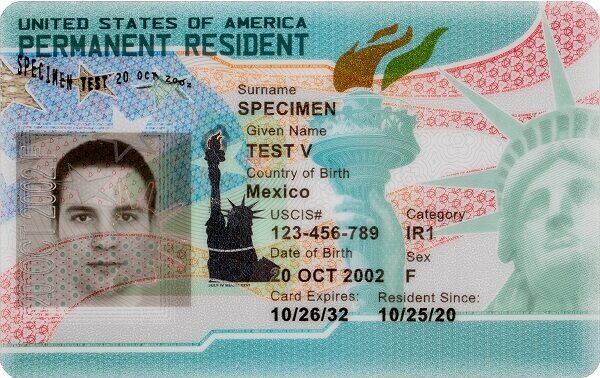
Somewhere in a Texas hospital tonight, a Kenyan nurse is finishing a twelve-hour shift and thinking about a file. Not a patient's chart — her own. It is the labour certification her employer filed to move her from a temporary work status toward a permanent green card, and for months it has sat inside a federal system most Americans have never heard of. Now Washington wants to rebuild that system, and the rebuild could add months, money and doubt to a journey that already tests the patience of tens of thousands of foreign professionals — many of them from Kenya.
The United States Department of Labor is preparing what it describes as the most significant overhaul in more than twenty years of the process employers use to sponsor foreign workers for permanent residency. The target is a programme called PERM, the permanent labour certification that sits at the front of most employment-based green-card cases. For Kenyan nurses, engineers, accountants and IT specialists who have built careers abroad, the proposed changes are less an abstract regulatory update than a question about whether the door they walked through will still open the same way for the next person behind them.
What Washington Is Actually Changing
PERM has remained largely unchanged since 2004. In the department's own framing, the rules were written for a labour market that no longer exists — one before the smartphone, before algorithmic hiring, before job boards replaced newspaper classifieds. The certification exists to confirm two things before a foreign worker can advance: that no qualified American worker is available for the specific job, and that hiring the foreign worker will not undercut the wages or conditions of workers already in the United States.
The proposed reforms would tighten both tests. According to the department, employers would face stronger recruitment requirements, heavier record-keeping obligations, and new duties designed to prove that a genuine search for domestic workers took place. The plan would also fold recent layoffs into the review, so that a company shedding American staff would find it harder to argue that it cannot find anyone to fill a role. Officials have signalled the changes are intended to ensure the programme is used only when a real skills shortage exists.
For now, this remains a plan rather than a rule. The proposal sits at an early regulatory stage; a formal notice, followed by a public comment period, would come before anything takes effect. Current PERM rules continue to apply in the meantime. But the direction of travel is unambiguous, and immigration lawyers have spent the summer warning clients to expect a slower, costlier path.
Why the Card Matters So Much to Kenyans
Each year the United States makes roughly 140,000 employment-based immigrant visas available, a figure that includes the spouses and children of the primary applicant. Most of those cases run through the EB-2 and EB-3 categories — the lanes for workers with advanced degrees or specialised skills, and for professionals and other skilled workers. Both typically require an employer sponsor, and neither can move without the labour certification the Department of Labor is now proposing to rewrite.
Kenya has become one of the most reliable suppliers of exactly the workers those categories are designed for. Kenyan-trained nurses in particular have become a sought-after export; industry data ranks Kenya among the top sources of foreign nurses entering the American system. Behind the statistics are households in Nairobi, Eldoret and Kisumu whose monthly budgets are underwritten by a relative's payslip in Dallas, Atlanta or Minneapolis. A green card is the difference between a career that can be planned and one that renews on the terms of a visa stamp.
A Squeeze From Both Ends
The PERM proposal does not arrive alone. It lands amid a broader tightening of the employment-based system that has unsettled sponsors and applicants alike. A separate rule floated earlier in 2026 would raise the wages employers must certify for sponsored workers — by roughly fourteen thousand dollars a year on average, according to reporting on the proposal. Higher mandated wages, combined with more demanding recruitment steps, change the arithmetic for employers deciding whether sponsorship is worth the cost and the delay.
That is the quiet risk in the reform. The rules are written to protect American workers, but their first effect may be to make some companies simply stop sponsoring. For a Kenyan professional, the danger is not only a longer queue; it is the possibility that fewer employers offer a place in the queue at all, especially outside fields with obvious and documented shortages.
The Diaspora Math
The stakes reach well beyond individual careers. Diaspora remittances are Kenya's single largest source of foreign exchange, out-earning tea, coffee and tourism, and the United States is the largest single contributor to that flow. Anything that slows the pipeline of Kenyans reaching stable, permanent status in America eventually shows up in the numbers the Central Bank of Kenya publishes each month.
Those numbers are already under pressure. The central bank trimmed its remittance projection for 2026, and inflows dipped early in the year after Washington introduced a small tax on money sent abroad. A harder route to permanent residency would not, on its own, collapse remittances — but it adds one more headwind to an economy that has come to treat its diaspora as a strategic asset.
It also sharpens the appeal of alternatives. Kenya has spent the past year signing labour-mobility agreements with countries such as Germany and deepening a health-worker arrangement with the United Kingdom, deliberately widening the map of destinations for its skilled workers. The American reforms are likely to accelerate that diversification, as young Kenyan professionals weigh a crowded, tightening US pathway against newer and more welcoming ones in Europe and the Gulf.
The Waiting Game
For the nurse in Texas, none of this changes tonight's shift, and none of it changes her status this month. What it changes is the calculus of patience. Advisers are urging sponsored workers to keep documentation immaculate, to talk to their employers about timelines before any new rule lands, and to resist the temptation to make irreversible decisions on the basis of a proposal that has not yet been written into law.
The larger lesson for the Kenyan diaspora is one it has learned repeatedly: the terms of belonging in another country are set by that country, and they can be redrawn with little warning. The green card remains, for many, the destination. The road there is simply getting longer — and the smartest travellers are the ones already studying more than one map.