The Facility They Never Asked For: How a US-Backed Ebola Centre Put a Kenyan Minister in the Dock
A Nairobi court found Health CS Aden Duale in contempt over construction at Laikipia. For a diaspora that funds care back home, the fight is about who decides.
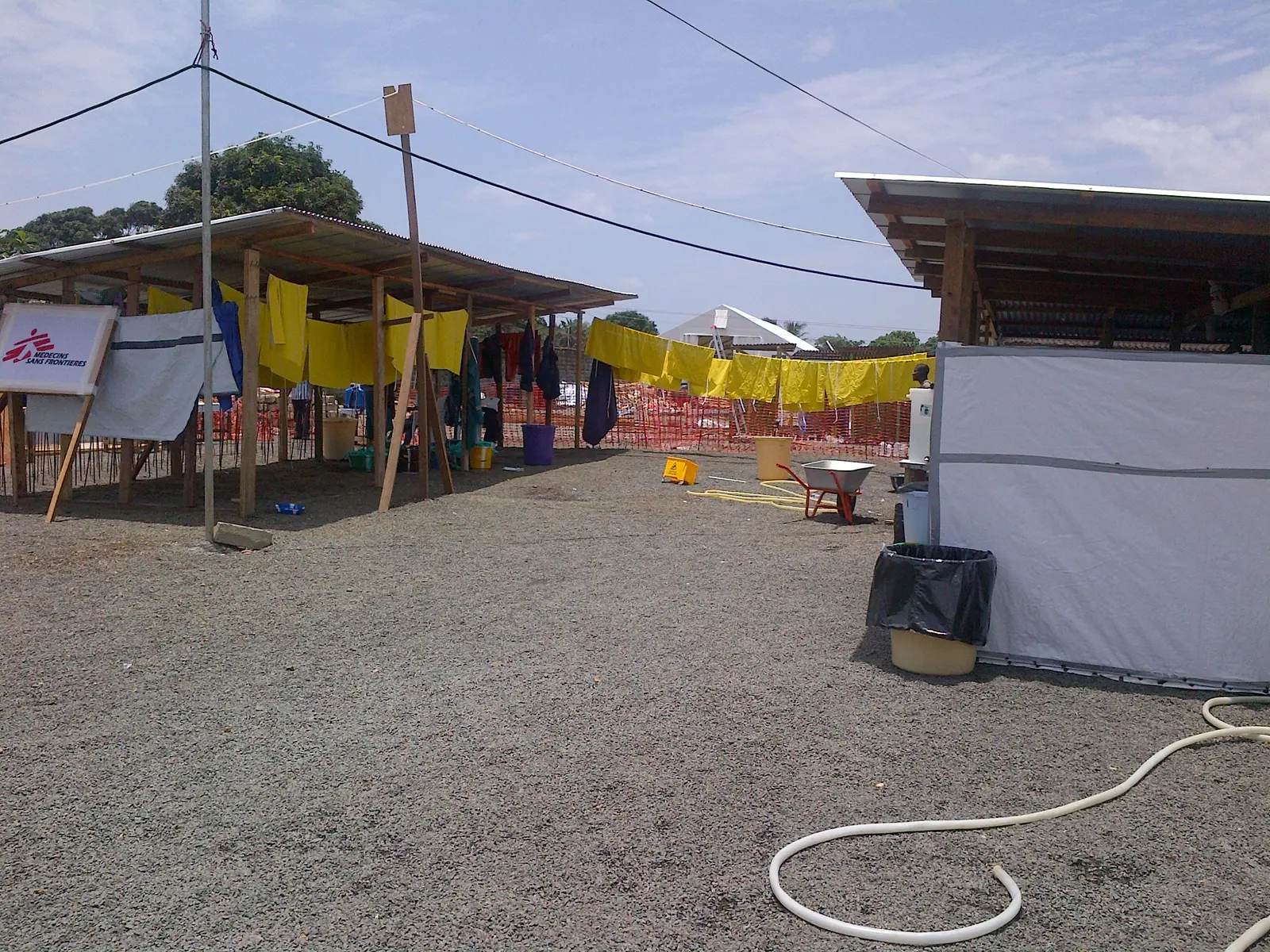
For weeks, the dirt road that skirts the perimeter of Laikipia Air Base has carried an unusual kind of traffic: not the tourists who pass through on their way to the Mount Kenya foothills, but residents clutching handwritten placards, lawyers carrying ring-bound court files, and reporters trying to photograph a construction site the government would rather keep out of frame. On Monday, that quiet standoff arrived in a Nairobi courtroom, where the Cabinet Secretary for Health, Aden Duale, was found guilty of contempt of court for allowing work on a US-backed Ebola quarantine and treatment facility to continue in defiance of judicial orders.
The finding, confirmed in a statement by the Law Society of Kenya and first reported by Tuko, sets up a sentencing hearing on Tuesday, June 23, when Duale has been ordered to appear in person to explain his non-compliance and receive his sentence. It is uncommon for a sitting Cabinet Secretary to be summoned for mitigation over a contempt finding. And for many in the Kenyan diaspora — a community that includes thousands of nurses, clinicians and public-health workers staffing hospitals from Atlanta to Abu Dhabi — the case has become a story about something larger than one official: who decides what is built on Kenyan soil, and in whose name.
A building site nobody could explain
The dispute began with a project that, by the accounts of those who went to court, appeared on the ground before it appeared on any public record. Petitioners told the High Court that construction of a high-risk biological quarantine facility had started at the Laikipia site without the public participation, environmental impact assessment, or emergency planning that Kenyan law requires for projects of that nature.
On May 28, 2026, the court issued conservatory orders barring the state from establishing, operationalising, approving or facilitating any Ebola-related facility pending a full hearing. Days later, on June 2, the court went further, directing the government to disclose the documents that would establish the facility's safety and legitimacy. According to the petitioners, neither order stopped the diggers. The question that hung over the courtroom was disarmingly simple: if a project is lawful, why is it so hard to explain?
"Profound disrespect": the contempt finding
The contempt application was brought by the Katiba Institute, a constitutional rights organisation represented in the matter by advocate Joshua Malidzo Nyawa, and certified as urgent by Justice Patricia Nyaundi. The institute argued that the government had pressed ahead with a hazardous facility while treating binding court orders as optional.
In its ruling, the court held that the respondents had failed to satisfactorily account for the continued works complained of, and found the Cabinet Secretary culpable for non-compliance. The Law Society of Kenya, summarising the decision, said court orders must be obeyed "fully and faithfully," and that public authorities are not free to choose which parts of a judicial directive they will follow.
Nora Mbagathi, the Katiba Institute's executive director, framed the outcome in constitutional terms, saying the ruling sent a clear message that public-health initiatives "must bow to constitutional accountability." Duale, for his part, had earlier rejected the contempt claims as speculative, arguing that the project was halted as soon as the conservatory orders were issued and that the authorities had acted in good faith. Tuesday's hearing will test which account the court ultimately accepts.
Why an Ebola facility, when Kenya has no Ebola?
The facility's purpose is the part the public has found hardest to accept. Kenya has recorded no Ebola cases, and residents near the Laikipia base have asked, repeatedly and loudly, why a high-containment centre for one of the world's most dangerous pathogens should be assembled in their backyard with so little explanation. Those questions have not stayed on paper; according to Tuko, opposition to the project has already spilled into protests that turned deadly.
The American backing has sharpened the unease rather than softened it. In a year when US engagement across Africa — from visa processing to development funding — has been visibly contracting, the prospect of Washington financing a biosafety installation in central Kenya has prompted a harder question about motive and control. The matter has drawn attention beyond Kenya's borders; international outlets, including Al Jazeera, reported on the earlier High Court order requiring the government to release the facility's details. What might once have been a local planning dispute now reads, to many, as a test of national sovereignty.
What the diaspora is watching
For Kenyans abroad, the Laikipia case touches several nerves at once. A large share of the diaspora works in healthcare, and biosafety, containment protocols and the ethics of pandemic infrastructure are not abstractions to them but the substance of their working lives. They know what a properly governed isolation facility looks like, and they recognise the warning signs when one is built without disclosure.
There is also the matter of trust. Diaspora remittances remain one of Kenya's largest sources of foreign exchange, and much of that money pays directly for the healthcare of relatives back home. When a government appears willing to override its own courts on a health project, it raises a quieter worry for those sending money across oceans: whether the institutions meant to safeguard that care can be relied upon. And with a politically engaged diaspora already watching closely ahead of the June 25 protest memorial, a contempt finding against a senior minister lands as more than a legal technicality. It reads as a signal about the health of the rule of law itself.
The test on Tuesday
When Duale appears before the court on June 23, the immediate question will be narrow — what sanction, if any, follows a contempt finding against a Cabinet Secretary. The larger question is whether the ruling changes anything at the Laikipia site, where the petitioners continue to demand that all activity cease until the courts have had their say.
For now, the case stands as an unusually clear collision between executive ambition and judicial authority, witnessed by a country with no Ebola cases and a diaspora with a long memory. Whatever the sentence, the precedent will travel: in WhatsApp groups in Dallas, in nurses' break rooms in Manchester, in the quiet calculations of families who send money home and trust, perhaps less than they once did, that someone is minding the rules. The building at Laikipia may yet be finished or abandoned. The argument over who gets to decide is only beginning.