The Document That Can Be Bought: How a Kenyan ID Scandal Reaches a Diaspora That Lives by Its Passport
An undercover investigation alleges Kenyan IDs and passports are being sold for Sh15,000. For the Kenyans abroad whose lives run on that document, the question is what their passport is now worth.
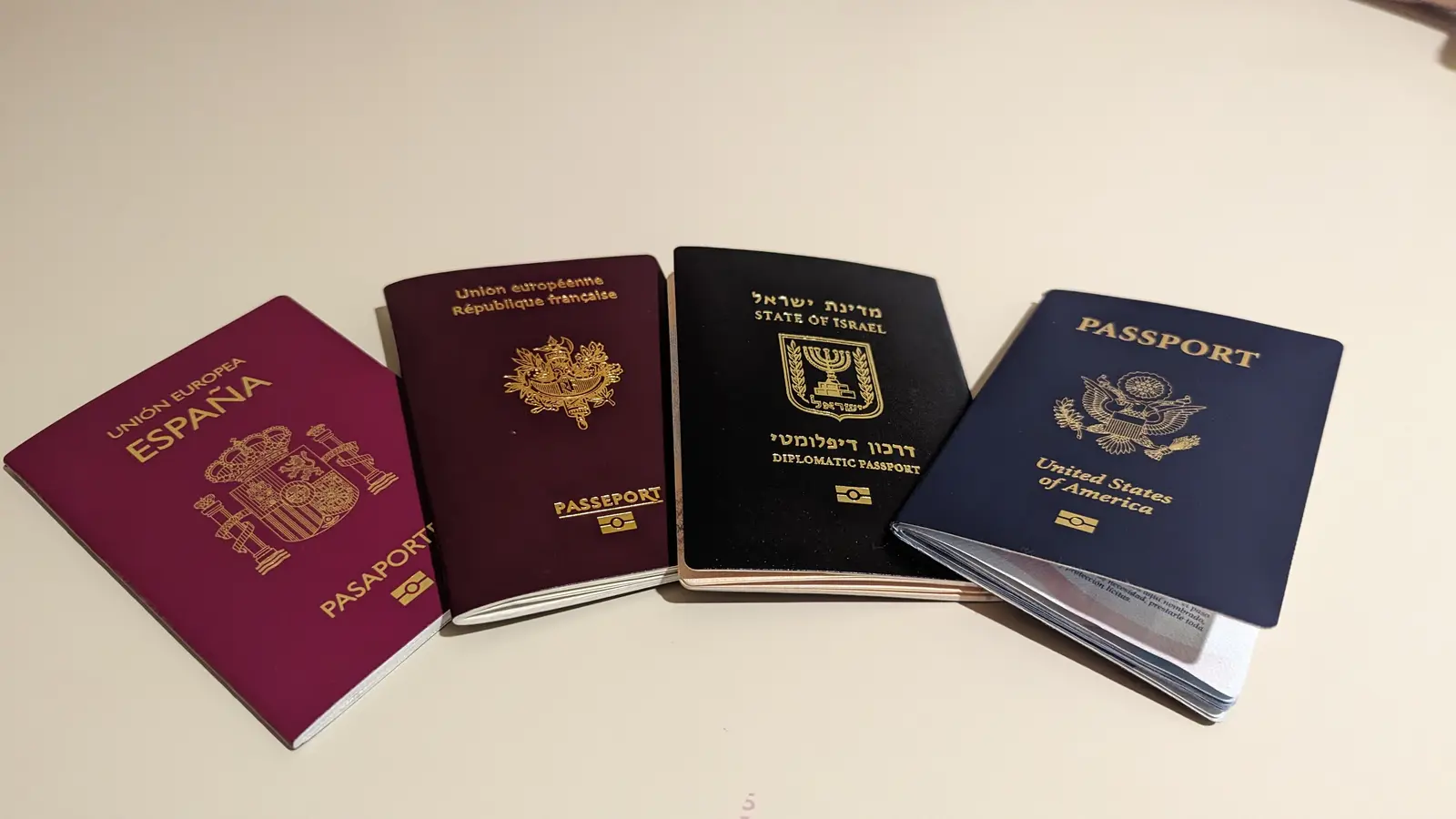
The Kenyan passport is a small, dark booklet, and for the better part of a million Kenyans living abroad it is among the most important objects they own. It is the thing a nurse in Dallas hands across a counter to board a flight home, the document a student in Toronto presents to renew a study permit, the proof a worker in Doha produces when an employer demands to know exactly who he is. Its authority rests on a quiet assumption that almost nobody thinks about until it fails: that the government which issued the booklet checked, and that the name printed inside truly belongs to a citizen of Kenya.
This week that assumption came under strain. An undercover investigation, reported by the diaspora outlet Mwakilishi and circulating widely in the Nairobi press, alleges that the same documents can simply be bought. Foreign nationals, according to the findings, have been able to obtain genuine Kenyan identity cards for as little as 15,000 shillings — roughly a hundred US dollars — and, once holding that card, to secure authentic Kenyan passports through the state's own registration systems. The claim is still an allegation, not a proven fact in court. But it has already reached the Senate, and it lands hardest on the people furthest from home.
A network inside the system
The investigation describes not a forgery operation but something more unsettling: a network said to run through the machinery of the state itself. According to the reporting, officials in the Department of Immigration and the National Registration Bureau worked with brokers and intermediaries to push applications through for people who are not eligible for Kenyan citizenship. The buyers named in the findings are foreign nationals from neighbouring countries — among them Somalia, Ethiopia, Burundi and Uganda.
What makes the allegation serious is the nature of the product. Because the cards and passports are said to be produced through official government systems rather than counterfeited in a back room, they are described as indistinguishable from documents issued through legitimate channels. There is no fake hologram to catch, no misspelled security feature. A passport obtained this way would, in theory, pass the same checks at the same desks as the one carried by a Kenyan who waited in line and filed honest paperwork.
What an identity card unlocks
To understand why this matters beyond the immigration counter, it helps to remember what a Kenyan ID actually opens. The investigation notes that the card enables its holder to buy property, open bank accounts, register a SIM card and vote in elections. It is the master key to civic life. A document that can be quietly bought is therefore not only an immigration problem; it is a banking problem, a land problem, and a question about the electoral roll.
Security analysts quoted in the coverage warn that weaknesses of this kind can be exploited by transnational criminal groups or extremist organisations seeking to move and operate without detection. The reporting also makes an uncomfortable point about scale: the relatively low price suggests the activity may extend well beyond a handful of isolated cases. The Kenyan government has invested heavily in digitising public services and hardening the security features of national documents, yet the alleged vulnerability sits not in the printing but in the vetting — in the human decision to approve.
The Senate takes notice
The story did not emerge in a vacuum. Days before the undercover report circulated, nominated Senator Hamida Kibwana formally asked Parliament to examine the integrity of Kenya's immigration, civil registration and national identification systems. She sought a statement from the Senate Standing Committee on National Security, Defence and Foreign Relations, requesting, among other things, the number of cases investigated or prosecuted over the past decade involving the fraudulent acquisition, issuance or possession of Kenyan identity and citizenship documents.
Kibwana's request was anchored in a concrete case. In May 2026, the High Court ruled that the 2023 deportation of a Bosnian aid worker, Zlatko Gegic — removed after being declared a prohibited immigrant over allegations he had irregularly obtained a Kenyan identity card — had violated his constitutional right to a fair administrative hearing. That ruling, the senator argued, exposed broader questions about how foreign nationals may be obtaining Kenyan papers and whether existing checks are adequate. Her statement also referenced public allegations linking Kenyan passports to members of Sudan's Rapid Support Forces, claims that have circulated without resolution. Pressure is now building on the Directorate of Criminal Investigations and the Ethics and Anti-Corruption Commission to identify those responsible and dismantle any network.
Why the diaspora feels this first
For Kenyans at home, a compromised registry is an abstraction until it touches a land title or a ballot. For Kenyans abroad, the passport is the relationship with the state, and its credibility is tested in public, at foreign borders, by officials who owe them no benefit of the doubt. The value of a travel document is, in the end, reputational. It is worth precisely as much as other governments believe the issuing authority can be trusted to vet its own citizens.
When that trust is questioned, the cost rarely falls on the people who abused the system. It falls on the honest holder: the extra question at the visa window, the longer processing time, the second look at a green booklet that used to pass without comment. A diaspora that already navigates tightening immigration regimes across the United States, Britain and the Gulf has a direct stake in Kenya proving that its documents still mean what they say. The same logic reaches the ballot. With diaspora voting tied to embassy registers and the national identity database, the integrity of the ID is the integrity of the vote that Kenyans abroad have fought to cast.
The wait for answers
None of this is settled. The investigation is a set of allegations, the Senate inquiry has only begun, and the agencies named have yet to publish findings of their own. It is entirely possible that the scale proves smaller than feared, or that the safeguards work better than the reporting suggests. What is already true is that the question has been asked out loud, and that it cannot be unasked.
Somewhere this weekend, a Kenyan abroad will slide that dark booklet across a counter and wait for the small nod that means everything is in order. The vast majority earned the document the slow, honest way. Their best protection is not a better hologram but a credible answer from Nairobi — one that shows the booklet still means what a citizen, standing far from home, needs it to mean.