The Country That Cannot Find a Dentist: How a Kenyan-Born Surgeon Fits Into Britain's Care Gap
As NHS 'dental deserts' spread across England, diaspora specialists like oral surgeon Sonam Haria help hold part of a strained system together.

In a coastal town in the English South West, a retired teacher rings a fourteenth dental practice and hears the same recorded message she has heard all week: the surgery is not taking new NHS patients. She is not unusual. Across large stretches of England, finding a dentist who will see an adult on the public system has become a kind of lottery, and the people who lose it are increasingly turning to home remedies, A&E departments, or simply waiting for a small problem to become a serious one.
Into this strained landscape steps a different kind of story — that of the specialists who keep the harder end of British dentistry functioning. One of them, according to the Kenyan diaspora outlet Mwakilishi, is a Kenyan-born oral surgeon named Sonam Haria, whose career traces a familiar diaspora arc: trained partly in Kenya, sharpened in Britain, and now embedded in a health service that cannot do without people like her.
A System Running Out of Dentists
The backdrop to Haria's work is a public dental system widely described as being in crisis. England's NHS dentistry, once a model of universal access, has been hollowed out by years of underfunding and an unpopular contract structure that many practitioners say makes NHS work financially unsustainable.
The result is geographic. Analysts and patient-advocacy groups now speak of "dental deserts" — areas where almost no practices accept new NHS adult patients. By some access analyses, the overwhelming majority of practices in regions such as the South West, the North West and Yorkshire are closed to new adult NHS registrations, and thousands of dental posts across the country sit unfilled. Healthwatch, the statutory patient body, has reported that a striking share of people now say they cannot afford the dental care they need, whether on the NHS or privately.
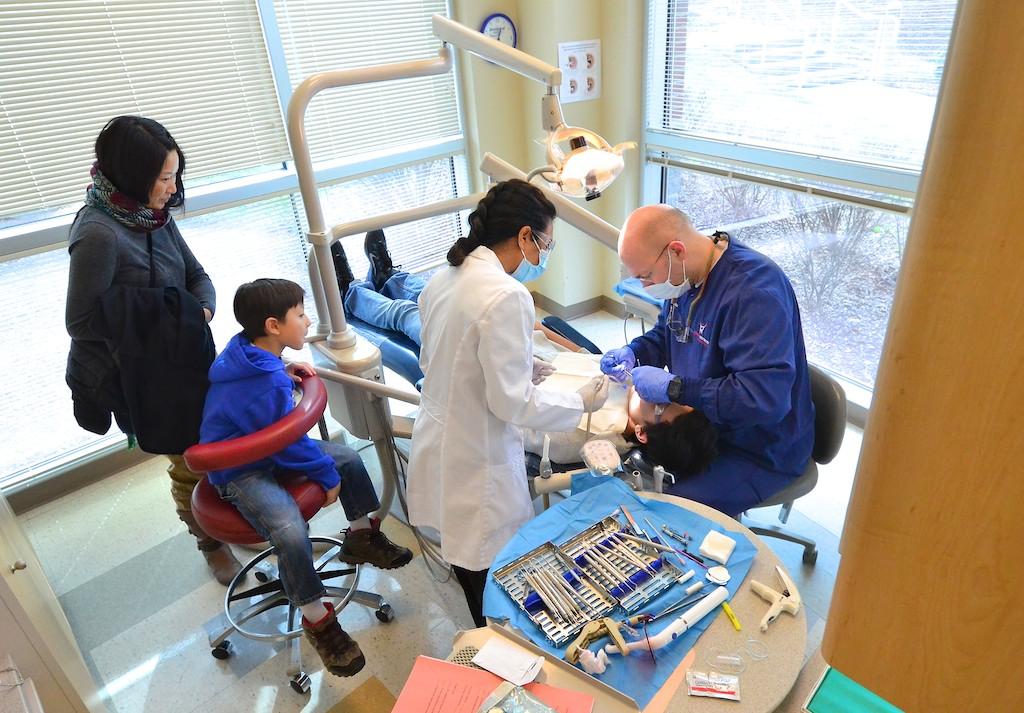
The clinical consequences fall hardest on those who can least absorb them. Children with high-sugar diets develop decay that, left untreated, can require extractions under general anaesthetic. Adults postpone check-ups until infections demand surgery rather than a filling. In that sense, the shortage does not just inconvenience patients; it pushes routine problems up the ladder of severity toward the very specialists who are themselves in short supply.
From a Nairobi Upbringing to Guy's Hospital
Haria's path, as recounted by Mwakilishi, runs through both countries. Raised in Kenya, she excelled academically and in sport, representing the country in international squash before studying dentistry at King's College London. Her move to Britain marked the start of years of postgraduate training.
After qualifying, the outlet reports, she completed advanced specialist training and earned specialist registration with the UK's General Dental Council — a credential reserved for dentists who pass demanding professional assessments. She has worked at leading institutions including Guy's Hospital in London, developing expertise in dental implant surgery and in oral oncology, caring for patients undergoing treatment for head and neck cancers. She is also described as a member of the Royal College of Surgeons of Edinburgh and the Royal College of Surgeons of England.
These are claims carried by a single diaspora outlet, and they describe a profile rather than a breaking event. But the broad shape — a Kenyan-trained professional rising into a specialist NHS role — is consistent with a pattern that British workforce data has documented for years.
Why the Diaspora Keeps Filling the Gap
Britain's health service has always leaned on internationally trained staff, and dentistry is no exception. When a domestic pipeline cannot produce enough practitioners — or cannot retain them inside the NHS — the gap is met in part by clinicians who qualified or trained abroad, many of them from Africa, South Asia and the Middle East.
For African diaspora professionals, that reliance cuts two ways. It offers a route into stable, high-skill careers and institutions of real prestige, and it gives clinicians access to research, equipment and case volumes that few hospitals at home can match. It also raises an uncomfortable question about where scarce medical talent ends up. A surgeon treating head and neck cancers in London is, by definition, not doing so in Nairobi or Mombasa — a version of the "brain drain" debate that has shadowed African health workforces for decades, and one that the steady westward pull of doctors, nurses and dentists has only sharpened.
The Mirror Back Home
That tension is why a profile like Haria's matters beyond Britain. Kenya is expanding its own Universal Health Coverage push while contending with rising rates of tooth decay linked to changing urban diets — the same dietary shift driving demand in the UK. The country's dental-training capacity, concentrated in institutions such as the University of Nairobi Dental School, remains modest relative to need.
Here, diaspora expertise can flow in the other direction. Through mentorship, virtual teaching and partnerships between overseas specialists and Kenyan institutions, the experience accumulated in places like Guy's Hospital can, at least in principle, help build the very capacity Kenya is trying to grow. It is the optimistic reading of the diaspora bargain: that the talent a country exports need not be talent it loses forever.
For now, though, the immediate story sits in that English coastal town, where the retired teacher is still dialling. Britain's dental shortage is structural, and no single surgeon resolves it. What stories like Haria's reveal is how much of the system's hardest, most specialised work already rests on the shoulders of people who began their journey somewhere else — and how a care gap in one country is quietly stitched, in part, by the talent of another.