The Casino Door at 3 A.M.: How a Kenyan Whistleblower's Abduction in Nairobi Ended in a Juba Military Cell
He warned for months that exposing South Sudan's stolen billions would cost him. Masked men outside a Nairobi casino proved him right — and put Kenya's reputation as a refuge on trial.
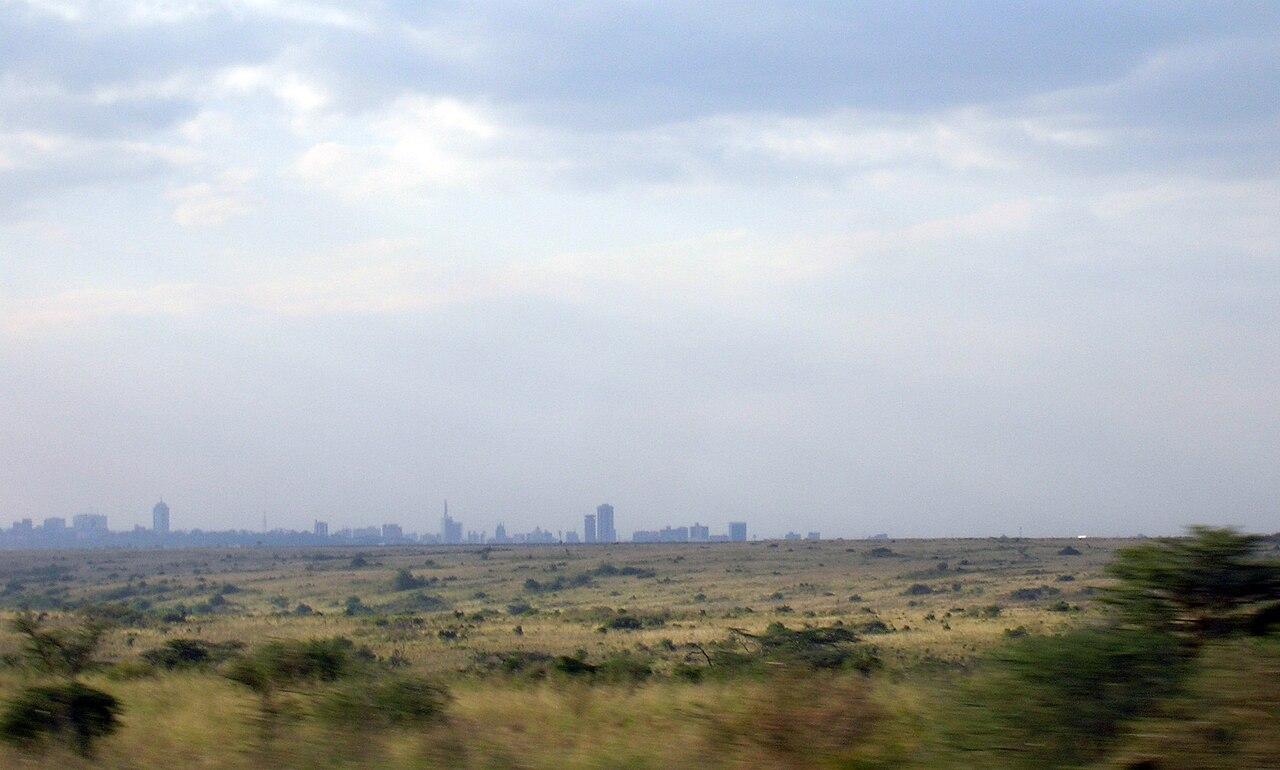
The last public record of Athorbey Al-Gaddhaffy-Dit Guet as a free man is a police report filed by his wife. It describes a moment shortly after 3 a.m. on Tuesday, on the outskirts of Nairobi, when the man most people simply call Gaddafi walked out of a casino and into the path of a white vehicle. Armed men in masks stepped out and surrounded him. "They blocked him, seized him, and bundled him into the vehicle," the report states, citing witnesses, according to the AFP news agency, which reviewed the document. Then the car was gone, and so was he.
By Thursday evening, the question of where that car was ultimately headed had been answered in the way his family feared most. Community representatives in Juba told the independent broadcaster Radio Tamazuj that Gaddafi — a dual Kenyan and South Sudanese citizen who had built his adult life in Nairobi — is now being held at a Military Intelligence detention facility inside the Giyada military complex in South Sudan's capital. It is the country he had spent recent months accusing, in documents passed quietly to journalists and human rights organisations, of corruption on an industrial scale.
For the South Sudanese, Ugandan, Ethiopian and Congolese communities who have made Kenya their refuge — and for Kenyans abroad who understand exactly what it means to trust a host country with your safety — the case lands like a stone dropped in still water. The ripples reach much further than one man.
The Man Who Kept Receipts
Gaddafi comes from the Bor community of Jonglei State in South Sudan, but his documents told a second story: he also held Kenyan identification papers and lived in Nairobi, part of a large South Sudanese diaspora that has treated the Kenyan capital as a sanctuary through civil war, famine and the long disappointments of their young country's independence.
He was not anonymous within that community. According to Kenyan activist and presidential aspirant Boniface Mwangi, Gaddafi approached him in April saying his life was in danger. The reason, Mwangi said, was that Gaddafi had supplied journalists and human rights organisations with information alleging illicit financial flows and corruption in South Sudan involving CapitalPay, a company that operates government-linked digital revenue collection and e-government services.
The allegations he carried did not exist in a vacuum. A United Nations report last year detailed how South Sudanese officials had diverted billions of dollars in oil revenue while the population went without basic services, in a country consistently ranked among the poorest and most corrupt in the world. His wife has also cited disputes between her husband and business associates, including businessman Garang Mayom Kuoc Malek — a reminder that in cases like this one, the line between political enmity and commercial grievance can be difficult to draw from the outside. What is not in dispute is that Gaddafi himself believed the danger was real, and said so repeatedly before it arrived.
Three Days, One Road North
The route his captors took says as much as the abduction itself. In the first hours after he vanished, Mwangi wrote on X that Gaddafi was reportedly being held at Jomo Kenyatta International Airport awaiting deportation, warning that he was "likely to be murdered" if returned. But sources later told Radio Tamazuj that he never boarded a plane at all. Instead, they said, he was driven north by road to the Nadapal border crossing between Kenya and South Sudan, handed over to South Sudanese security personnel, and moved onward to Juba.
That detail matters. A rendition by road, through an official border post, into the immediate custody of another state's security services is hard to square with a freelance kidnapping. Rights advocates say it points instead to coordination between security agencies on both sides of the border. Neither Kenyan nor South Sudanese authorities have commented on the case.
The Community Waiting Outside the Gate
In Juba, the people pressing hardest for answers are his own. Elijah Manyok Jok, chairman of the Bor Community Youth Association, told Radio Tamazuj that the community's inquiries confirmed Gaddafi had arrived in the city and was being held at the Military Intelligence facility in Giyada. "However, we have not yet been granted access to see him," he said.
Manyok said the chief of Military Intelligence — Lt. Gen. Abud Stephen Thiongkol Ijong of the South Sudan People's Defence Forces — told community representatives that access would be considered only after he received an official report from the detention facility explaining the circumstances of Gaddafi's arrest in Kenya and his transfer across the border. Until that report surfaces, a dual citizen of Kenya sits in a military cell with no charge made public, no lawyer at his side, and no family visit approved.
A Pattern Nairobi Cannot Explain Away
If the abduction were an isolated event, Kenyan officials might plausibly call it a criminal matter. It is not isolated. In November 2024, Ugandan opposition leader Kizza Besigye was seized in Nairobi and surfaced days later before a military court in Kampala. In the months before that, four Turkish refugees were abducted in the Kenyan capital and forcibly returned to Turkey. Amnesty International has described the accumulation of such cases as a "growing and worrying trend of transnational repression" playing out on Kenyan soil.
Each episode follows a familiar arc: a foreign dissident or refugee disappears in Nairobi, officials say little, and the person reappears in the custody of the very government they fled. What makes Gaddafi's case sharper still is his passport. This time, the man taken was not only a guest of Kenya. He was, by citizenship, one of its own.
What It Means for Everyone Who Chose Kenya
Kenya's standing in East Africa rests on a quiet bargain. It is the region's banker, its aid hub, its university town and its safe house — the place you send your children, your savings and, when things turn dangerous at home, yourself. Hundreds of thousands of South Sudanese live on the Kenyan side of that bargain. So, in mirror image, do millions of Kenyans abroad, who depend on the idea that citizenship and legal residence mean protection.
A case in which masked men can take a Kenyan citizen from a Nairobi street and deliver him to a foreign military facility, apparently through an official border crossing, corrodes that bargain at both ends. Human rights organisations and Gaddafi's relatives are now asking Kenyan authorities to do three specific things: disclose the full circumstances of his seizure and transfer, ensure he is granted access to his family and legal counsel, and investigate who authorised the operation on Kenyan soil.
The answers, if they come, will arrive too late to undo the morning of June 9. Somewhere in the police file his wife opened that day, the white car is still pulling away from the casino door — and an entire region's diaspora is watching to see whether anyone in Nairobi will explain where it was allowed to go.