The Cars Kenya Hopes to Build: What a Ksh22 Billion Japanese Deal Means for a Diaspora Weighing the Road Home
A new financing facility with Tokyo aims to put more locally assembled vehicles on Kenyan roads — and quietly reframes the question of whether the country's young people must leave to find a future.
In a workshop on the industrial edge of Thika, the smell is the same as it has been for years: hot metal, rubber, the faint sweetness of fresh paint. A young technician tightens a panel onto a chassis that arrived, like most of the parts around him, from somewhere else. He learned his trade here, but two of the men he apprenticed with did not stay. One drives for a delivery firm in Doha. The other is in Texas, sending money home each month. When the television in the break room flashed news of a new deal with Japan this week, the technician looked up, then went back to the panel. He has heard promises about Kenyan industry before. What he wants to know is whether this one will keep his hands busy long enough that he never has to pack a bag.
That quiet, personal calculation — stay or go — sits underneath a headline that, on its surface, is about machinery and money. On Monday, at State House in Nairobi, Kenya signed a financing facility worth roughly Ksh22 billion with Japan, aimed squarely at the country's small but stubborn dream of building more of its own vehicles. For a diaspora that reads back-home economic news the way others check the weather, the agreement is less about cars than about a question that never fully goes away: is home becoming a place a person can build a life, or a place one leaves to support from afar?
A Signature at State House
The agreement was signed on Monday, June 22, witnessed by President William Ruto. According to People Daily and other Kenyan outlets, the facility was concluded with Nippon Export and Investment Insurance, known as NEXI, the Japanese government-linked agency that underwrites trade and investment risk. Treasury Cabinet Secretary John Mbadi signed on Kenya's behalf, alongside NEXI's chief executive, Atsuo Kuroda.
Ruto framed the facility as a milestone in widening Kenya's industrial base through international partnerships, saying it would help put more locally manufactured vehicles on the road. The language was familiar — Kenyan administrations have promised industrial takeoff for decades — but the structure of the deal is worth noting. This is not aid. It is a financing arrangement, the kind sometimes denominated in Japanese yen, designed to lower the cost of capital for assembly and related projects. Reporting from Kenyan outlets indicated the support also extends to energy-sector reforms, tying industrial ambition to the cheaper, steadier power that any factory needs to run.
The Money, and What It Is For
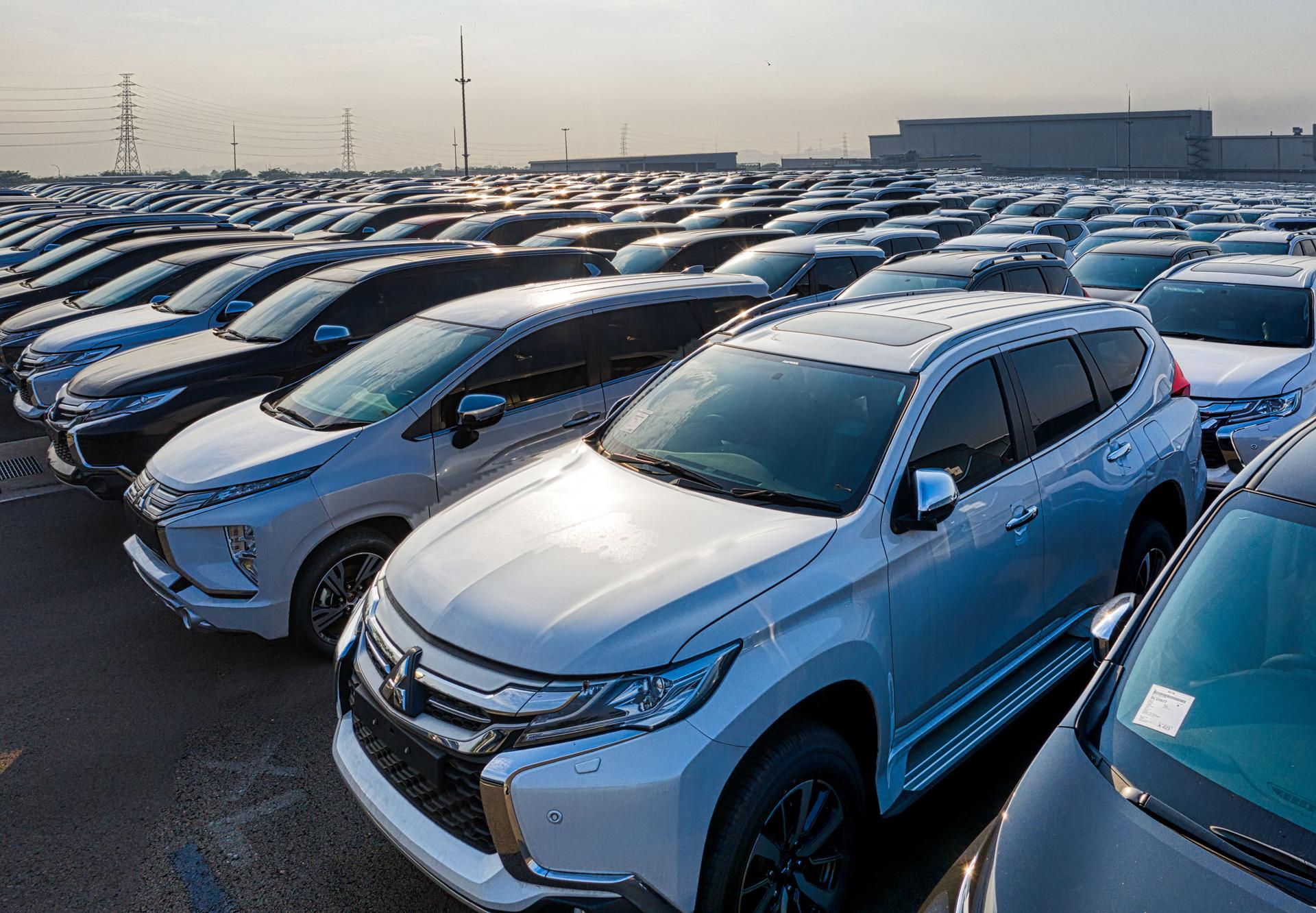
Stripped of ceremony, the facility is meant to do one thing: make it cheaper and more credible to assemble vehicles inside Kenya rather than import them finished. Kenya already has assembly lines — plants around Thika, Mombasa and Nairobi have screwed together trucks, buses and pickups for years — but they operate well below capacity, undercut by a flood of used imports that are cheaper for households even as they drain the country of foreign exchange and skilled work.
The official case for the deal rests on a chain of consequences. Local assembly, the argument goes, builds technical skills. Those skills deepen an industrial base. A deeper base improves the trade balance by trimming the import bill. And a healthier trade balance, in turn, steadies a shilling whose every wobble is felt by the families abroad who watch the exchange rate before they send money home. Each link in that chain is plausible. None is guaranteed. The history of Kenyan manufacturing is littered with facilities that opened to fanfare and then idled when the incentives shifted or the imports kept coming.
Why a Car Plant Matters to People Who Left
For the diaspora, the relevance is not abstract. The Kenyans who left for the Gulf, for Britain, for North America did not, in most cases, leave because they wanted to. They left because the jobs at home were too few, too informal or too poorly paid to carry a household. The remittances they send — more than five billion dollars a year, the single largest source of foreign exchange the country has — are an act of love and also a quiet indictment, evidence of an economy that exports its people because it cannot yet employ them.
An assembly line is, in this light, more than an assembly line. Every skilled job created at home is one fewer reason for a young mechanic to board a plane to Doha on a two-year contract. Every supplier that springs up around a plant — the firms that make seats, wiring, glass, bolts — is a small argument that a future can be built in Nairobi rather than wired back to it. Diaspora investors, too, are watching: returnees and overseas Kenyans have long said they would put money into manufacturing if the policy environment felt stable. A deal anchored by a Japanese state agency is, at minimum, a signal of seriousness.
The Long Road of "Made in Kenya"
This week's facility did not appear from nowhere. It follows Kenya's state visit to Japan in 2024 and the country's participation in the Tokyo International Conference on African Development, the long-running forum through which Japan channels investment and diplomacy across the continent. More than 120 Japanese companies already operate in Kenya, and Tokyo has increasingly positioned itself as a patient, infrastructure-minded partner in contrast to faster, debt-heavy alternatives.
For Kenya, the appeal is partly about diversification. Much of the country's recent borrowing and dealmaking has leaned toward a handful of partners; a substantial Japanese facility widens the circle. For the diaspora, that diversification carries its own reassurance. Many overseas Kenyans have grown wary of arrangements that load the public debt without obviously creating jobs. A facility explicitly tied to assembly lines, component production and skills — with officials pointing even to electric-vehicle technology — is the kind of deal a sceptical diaspora is more inclined to cheer, provided the plants actually hum.
What the Diaspora Will Watch For
The test of this agreement will not be the signing photographs. It will be whether, a year or two from now, more Kenyans are drawing a wage from a factory floor, and whether the vehicles those floors produce are affordable enough to compete with the used imports that still dominate the roads. It will be whether the energy reforms bundled into the deal lower the power costs that have long made Kenyan manufacturing uncompetitive. And it will be whether the skills built in these plants stay in the country or simply become another export, as trained technicians follow the same path abroad that their predecessors did.
Back in the Thika workshop, the technician is not waiting for a press release to tell him whether things have changed. He will know it in the most ordinary way: by whether the orders keep coming, by whether the friends who left start asking, cautiously, whether it might be worth coming home. A financing facility cannot answer that on its own. But it is, at least, a brick laid in the direction of a country that holds onto its people rather than sending them out to hold it up. For a diaspora that has carried Kenya on its remittances for a generation, that direction is the whole point.