The Suitcase Tax Eases: How Ruto's Sixfold Duty-Free Raise Rewrites the Diaspora's Trip Home
Kenya has lifted the duty-free allowance for returning travellers from Sh39,000 to Sh260,000 — a quiet win for the diaspora who carry their savings home in their luggage.
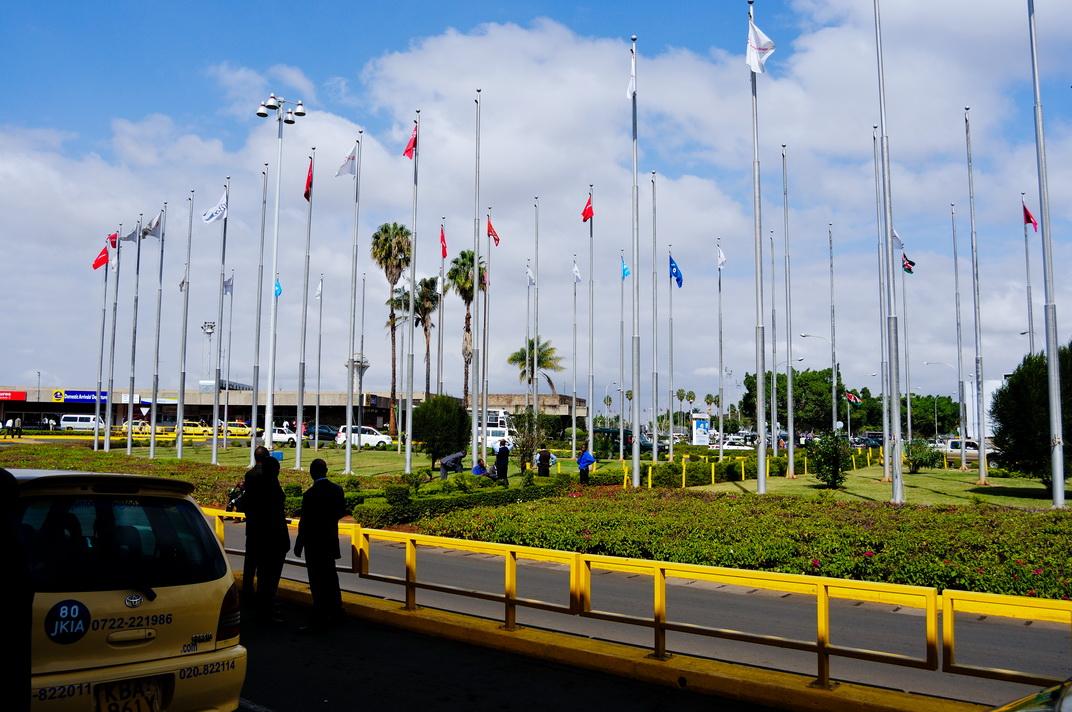
Anyone who has flown home for Christmas knows the small arithmetic that begins long before the descent into Nairobi. The new phone for a younger sibling. The laptop a cousin needs for college. The blender, the winter coats turned into gifts, the shoes bought on a Black Friday sale in a city eight time zones away. Somewhere over the Sahara, the mental tally starts: how much of this will survive the green channel, and how much will be unwrapped under the fluorescent lights of a customs desk and assessed for duty.
For years, that arithmetic was governed by a figure that felt frozen in another era. A returning traveller could bring in personal goods worth up to Sh39,000 before customs duty kicked in — a ceiling low enough that a single mid-range smartphone could breach it. On Tuesday, that ceiling moved, and it moved a long way.
A line in the Finance Act
President William Ruto announced the change while assenting to the Finance Bill 2026/2027 at State House, Nairobi, signing into law a package of tax and revenue measures that had moved through Parliament after months of public hearings. Tucked among the larger provisions was a measure aimed squarely at people who spend most of the year outside the country.
"To address concerns raised by returning travellers, including Kenyans who travel abroad and members of the diaspora, we have increased the duty-free allowance from Sh39,000 to Sh260,000 for gifts and personal effects that Kenyans can buy as they travel or as they come home from their jobs abroad," Ruto said, according to The Star.
The new threshold is roughly six times the old one. In practical terms, it lifts the duty-free line from the price of a single gadget to something closer to the value of a suitcase carefully packed over a year of saving.
What changes at the customs desk
The mechanics are straightforward. Travellers entering Kenya may now bring in personal effects and gifts worth up to Sh260,000 without paying customs duty, where previously anything beyond Sh39,000 was potentially dutiable. The change does not alter what people do — Kenyans abroad have always travelled home with electronics, clothing and household items — but it changes how much of that the state taxes at the border.
That gap between the two figures had become a quiet source of friction. Consumer goods are frequently cheaper in international markets, where competition is fierce and seasonal sales are aggressive. By the time the same television or laptop reaches a Nairobi shelf through commercial channels, its price has absorbed shipping, import duties, taxes and a chain of distributor margins. A diaspora worker carrying the item home in person was, in effect, performing a private import — and running into a duty ceiling set for a different economy.
Why the diaspora carries its wealth in a suitcase
The measure lands on a community whose financial relationship with Kenya is already enormous and already misunderstood. Remittances are the headline number: the billions of dollars Kenyans abroad wire home each year, now one of the country's largest sources of foreign exchange. But the suitcase economy is the part the spreadsheets miss — the value that travels not as a bank transfer but as cargo in the overhead bin and the checked bag.
For someone earning in dollars, pounds or euros, that channel makes intuitive sense. A salary that converts into a large number of shillings buys more abroad before conversion than after, and goods bought overseas often arrive in better condition and at lower cost than their locally retailed equivalents. A laptop bought in Dubai, carried home through Doha and switched on in Eldoret crosses several economies in a single trip, but the benefit settles in Kenya — in a student's coursework, a small trader's bookkeeping, a household's standard of living.
Seen that way, the old Sh39,000 cap functioned almost as a tax on devotion: a levy on the act of bringing something tangible to the people the diaspora left behind. Raising it acknowledges a behaviour the state cannot stop and has little reason to discourage.
The retailers who may not cheer
Not everyone gains evenly. Local retailers, particularly those selling consumer electronics, have reason to watch the change warily. Every high-value phone or appliance that enters duty-free in a traveller's bag is one that was not bought from a Kenyan shop that paid full import costs. For a sector already squeezed by thin margins and a cost-of-living crunch, a more generous personal allowance nudges some spending offshore.
The counter-argument, which the government leans on, is that the diaspora's economic footprint at home extends well past the till. Returning Kenyans spend on accommodation, transport, entertainment, construction and property, and they bring in goods using foreign currency that no commercial importer had to source. The personal allowance, in that framing, is less a leak than a recognition that the diaspora's money reaches Kenya through many doors at once.
A small measure inside a contested budget
The duty-free change arrived inside a Finance Act that has been anything but uncontroversial. The 2026/2027 budget cycle has drawn the usual scrutiny over who carries the tax burden, and the law was signed against a tense national backdrop in the same week the country marks a politically charged protest anniversary. Ruto framed the broader package as one built on public participation and fairness rather than new burdens, telling the State House gathering that the law "does not raise taxes on ordinary Kenyans" but instead improves compliance and closes loopholes.
For the diaspora, the larger debates over the budget will play out at a distance. The duty-free clause is the part that touches them directly, and it touches them in a familiar place: the moment of homecoming, the bags on the belt, the walk toward the green channel.
What it does, and what it doesn't
It would be easy to overstate the change. A higher allowance does not lower the price of goods inside Kenya, does not reform the customs experience, and does not address the deeper questions the diaspora keeps raising — over voting access, consular support, the safety of workers in the Gulf, and whether the state values its citizens abroad as more than a remittance line. A duty-free ceiling is a narrow instrument.
But narrow instruments still register. For the nurse in Manchester, the construction worker in Doha, the graduate student in Minnesota who has spent the year quietly saving for the trip back, the new figure means a little more of what they carry will reach the people it was meant for, untaxed at the door. After years of a frozen number, that is a small, concrete acknowledgement that the journey home, and everything packed for it, counts.