The Arrivals Hall That Became a Trap: How a US Supreme Court Ruling Leaves Travelling Kenyan Green Card Holders in Limbo
A 6–3 decision in Blanche v. Lau lets border officers treat returning permanent residents with pending charges as if they were knocking on America's door for the first time.

When Muk Choi Lau stepped off his flight from China and into the arrivals hall at John F. Kennedy International Airport, he did what millions of lawful permanent residents do every year: he handed a border officer the green card that says he belongs. He had carried that status since 2007. He expected to be waved through as a returning resident, a person already admitted to the life he had built in the United States.
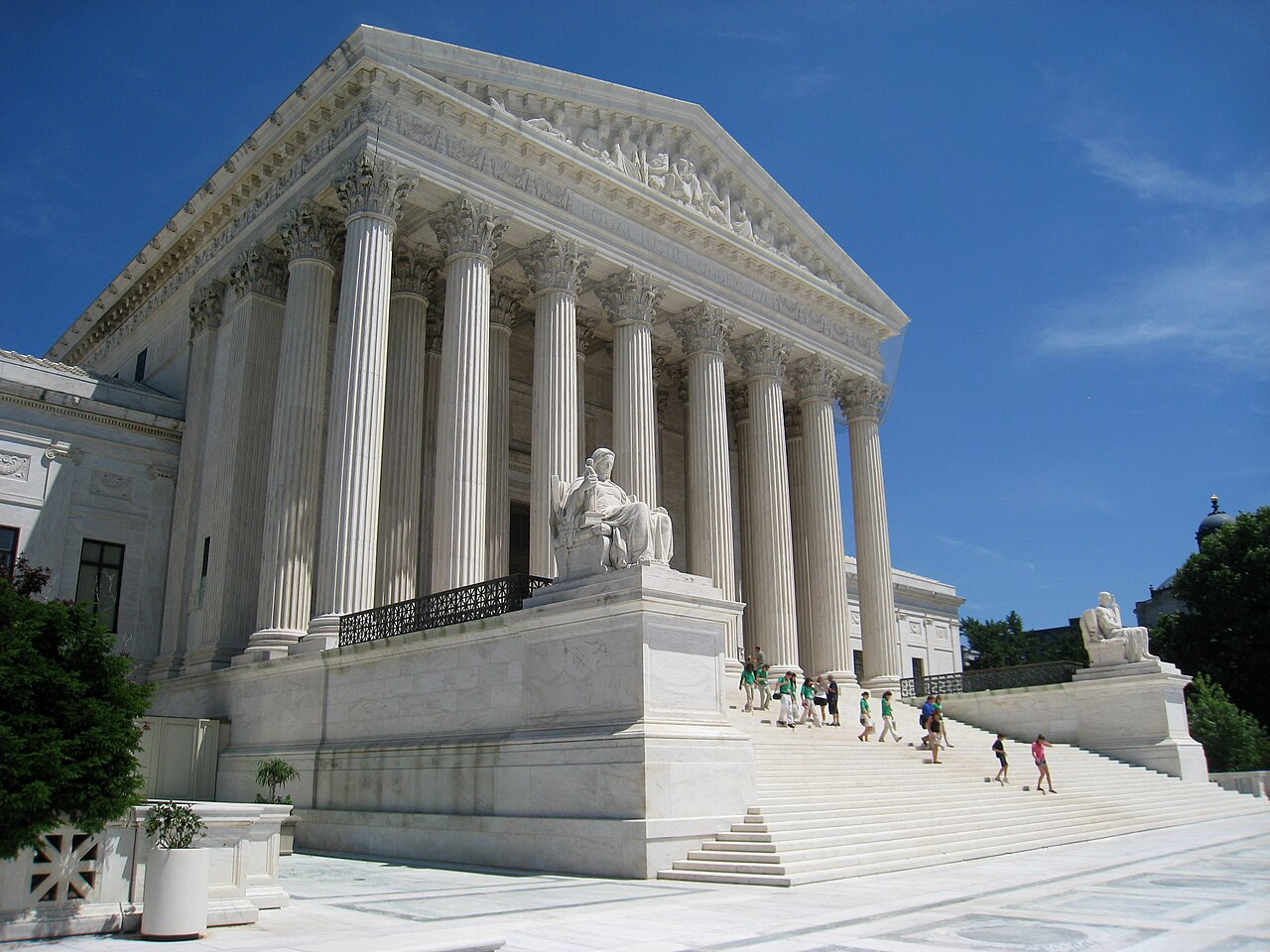
Instead, the officer set him aside. Because of a single unresolved criminal charge filed in New Jersey, Lau was not admitted at all. He was placed on immigration parole — a legal status that treats a person as someone standing at the door asking to be let in, rather than someone already inside. That decision at JFK, made years ago, has now become the law of the land. On June 23, the United States Supreme Court ruled 6–3 that border officers may do to other green card holders exactly what was done to Lau.
For the tens of thousands of Kenyans who hold US permanent residency, the ruling lands far from any courtroom. It lands at the airport, in that narrow moment between the jet bridge and the immigration desk, where a returning resident now carries less certainty than they did a week ago.
What the Court actually decided
The case, Blanche v. Lau, turned on a technical but consequential question: how much proof must the government have before it treats a returning green card holder as an "applicant for admission" rather than as someone already admitted? The distinction matters enormously. An applicant for admission can be paroled, questioned, placed in removal proceedings, and made to argue their way back into a country where they have lived for years.
Lau's history shows how the mechanism works. After he was charged in New Jersey with trademark counterfeiting in 2012, he travelled to China and then sought to re-enter through JFK. Border officials paroled him because of the pending charge. He later pleaded guilty and received a probationary sentence, after which the Department of Homeland Security began removal proceedings, arguing his offence was a "crime involving moral turpitude" — a category of conduct that can render a non-citizen inadmissible.
Lau fought back, arguing that he should not have been treated as inadmissible at the border because, at the time he returned, he had not been convicted of anything. The Second Circuit Court of Appeals agreed with him, finding the government lacked sufficient evidence. The Supreme Court has now reversed that finding. Writing for the majority, Justice Clarence Thomas held that border officials are not required to show "by clear and convincing evidence" that a crime has been committed before placing a permanent resident on parole. A pending charge can be enough to start the process.
The dissent's warning
The three dissenting justices saw the decision as a quiet but serious erosion of due process. Justice Ketanji Brown Jackson, joined by Justices Sonia Sotomayor and Elena Kagan, warned that the ruling hands the government broad discretion to place lawful permanent residents in what she called "immigration limbo" on the strength of allegations alone.
Her concern is precise: a charge is not a conviction. Under the majority's logic, a resident can be pulled out of the returning-resident line and routed toward possible removal before any court has found them guilty of anything. Immigration attorneys quoted in US coverage of the decision described the new latitude given to border agents as close to unlimited. For someone whose case is still working through a criminal court, the consequence is a long stretch of uncertainty layered on top of an unresolved prosecution.
Why this reaches Nairobi and Minneapolis alike
It is tempting to read Blanche v. Lau as a story about one Chinese national and a counterfeiting charge. For the Kenyan diaspora, it is something closer to a change in the weather. The United States is the single largest hub of the Kenyan diaspora and, by a wide margin, the most important source of the money that flows back home. The 2025 Remittances Household Survey Report, released this month, found that Kenyan households received a record 931.8 billion shillings over the survey period, with the United States alone accounting for 43.5 percent of those flows.
Behind that statistic are people who travel — to bury parents, attend weddings, check on land and businesses, or simply to see family after years away. Many of them are green card holders rather than citizens, and many carry the ordinary legal entanglements of any large community: a contested traffic matter, an old charge, a case still moving slowly through a county court. For those individuals, the calculus of a trip home has shifted. A pending matter that once felt like a private inconvenience is now something a border officer can act upon the moment they land back in the US.
A harder choice for those who travel
The practical advice circulating among immigration lawyers since the decision is blunt: permanent residents with any unresolved criminal matter should think carefully, and seek counsel, before leaving the country. The reason is not that re-entry has become impossible, but that it has become less predictable. The protection that a green card once seemed to guarantee at the border — the near-automatic right of a returning resident to walk back into their own life — has been narrowed.
That uncertainty interacts with a broader tightening of the US immigration landscape that Kenyans abroad have been tracking closely, from proposals to sharply raise citizenship fees to renewed attention on deportation. Each change on its own is manageable. Together, they nudge many long-term residents toward the same conclusion: that the surest protection against the discretion of a border officer is citizenship itself, with its far stronger guarantee of return.
What to watch next
Blanche v. Lau does not change who is eligible for a green card, and it does not strip status from anyone. What it changes is the margin of safety at the border for residents with open legal questions. The decision arrives as the Court weighs several other disputes tied to immigration policy, including cases touching asylum, birthright citizenship and temporary protections — a docket that will keep shaping the terms on which the diaspora lives, works and travels.
For now, the message for Kenyan permanent residents is less about panic than about preparation. Know the status of any pending matter before booking a flight. Carry documentation. Talk to a lawyer if there is any doubt. The arrivals hall has not closed. But for some travellers, it has become a place where the journey home can pause — and where the green card in their hand no longer ends the conversation the way it used to.