The Skills to Stay: How Kenya's Plan to Merge Its Youth Service and Trade Schools Speaks to a Generation Tempted Abroad
A Ksh15 billion proposal to fold National Youth Service recruits into technical colleges is pitched as a fix for the joblessness that empties villages toward the Gulf and beyond.
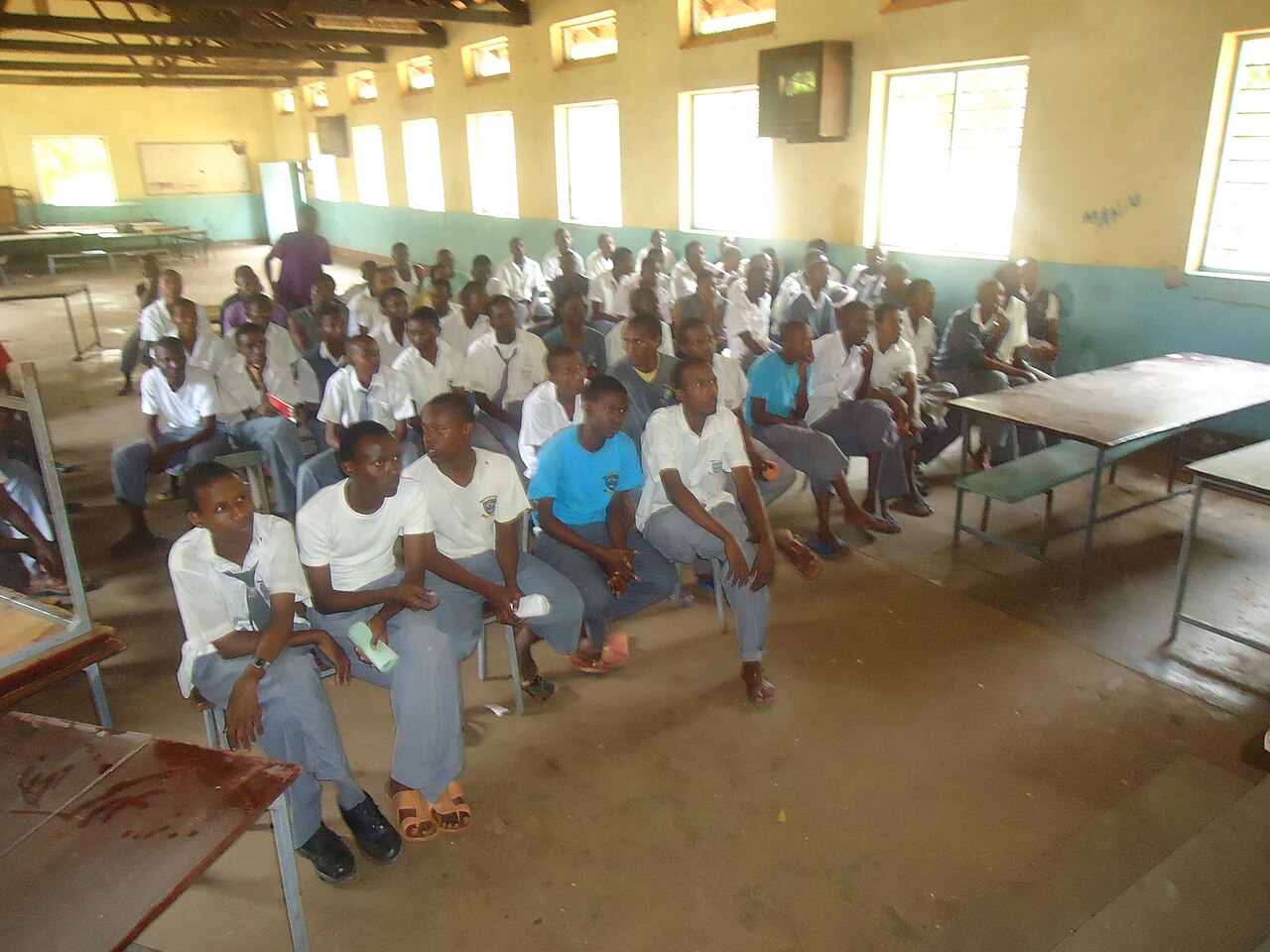
In a thousand homesteads across Kenya, the same quiet calculation is running this month. A young man finishes a certificate course and finds no work to match it. A young woman scrolls a WhatsApp group where a recruiter promises a cleaning contract in Riyadh or a warehouse shift in Qatar. The wage sounds enormous against the local nothing. The family does the sums, weighs the risks they have heard about, and more often than not, someone packs a bag.
It is against that backdrop — a generation forever deciding whether its future is at home or abroad — that the government has unveiled a plan to keep more young Kenyans skilled, employed, and, by implication, in the country.
Speaking at a church service at ACK Kiamiatu in Kega, Embu County, on June 14, Cabinet Secretary for Public Service, Human Capital Development and Special Programmes Geoffrey Ruku announced a scheme to merge the operations of the National Youth Service with the country's Technical and Vocational Education and Training institutions. The aim, he said, is a single, seamless pipeline that hands young people practical skills and real workplace experience.
What the government is proposing
"We have put in place plans led by President William Ruto to see that all the NYS students fit in the Technical and Vocational Training Centres in the country so that they can be ready for the job market," Ruku told the congregation.
Under the plan, NYS recruits who currently pass through paramilitary-style training would be channelled into TVET institutions, graduating with the kind of certified, industry-relevant competencies that employers actually ask for. Starting in 2027, Ruku said, all NYS training centres would be remodelled into modern centres of excellence operating hand in hand with technical colleges, and the network of facilities would be expanded so that more youth can reach them.
"Starting 2027, the government wants every young person willing to acquire skills to have an opportunity to do so," the CS said, framing the merger as "a stronger foundation for employment, innovation and self-reliance." The proposal, as reported by Kenyans.co.ke, carries an estimated price tag of around Ksh15 billion. The plan has also been confirmed by education-sector outlets, which described it as a move to harmonise NYS and TVET training.
The numbers behind the promise
The scheme does not arrive in a vacuum. The 2026/27 National Budget already devotes serious money to the same goal. The National Youth Service was allocated Ksh12.5 billion, itself one slice of a broader Ksh110.2 billion youth and women empowerment strategy that also funds the NYOTA programme at Ksh4.9 billion, KJET at Ksh2.4 billion, and Youth Support programmes at Ksh1.6 billion.
The TVET sector is the larger pillar. It received Ksh58.5 billion to serve an enrolment that has climbed to 825,484 trainees, with a further Ksh2 billion set aside for TVET scholarships and Ksh2.1 billion for building and equipping institutions. Read together, the figures describe a state betting heavily that the answer to youth unemployment is a welder's torch, a plumber's wrench, and a certificate that a foreman will respect — rather than another year of idle waiting for a white-collar job that the economy is not producing.
Why the diaspora is the unspoken benchmark
For Kenyans abroad, a story about technical colleges may seem a long way from their own concerns. It is not. The same shortage of decent work that this plan is meant to cure is the single biggest reason their own ranks keep swelling. Every recruitment drive for domestic workers to the Gulf, every nursing cohort bound for Britain, every student who never comes home draws from the pool of young people for whom Kenya could not find a place.
That outflow has become an economic mainstay rather than an embarrassment. Money sent home by Kenyans overseas is now among the country's largest sources of foreign exchange, propping up household budgets and the shilling alike. A government that succeeds in skilling and employing more youth at home would, over time, change the arithmetic that sends them away in the first place — and that is precisely why diaspora families watch these announcements with more than passing interest. Many of them are funding the very siblings and children who would be the first to test whether the new pipeline leads to a job or to the airport.
Skills versus departures
The harder question is whether training alone can hold a generation in place. Skills are necessary but not sufficient; a certificate without a vacancy simply produces a better-qualified migrant. Kenya has graduated capable technicians for years, only to watch many of them carry their qualifications to construction sites in the Gulf and care homes in Europe, where the pay clears in a single month what they might wait a year to earn at home.
The promise of the NYS–TVET merger rests on a chain of ifs: if the centres of excellence are built on schedule, if the curriculum tracks real labour demand, if local industry can absorb the graduates, and if the Ksh15 billion is spent on workshops rather than swallowed by overheads. Each link has failed before in Kenyan skills programmes. The difference this time, the government argues, is scale and integration — folding two large systems into one rather than running parallel schemes that never quite connect.
What to watch
The proof will be ordinary and slow: whether a young person who finishes an upgraded NYS-TVET course in 2028 finds work in Nakuru or Nairobi, or whether the recruiter's WhatsApp message still offers the better deal. For the diaspora, the plan is worth following not as distant policy but as a measure of the country they left — a signal of whether the next generation will have the choice their own families often did not.
Until the centres are built and the first reshaped cohorts graduate, the announcement remains a statement of intent rather than a delivered result. But it names the right problem. The question Kenya has struggled to answer for a decade is not how to send its young people abroad, but how to make staying a future worth choosing.