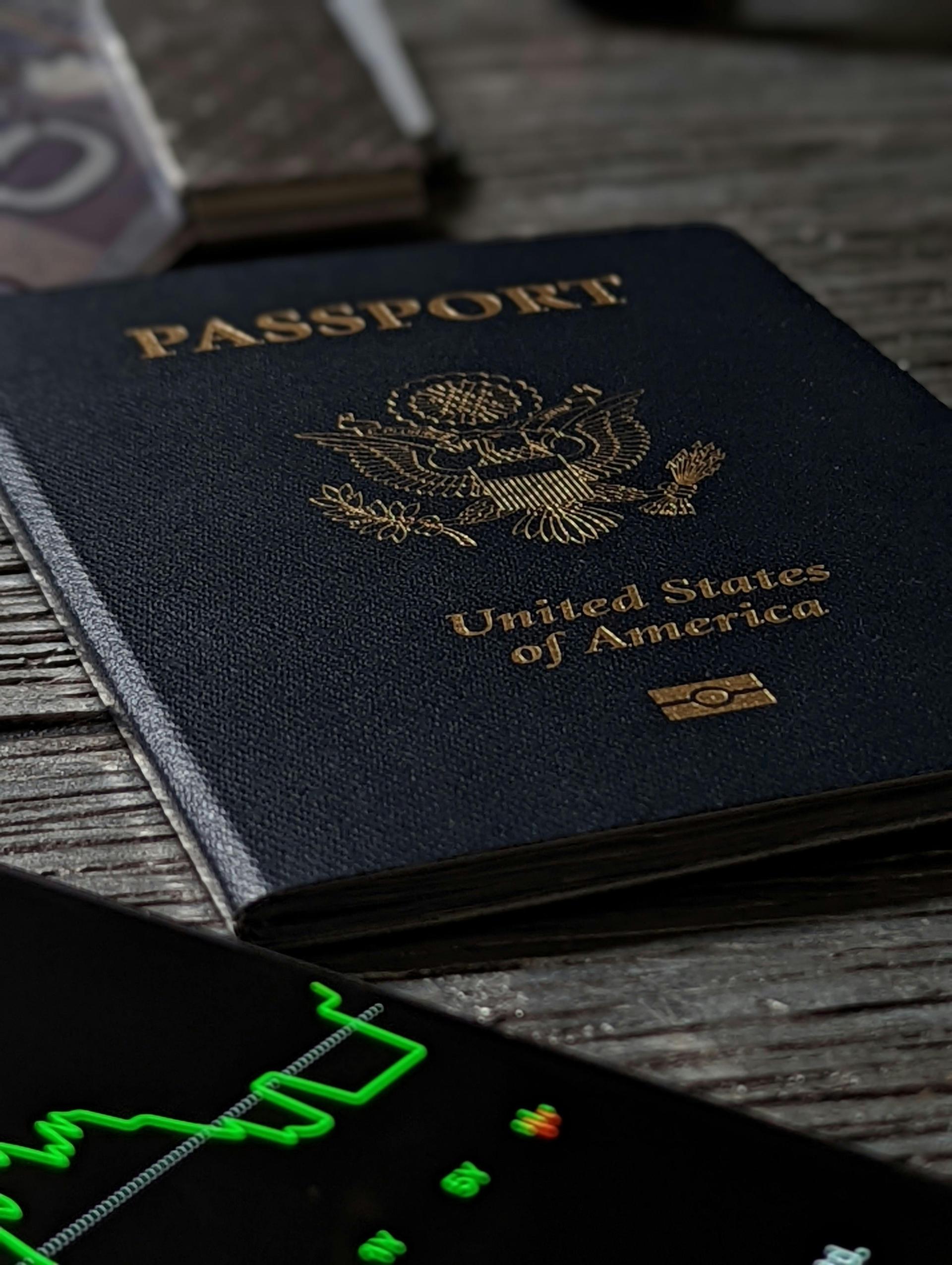
The Stamp That Used to Stay Home: How a Friday USCIS Memo Sends Kenyan Spouses and Workers Back Through Nairobi
A May 29 USCIS guidance reframes adjustment of status as "extraordinary discretionary" relief, a quiet rule change that may push thousands of Kenyans toward consular processing in Nairobi.

On the afternoon of Friday, May 29, U.S. Citizenship and Immigration Services issued a memorandum that, by the weekend, was already being forwarded between WhatsApp groups linking Houston nursing corridors to apartment blocks on Ngong Road. The two paragraphs that mattered most reframed what immigration lawyers call "adjustment of status" — the routine procedure that lets people inside the United States move from a temporary visa to a green card without leaving the country — as an "extraordinary discretionary" relief, to be granted only in exceptional cases. For tens of thousands of Kenyans on the cusp of permanent residency, the implication was immediate. The pathway they had counted on, the one that did not require booking a flight back to Nairobi, had been narrowed in the space of a single Friday afternoon.
The change arrived without a press conference and without a signing ceremony. It is the kind of policy shift that lands on a Kenyan-American household in a half-screenshot, late at night, beneath the green tick of a married daughter writing from Eldoret to ask whether the latest news will affect her mother's papers. By Sunday morning, immigration attorneys from Boston to Bellevue were issuing client alerts, and embassy phone lines in Nairobi were already busy.
What the May 29 memo actually says
The text of the new guidance, which began circulating to USCIS adjudicators on Friday and applies to new and pending cases, rests on a single legal hinge. Adjustment of status, authorised under Section 245 of the Immigration and Nationality Act, has for decades served as the default route to permanent residency for people who entered the United States legally and met the criteria for a green card. The memo does not abolish that route. It reclassifies it. Officers are now instructed to treat adjustment as an exceptional remedy and to weigh applications under a "totality of the circumstances" test.
That test, the memo says, must consider negative factors — prior immigration violations, fraud, misrepresentation, or conduct inconsistent with a non-immigrant visa — alongside positive ones, such as family ties, good moral character and long-term contributions to the country. When the negative side is judged to outweigh the positive, the application is to be denied, and the applicant directed to file at a U.S. embassy or consulate abroad. Denials, the agency has said, will arrive with written explanations setting out which factors weighed against the case.
Eddie Raleigh, a partner at the immigration firm Fragomen, told The Wall Street Journal that the memo intends adjudicators to be "more judicious" about approving adjustment-of-status requests. The administration has publicly framed the change as a comprehensive overhaul. The internal memo, lawyers note, reads more like a directive to apply heavier scrutiny to a route that until last week was treated as ordinary.
Why this stings for Kenyans
For the Kenyan diaspora in the United States, adjustment of status has been more than a legal shortcut. It has been the rail along which most of the community's success stories travel. A nurse on an H-1B who marries a U.S. citizen, a graduate of a master's programme who lands an EB-2 sponsorship from an employer in Atlanta, an asylum recipient who has rebuilt a life in suburban Maryland — all of them have, until Friday, been able to file the I-485 form and wait for a green card without ever leaving the country.
That stability matters. Kenyan families in the United States are often dual-earner, often supporting elderly parents back home, and often anchored by a child enrolled in an American school district. Asking the breadwinner to fly to Nairobi for a consulate appointment is not a minor detour. It can mean weeks of lost wages, an interrupted school year and the gnawing uncertainty of waiting in a city the applicant has not lived in since their twenties.
The numbers magnify the reach. The State Department for Diaspora Affairs estimates that more than 150,000 Kenyans live in the United States. Several thousand of them file an adjustment-of-status application each year, with nurses, software engineers and graduate students among the largest cohorts.
The Nairobi bottleneck
The other end of the new pipeline is a consular section at the U.S. embassy on United Nations Avenue that has been running close to capacity for most of the year. Earlier in May, the State Department announced the temporary suspension of operations at five U.S. embassies overseas, raising fresh concerns about appointment availability across Africa. Nairobi was spared the closure list, but immigrant visa interview slots there have been booked weeks in advance.
A May 29 dispatch from Mwakilishi, the diaspora outlet, warned that processing times for several U.S. visa categories had already begun to stretch into 2027 under earlier rule changes. The new memo, if applied broadly, will route a fresh wave of applicants through the same already-strained system. Kenyan immigration lawyers in Washington and Boston are now telling clients to budget six to twelve months for the consular leg of the process, on top of whatever time was already spent waiting inside the United States.
H-1B workers, spouses and the families caught between two embassies
The memo carves out one important reassurance. The principle of "dual intent," which lets H-1B holders pursue permanent residency while remaining on a temporary visa, survives unchanged. USCIS has also signalled that highly skilled workers — the engineers, doctors and academics most prized by U.S. employers — are unlikely to face immediate disruption.
The bigger jolt lands on the family side. Spouses of U.S. citizens, who once formed the most predictable pool of adjustment applicants, will now feel the full weight of the "totality of circumstances" review. So will asylum recipients who have already cleared an asylum officer, and refugees whose green-card filings were until recently treated as procedural. Each of those applicants must now persuade an officer that their case earns the discretionary stamp the memo treats as rare.
For some, that means a return trip to Nairobi for an interview at a consulate where they have not set foot as adults. For others, particularly those with old visa overstays or any record of past misrepresentation, it may mean an outright denial — followed by a re-entry to Kenya that could last months while a fresh application makes its way through a slower system.
What the Kenyan diaspora is watching for next
The first signs of the memo's reach will come in adjudication patterns over the next several weeks. Lawyers will be watching for surges in requests for evidence, denials in spousal cases, and consulate scheduling backlogs in Nairobi. Several U.S. immigration advocacy groups are already preparing litigation that is likely to reach a federal circuit court before the summer ends.
The Kenyan side of the response has been quieter so far. The State Department for Diaspora Affairs, which hosted a Friday meeting at State House on broader diaspora policy, has yet to issue a formal statement on the USCIS memo. But the consulate in Nairobi will be the first to feel the strain, and embassy phone lines in Westlands were already busy by Sunday morning.
For the Kenyan families on the receiving end, the day-to-day question is narrower than the policy debate. Hospital shifts have been booked through October. School registrations in Atlanta and Houston suburbs are locked in. The I-485 forms already filed in March and April will be adjudicated by USCIS officers reading them under instructions written on a Friday that most Kenyan-American households did not know existed until the weekend.