The Counsellor From Amman: How Trump's New Ambassador Pick for Nairobi Reaches Every Kenyan Visa Line in America
Henry Wooster, a career diplomat with a Jordan posting on his résumé and Haiti on his desk, is Trump's pick for Nairobi — and the visa counter every Kenyan abroad watches.
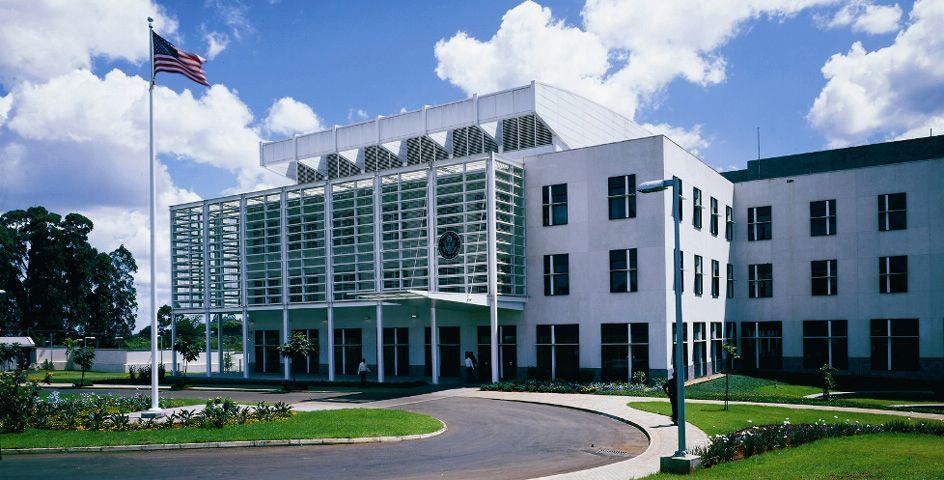
It is 7:45 in the morning at the appointment window outside the United States Embassy in Gigiri, and the woman at the front of the line is rehearsing the same paragraph for the third time. Her son is in his second year at a university in Iowa. He has a graduation in May. She has been refused once already. The consular officer behind the glass will read a typed note that came down from Washington, and she has prepared a folder of bank statements thick enough to settle the question. By the time her appointment is called, she will not have looked up at the steel fence behind her, or at the eagle on the embassy's frieze. She will be thinking only of the officer's face.
That officer reports up a chain that ends with an ambassador, appointed by a president and confirmed by a Senate. On the second of June, President Donald Trump sent the Senate the name of the man he wants in that chair: Henry T. Wooster, a career member of the Senior Foreign Service whose résumé reads like a long catalogue of difficult assignments. If the Senate Foreign Relations Committee moves quickly and the full chamber agrees, Wooster will become the single American official whose decisions sit closest to that appointment window in Gigiri.
A Career Built on Hard Postings
Wooster is not a political ambassador in the sense Kenyans have grown used to. The last full chief of mission in Nairobi was Meg Whitman, the technology executive who arrived under President Joe Biden and stepped down after the 2024 election. Whitman was a name; she could pick up the phone to Silicon Valley. Wooster's name is unfamiliar to most readers in Eldoret or in Lowell, Massachusetts, but the career he carries is the kind State Department professionals call regional, with edge.
He served as the United States Ambassador to Jordan from October 2020 to July 2023, a span that began under Trump and ended under Biden — an unusual stretch of continuity through a change of party. He has run the embassy in Port-au-Prince since June 2025, holding the line for an American mission inside one of the most volatile capitals in the hemisphere. His earlier career took him through the Bureau of Near Eastern Affairs, the Office of Iranian Affairs, the National Security Council as director for Central Asia, and a posting as foreign policy adviser to the commanding general of the Joint Special Operations Command. He served twenty-four years in the United States Army Reserve. He holds degrees from Amherst and Yale, and he speaks French and Russian with working knowledge of Arabic, Persian and Aramaic.
That résumé is built around security and crisis rather than the easier postings of trade and culture. Kenya, which sits at the centre of America's counter-terrorism architecture in East Africa and which has hosted parts of the US mission to Somalia, will not be the first hard ambassadorship Wooster has been asked to hold.
What the Job Actually Does for Diaspora Families
The reason this nomination matters to a Kenyan family in Roseville or in Newcastle has very little to do with the photographs of credential ceremonies that will fill diplomatic news feeds if Wooster is confirmed. It has to do with the slow grammar of consular work.
The ambassador in Nairobi oversees immigrant and non-immigrant visa issuance through the largest US consular operation in the region. He sets the tone for how the embassy processes family-based green-card petitions between Kenyan applicants and their relatives in the United States. He manages citizen services for the tens of thousands of Kenyan-Americans who travel home each year, carries the file on travel advisories and prisoner welfare cases, and oversees passport re-issuance for newborns delivered in Nairobi to American parents. In a year when the Bureau of Consular Affairs has tightened guidance on green cards and paused certain admissions altogether, the person in the chair sets the temperature.
He also, more quietly, leads the embassy's daily exchange with Kenya's Ministry of Foreign and Diaspora Affairs on the questions Kenyans abroad raise loudest: the welfare of citizens in distress, the repatriation of remains, and the flare-ups that send a diaspora WhatsApp group into a long night of phone calls.
A Bilateral Relationship Already Under Strain
Wooster would inherit a US-Kenya relationship that has been louder than usual. In the last three weeks alone, a US-funded Ebola quarantine facility in Nanyuki has triggered protests that ended in two deaths and a court order halting the project. The Department of Homeland Security has issued and then partly walked back guidance affecting green-card holders from several African nations. The State Department has updated its travel advisory for Kenya. And Kenya itself remains in the middle of an unsettled domestic political cycle, with the early choreography of 2027 already visible in the funerals and endorsement rallies of the last week.
The closest analogue in Wooster's own record is Jordan, where he managed an embassy through cross-border security crises and intermittent friction with a host government that had its own pressures at home. Officials who worked with him in Amman describe a careful operator who prefers to lower the volume in public and resolve disputes through quiet, persistent meetings. Whether that style holds in Nairobi, in front of cameras that follow the embassy more closely than they ever followed Amman, is something the diaspora will judge for itself.
The Senate's Calendar Is Now the Diaspora's Calendar
The mechanical next steps are familiar but slow. The nomination will be referred to the Senate Foreign Relations Committee. A hearing will be scheduled, usually weeks out. Wooster will answer written questions for the record. The committee will vote; the full Senate will vote. There is no statutory deadline, and the calendar can stretch if individual senators place holds. For the family at the Gigiri window, that calendar is suddenly relevant: a confirmed ambassador signals stability, while a long interim under a chargé sometimes means policies tighten quietly through guidance memos rather than openly through a head of mission.
The nomination is part of a wider package that also includes ambassadors-designate to Egypt, Sierra Leone, The Gambia, Equatorial Guinea, Brazil, Colombia and several others. The Senate's appetite for moving a long African slate through committee will, in practice, set how quickly Nairobi gets its top diplomat back.
What Wooster Would Inherit on Day One
If he is confirmed and presents his credentials in State House Nairobi, Wooster will inherit a mission of more than four hundred thousand square feet of floor space in Gigiri, a country team that runs everything from PEPFAR programmes to security cooperation, and a list of files that will, by then, have only grown. He will inherit an Ebola facility dispute that has spilled into Kenyan politics. He will inherit a visa backlog that defines the rhythm of countless Kenyan-American households. He will inherit a host country whose own diaspora ministry has just promised a welfare fund whose floor plan no one has yet seen.
He will also inherit a small but recurring courtesy that few Washington appointments understand. Each year on August 7, an American chief of mission in Nairobi walks the grounds of the original embassy site on Moi Avenue, where in 1998 a truck bomb killed 213 people, twelve of them American. The names are engraved on a wall in a memorial park beside the location of a building that no longer exists. Whoever the Senate confirms will, in time, stand at that wall. The diaspora that watches the Wooster nomination should know the building it is about: not the embassy of headlines, but the embassy that decides whether a son finishes his second year at a university in Iowa with his mother in the room.