The Petition in Milimani: How Katiba Institute Just Asked a Court to Halt the US-Kenya Ebola Pact the Diaspora Never Saw Signed
A constitutional rights lobby has filed an urgent petition asking a Nairobi judge to freeze the arrangement that would make Kenya a holding ground for Ebola-exposed Americans — and the diaspora is reading every line.
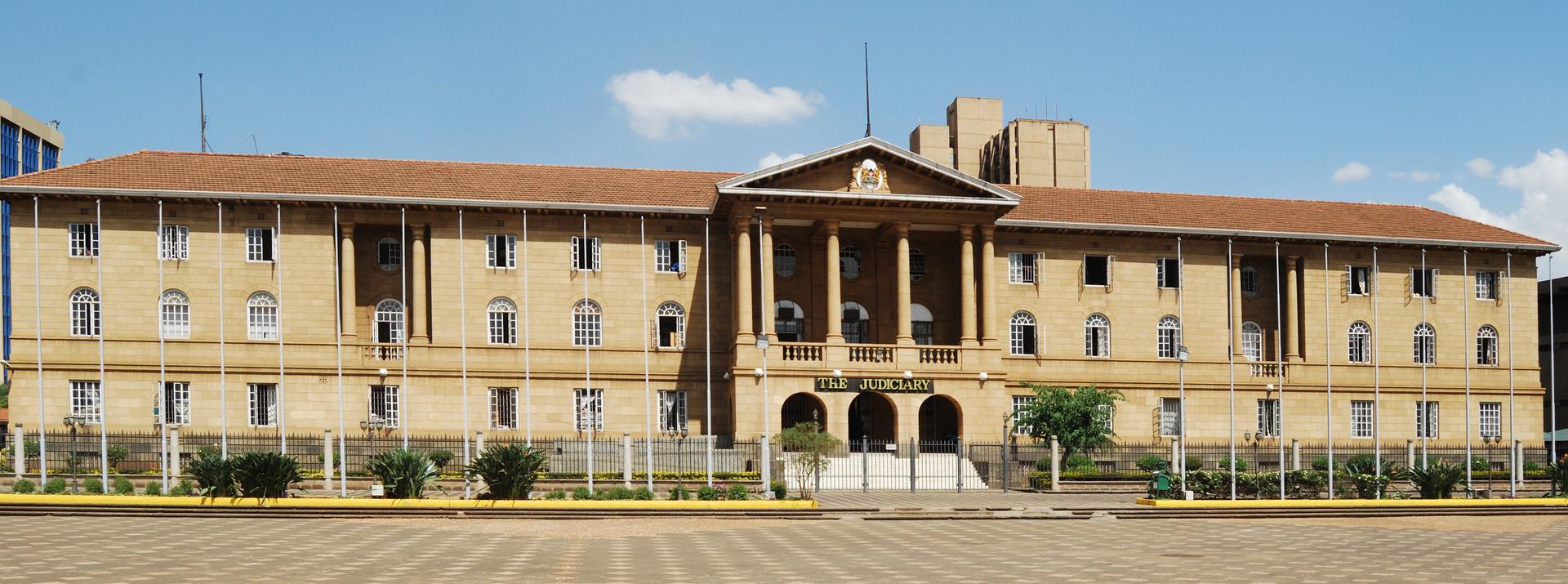
The papers were stamped in Milimani while most of the diaspora was still asleep. By the time Kenyans in Atlanta and Manchester opened their phones for the morning news, a constitutional lawyer named Malidzo Nyawa had walked into the High Court in Nairobi with an urgent petition that asks a single, very specific thing of a Kenyan judge: stop the government from turning Kenya into an offshore quarantine ward for the United States. The petition does not raise its voice. It does not need to. It catalogues, one constitutional provision at a time, the way an Ebola pact has reportedly travelled from Washington to Nairobi without ever being read aloud in Parliament.
For a diaspora that has spent the last forty-eight hours debating an earlier story about a tent the United States planned to put up in Kenya, the filing changes the temperature of the conversation. The question is no longer whether the facility is wise. The question is whether a court will let it be built at all.
The Case Filed at Milimani
According to court papers reported in the Daily Nation, Katiba Institute has sued the Attorney-General and the Cabinet Secretary for Health, with the health-rights group KELIN Kenya listed as an interested party. The petition asks the High Court to immediately bar the government from "establishing, operationalising, facilitating, approving or permitting" any Ebola quarantine, isolation or treatment facility connected to the arrangement with Washington, and from admitting any Ebola-exposed person pending the case.
The petition's central accusation is procedural. It claims the deal was negotiated in secret, without parliamentary approval, public participation, health risk assessments or disclosure of the agreement terms. The Daily Nation report cites the petition's language directly: that the arrangement amounts to converting Kenya into an offshore quarantine centre for foreign states, and that the Executive has substituted unilateral action for the country's constitutional architecture of checks and balances.
Katiba Institute is not alone in raising the alarm. The Law Society of Kenya's president, Charles Kanjama, had publicly opposed the proposed treatment centre before the petition was filed, a position covered by Radio47 in the days leading up to the case. The lobby's lawyers told the court they are relying, in part, on a precedent from Covid-19 litigation in which conservatory orders were issued against public-health decisions made without adequate disclosure.
The BSL-4 That Kenya Does Not Have
Buried in the petition is a sentence that did more than any political slogan to sharpen the public's attention. Kenya, the lobby argues, does not possess a Biosafety Level 4 laboratory — the only category of containment certified to safely handle viruses like Ebola. The country's facilities, the petition states, extend only from Biosafety Level 1 to Level 3, with just three BSL-3 laboratories operating nationwide. The implication is plain. Even if Nairobi wanted to host Ebola-exposed patients, it does not currently have the bricks and biosafety glass to do it.
"Ebola is a highly severe and often fatal disease with no universally approved cure and limited treatment options," the petition states, according to the Daily Nation. The petitioners go further, asking the court the question that animates the whole file: if an outbreak escaped containment, could Kenya manage to contain it?
The argument is one the diaspora has heard before from a different angle. Nurses and clinicians who left for the United States, the United Kingdom and Australia tend to know what Level 4 containment actually requires. They know it is not a tent. They know it is not a renovation of an existing isolation ward. They know it is sealed air, redundant suit systems, autoclaves the size of cars, and protocols rehearsed for years. Watching the question move from a press release to a court file is, for many of them, the first time the technical conversation has met the political one.
The Constitution at Stake
Katiba Institute's petition is not only about Ebola. It is about how Kenya signs deals.
The lobby argues that the proposed arrangement should have moved through Parliament under the Treaty Making and Ratification Act, because it carries bilateral obligations and touches the rights of Kenyan citizens. By bypassing the legislature, the petition says, the government has violated Articles 94, 95 and 96 of the 2010 Constitution — the provisions that lodge legislative authority in Parliament, define the National Assembly's powers, and set the Senate's role in matters affecting counties.
That framing is what makes the case politically charged. The petition does not ask the court to weigh epidemiology. It asks the court to defend the architecture of the Constitution against what it calls unilateral executive action. It also asks that the Ministry of Health be compelled to disclose all documents linked to the arrangement and to file a detailed contingency plan covering surveillance, prevention and emergency response.
For the diaspora, the precedent is the part that travels. A win for Katiba Institute would not just halt one quarantine plan. It would set a marker for how every future bilateral deal — including ones touching on remittances, taxation and consular arrangements that diaspora households actually live by — must be brought into the open before it can take effect.
Washington's Quiet Footprint
The arrangement the petition challenges originates abroad. The Daily Nation report references public remarks attributed to US Secretary of State Marco Rubio, who, according to the petition, indicated that the United States could not allow Ebola cases into the country. That sentence is what gives the lobby its strongest political talking point: that Washington, faced with the resurgent Ebola outbreak in the Democratic Republic of Congo, looked for somewhere else to hold Americans who might be exposed — and that somewhere else, by reported agreement, is Kenya.
Reporting in Arab News and Capital News in recent days has described the proposed facility as a state-of-the-art centre for US citizens leaving the DRC. None of the published accounts, however, has produced a public copy of the agreement, the cost-sharing schedule, the staffing model, or the protocols for transferring patients across borders if their condition deteriorates. The petition argues that absence is itself the issue.
What the Diaspora Sees From Here
In the kitchens of Kenyan households in Dallas, Toronto, Doha and Sydney, the news will land in different ways. Travel-planning chats will tighten. Wits will sharpen. A few families with relatives in BSL-laboratory science will start being asked questions they have been quietly answering all week. The court process itself is slow — the case is pending hearing directions — but the petition has already done something the press releases did not. It has placed the deal on a docket.
That matters because the diaspora's relationship with Kenya is not abstract. It runs through embassies that handle passports, hospitals where parents will be admitted next time someone visits, and bilateral channels through which everything from voting access to remittance taxation is negotiated. The Katiba Institute petition is, in that sense, less about Ebola than about the rules that govern the room where these deals get made.
If the court grants conservatory orders, the tent stays in storage. If it refuses, Washington's footprint in Nairobi grows by one address. Either way, the next document the diaspora is waiting for is not a press release. It is a ruling.