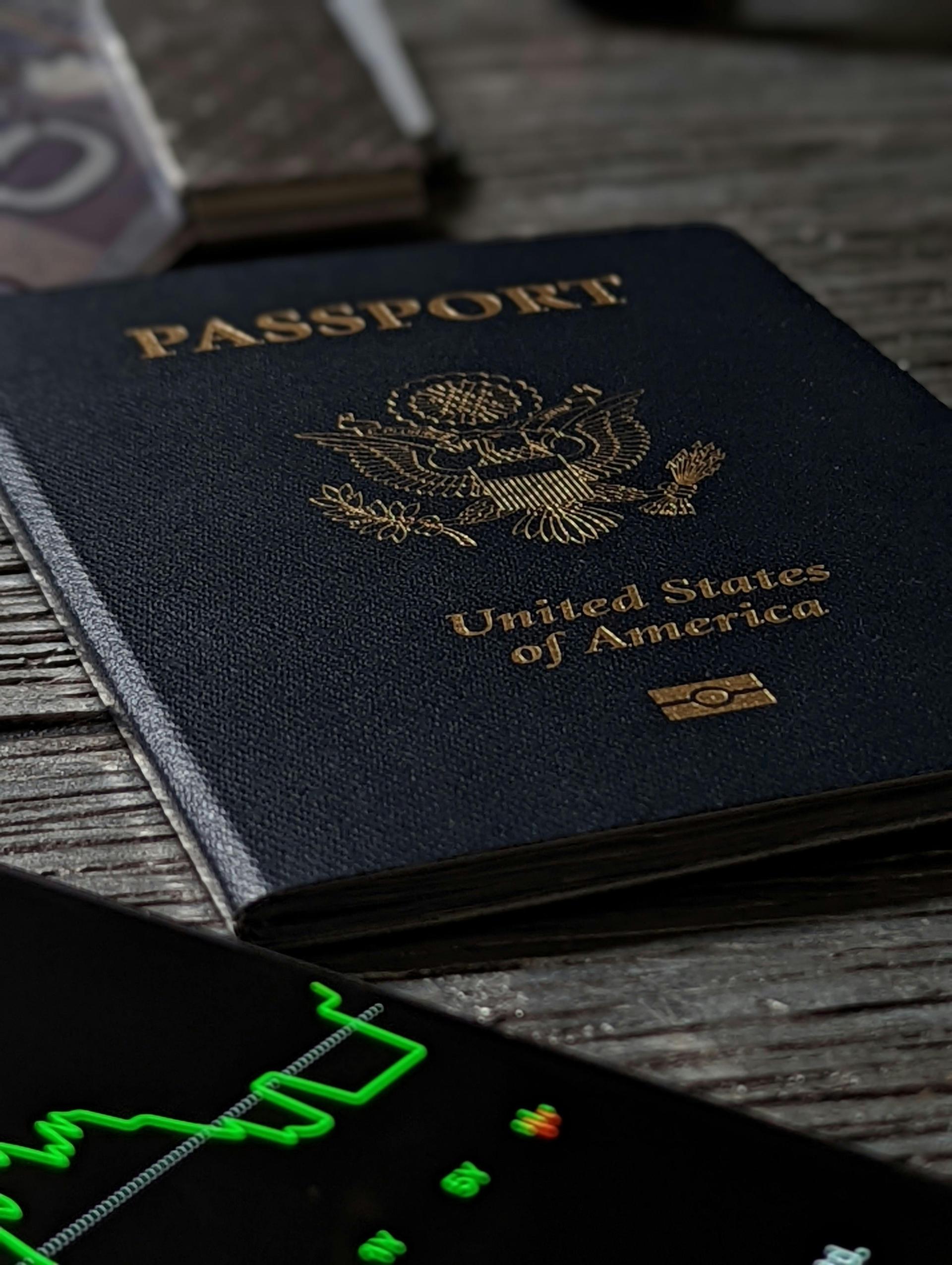
The Friday Reprieve From Washington: How a DHS Walk-Back of the Green Card Memo Lands on Kenyans Already Inside the US
USCIS told the world last week that adjustment of status would be 'extraordinary.' Eight days later, DHS softened the line. Kenyan families read every sentence.

A Kenyan nurse in Maryland set her phone down on the kitchen counter on Friday afternoon and read the new statement from the Department of Homeland Security twice before she trusted it. She had spent the previous eight days drafting a private worst-case plan with her husband, a US citizen, around an idea that had surfaced in a Washington memo on a Thursday in May: that anyone seeking permanent residency from inside the United States might soon be told to leave the country and finish the paperwork at a consulate back home. The DHS clarification did not retract the memo. It said, instead, that immigration officers would keep deciding case by case who could remain in the United States while pursuing a green card, and who would be asked to step outside the gate first.
For Kenyans in the United States — students on F-1 visas, healthcare workers on H-1Bs, families straddling B-2 trips and pending I-130 petitions — the eight days between May 22 and May 30 were not a normal news cycle. They were a real, lived rehearsal of what a quieter immigration system might look like, and how thin the line is between a memo and a household plan.
What USCIS actually said on May 22
The original USCIS memo, issued late on the afternoon of Friday, May 22, did not change the immigration statute. It changed how the agency intends to read it. Adjustment of status, the procedure that lets a non-citizen already inside the United States move to permanent resident without leaving, was described in the memo as "a matter of discretion and administrative grace." That language has been part of immigration jurisprudence for decades. What was new was the framing around it. The memo said the policy would be available only in "extraordinary circumstances," and that the default expectation, for those on temporary visas, was that an applicant would return home and apply through a US consulate abroad.
In the immigration bar, the memo landed with unusual weight. Erickson Immigration Group called it a meaningful tightening of practice rather than a clarification of existing law. The Quarles law firm wrote that dual-intent visa holders — primarily H-1B and L-1 workers, plus their H-4 and L-2 dependents — were less exposed than other categories, because adjustment from those visas is itself contemplated in the statute. F-1 students, B-1/B-2 visitors, and the large category of people on temporary humanitarian status sat closer to the edge.
The Friday clarification: discretion, not a universal rule
A week later, on Friday, May 29, a DHS spokesperson issued a brief statement that pulled the public framing back. The statement, reported by Mwakilishi the next morning, said the May 22 memo did not require all green card applicants to leave the United States. Instead, it described the change as "reaffirming existing authority" and emphasised that immigration officers would continue to exercise discretion. Applicants whose cases offered "significant economic benefits or national interest" might still be allowed to complete the process inside the country.
The clarification did three things at once. It softened the headline. It left the legal architecture of the memo standing. And it pushed the most consequential decisions down to individual adjudicators in field offices in Newark, Atlanta, Houston, Dallas, San Bernardino and a dozen other places where pending Kenyan applications sit in stacks. None of those officers received a public set of criteria on Friday for what "extraordinary" should look like in practice.
Why Kenyans in the US read these memos line by line
The Kenyan diaspora in the United States is, by the most cautious estimates, well over 150,000 people, concentrated in Texas, Massachusetts, Minnesota, Maryland, Georgia, and the Pacific Northwest. A large share of working adults are in healthcare, an industry that has been the main pipeline for H-1B and EB-3 sponsorships over the past decade. Many are married to US citizens or lawful permanent residents and have spent two or three years inside the country waiting on an I-485, the form that completes an adjustment of status.
For that group, the question raised by the May 22 memo was not abstract. Leaving the United States during a pending I-485 has historically meant abandoning the application unless the applicant first secures an advance parole document. Returning home to a consulate in Nairobi to "complete" the process, in practice, would mean a new biometric appointment, a new medical exam, an interview slot that may not exist for months, and a re-entry that is no longer guaranteed. Kenyan immigration lawyers in the United States spent the long weekend telling clients not to cancel any pending appointments, not to leave the country preemptively, and to ask in writing for confirmation before acting on anything they read on social media.
What "extraordinary circumstances" might look like
DHS did not publish a list. But the May 22 memo and the May 29 walk-back, read together, suggest a few markers that adjudicators are likely to weigh. Marriage to a US citizen with a long, documented life together in the country remains the strongest single factor. An employer-sponsored case with an approved I-140 in a shortage occupation — registered nurses, certain physicians, advanced engineering specialties — should sit on safer ground, in part because the underlying statute already treats H-1B and L-1 holders as dual-intent. Pending humanitarian cases, U-visa derivatives, and victims of domestic violence covered by the Violence Against Women Act are explicitly carved out in adjacent guidance.
The harder cases are the more ordinary ones: a Kenyan F-1 student who married a US citizen during her studies; a B-2 visitor whose son became a US citizen and filed for her after her authorised stay expired; a Kenyan religious worker whose R-1 visa is winding down. Each of those applications now has an extra layer of unwritten discretion sitting on top of it.
A diaspora that has learned not to celebrate too soon
By Sunday morning, the Kenyan-American Whatsapp groups that had been crowded with screenshots of the original memo were quieter. Some posts marked the DHS clarification as good news. Others reminded readers that the memo itself had not been rescinded, and that the language about consular processing remained on USCIS letterhead. A pastor in Lowell, Massachusetts, who has spent two decades helping new Kenyan arrivals fill out paperwork, wrote in his group that the most useful thing his community could do this week was simply to keep their files in order, attend every appointment as scheduled, and resist the urge to make irreversible travel decisions on the strength of a headline.
That is, in the end, the texture of the moment for Kenyans inside the United States. The Friday reprieve from Washington is real. The architecture that made the original memo possible is also real, and it is now in the hands of adjudicators in city after city. The next several months of green card decisions will reveal which of those two things matters more.