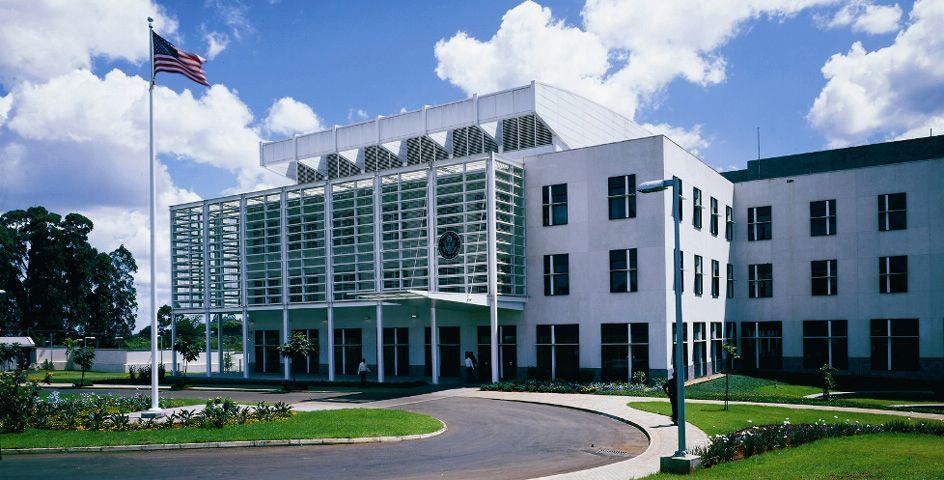
What the Embassy in Seoul Began: Kenya's Proposed Welfare Fund and the Day a Worker Abroad Calls Home
Mudavadi's pitch to Kenyans in South Korea outlines a taxpayer-backed cushion for diasporans — and the hard questions Parliament will answer first.

The lobby of the Kenyan Embassy in Seoul filled up gradually on the last Sunday of May, the way it does whenever a senior minister is in town — older men in suits at the front, younger workers from the manufacturing towns in chinos and sweaters at the back, mothers with toddlers near the door. Prime Cabinet Secretary Musalia Mudavadi, in the country for the Korea–Africa Ministerial Meeting, used the engagement on May 31 to lay out what may become one of the most consequential changes in the way Kenya treats its citizens overseas: a national welfare fund, backed by taxpayer money, intended to catch them when they fall.
A Kenyan factory worker in Ansan, a domestic in Riyadh, an undergraduate in Newcastle, a nurse in Reading — each of them, in different ways, has spent the past two years watching the state arrive late to crises. The fund Mudavadi described would not, by itself, fix that. But it would, for the first time, give the government a legal pocket to reach into when it does arrive.
A Cushion Drafted in the Shadow of Recent Funerals
The proposal landed at the end of a brutal stretch for the Kenyan diaspora. Sheila Jepkorir Chebii's death in Sydney is still under inquiry. June Chebet Kili died in Newcastle, New South Wales, days before her graduation. The remains of former rugby coach Felix Oloo arrived in Nairobi this week from Everett, Washington. Each of those repatriations has been carried, in practice, by community fundraisers — M-Changa pages stitched together across time zones, WhatsApp groups passing around bank details, a parish in Maryland matching a county pledge in Uasin Gishu.
Mudavadi did not name those families on Sunday. But the fund he described is shaped by their experience. According to the Ministry of Foreign and Diaspora Affairs, the framework would provide structured assistance, including emergency support and repatriation services, drawn from public resources rather than relying entirely on what diaspora associations can raise on their own.
"As government through the Ministry of Foreign and Diaspora Affairs, we are working with Parliament to establish a framework that will legally formalise the allocation of resources from taxpayers to cater for some of these challenges since the diaspora is growing in numbers and their needs are also increasing," Mudavadi told the gathering in Seoul, according to The Standard's account of the meeting.
What the Fund Would Sit Beside
The welfare fund is being designed to work alongside a Diaspora Bond framework that the Treasury has been sketching for more than a year. The bond would mobilise savings from Kenyans abroad to finance national projects at home. The welfare fund would move in the opposite direction — public money from the Nairobi exchequer travelling outward to citizens in trouble, then often back home with them.
The pairing is deliberate. Officials inside the ministry have argued that diaspora policy has been lopsided for years: the state has been comfortable counting remittance receipts — well above four billion US dollars a year now — but reluctant to formalise spending in the other direction. The fund, if Parliament approves it, would acknowledge that those receipts come at a human cost, and that some of that cost requires a structured government response.
The Hard Questions Parliament Has to Answer First
Mudavadi was careful to flag the discomforts before legislators arrived at them. Should taxpayer money rescue a Kenyan held in the Gulf on drug-trafficking charges? A worker arrested in a Southeast Asian capital for cyber-fraud? Someone trafficked under false promises by a rogue recruiter and then drawn, willingly or not, into crimes against the laws of the host country? The Cabinet Secretary said these were ethical and policy questions the ministry expected to debate openly with Parliament before the fund became operational.
That gating exercise is unusual for a Kenyan ministerial announcement, where new funds typically arrive with eligibility worked out in private. The willingness to surface the moral edge cases now suggests the ministry expects pushback in the National Assembly, particularly from members of Parliament whose constituencies have not seen large remittance inflows and may resist underwriting risk on behalf of those who have.
The Recruitment Crackdown Already Underway
Parallel to the fund, the government has been moving against the labour-recruitment industry that has, by official estimate, sent thousands of Kenyans into exploitative contracts in the Middle East and Asia. Mudavadi reported that the ministry has shut down more than 700 rogue recruitment agencies, and that forthcoming legislation will introduce prison sentences for operators who falsify contracts or traffic workers under recruitment cover.
The next step, the Cabinet Secretary said, is to gazette licensed recruitment firms publicly, so that a graduate in Eldoret weighing a "hotel job in Riyadh" can confirm in a few clicks whether the agency at the other end of the WhatsApp number is on the legitimate list. That gazettement, if it happens within the year, would close one of the longest-standing information gaps in Kenya's labour-migration pipeline. The same legislation, Mudavadi told the Seoul gathering, will pursue bilateral labour agreements with destination countries to expand legal employment opportunities and reduce the distress cases that have come to define the Gulf corridor.
Why Seoul Was the Venue
Mudavadi chose the Seoul embassy to make this case for reasons that are not incidental. South Korea hosts a small but growing Kenyan community — students, factory contract workers, professionals on bilateral skills programmes — and the country has been one of the more ordered host destinations under its Employment Permit System. It is, in other words, the version of labour migration the Kenyan state hopes to scale: legal, contract-based, paid into a recoverable account.
His visit also preceded the Korea–Africa Ministerial Meeting, where Kenya is expected to deepen cooperation in ICT, education, infrastructure, health, agriculture, energy, maritime affairs and climate resilience. Several of those areas are read in Nairobi as future labour-migration pathways for skilled Kenyan workers — a counterweight to the Gulf domestic-work pipeline that has dominated the conversation. Bilateral talks with the South Korean Foreign Affairs Minister, Mudavadi added, covered trade, technology transfer and investment cooperation built on more than six decades of diplomatic relations.
What the Fund Will Not Do, At Least Not Yet
For Kenyans abroad watching the announcement from Doha, Dubai, Atlanta, Manchester or Brisbane, the welfare fund is not a guarantee. It is, today, a proposal. Parliament has not received the bill. Treasury has not gazetted an allocation. The eligibility frame is still being drafted, and the questions Mudavadi flagged in Seoul — who qualifies, what conduct disqualifies, how the fund interacts with consular insurance and host-country welfare — will take months to settle.
For all that, what was announced on Sunday matters. For the first time, a senior member of the executive has publicly committed to a legal mechanism that says, in essence, that a Kenyan citizen does not stop being a Kenyan citizen on the day their passport is stamped at Jomo Kenyatta International. Whether the bill that eventually lands in Parliament keeps that promise intact, or whittles it down to a narrow consular contingency line, is the next year's story.
Until then, the community fundraisers will keep going. The next time a young Kenyan dies in a host-country hospital, an M-Changa page will go up before any minister sees the news. The welfare fund, if it becomes law, will arrive too late for those families. But it will arrive in time, perhaps, for the worker now packing a suitcase in Mombasa for a contract he has not yet read.